Bollywood's first digital-only release campaign rewrote the playbook
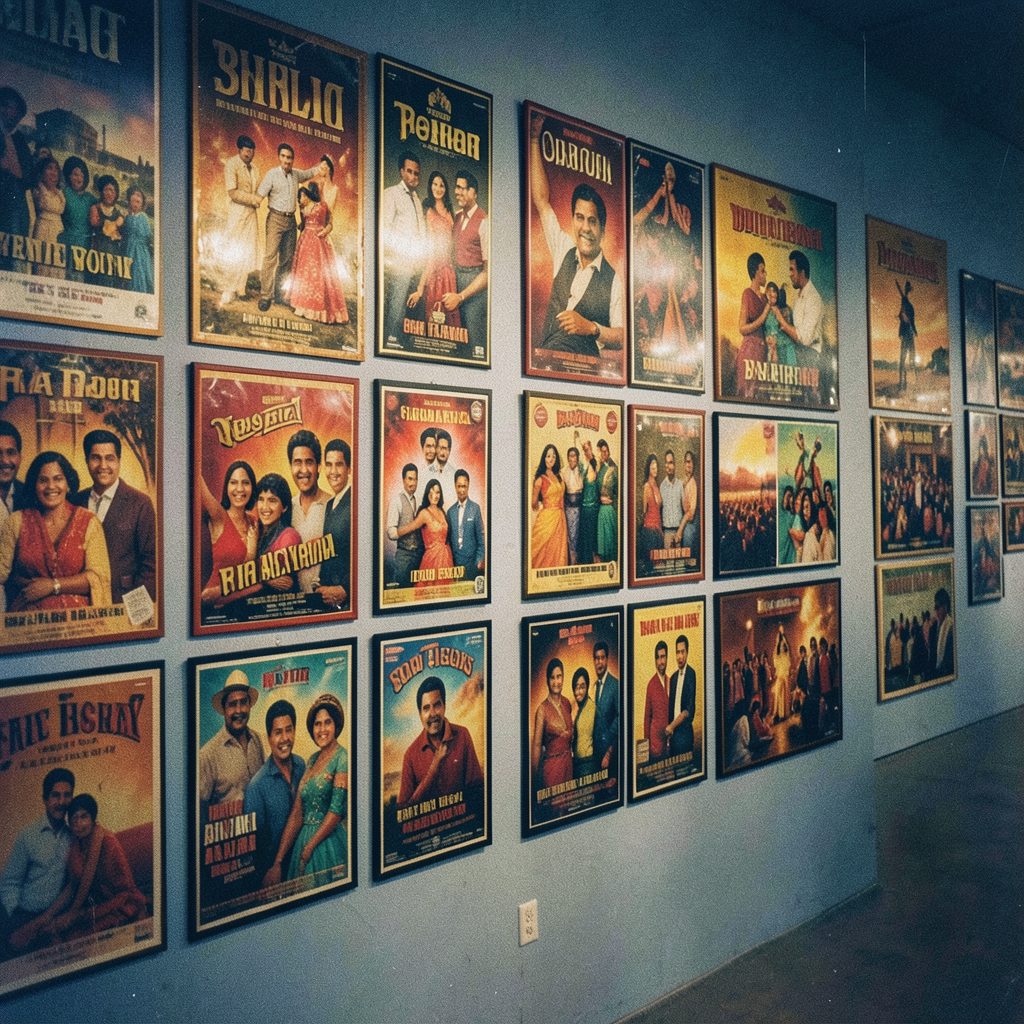
The Hindi film industry has spent decades perfecting the saturation release — wider screens, bigger cut-outs, theatrical footprints across thousands of cinemas. So when a mid-budget production house announced that its biggest launch of the year would rely entirely on online channels, eyebrows lifted across the trade. There were no large-format posters pasted on Mumbai's Marine Drive, no radio jingles blasting from auto-rickshaw speakers, no midnight premieres with stars draped in marigolds. Instead, the studio poured its marketing spend into a layered, platform-native push that treated the internet as the sole cinema.
The gamble was not simply about saving on print or outdoor. Producers were responding to a real shift in viewer behaviour, with younger fans streaming on phones during commutes, scrolling reels at lunch, and discovering songs before they heard them on the radio. The team framed the rollout as a laboratory for the industry's next chapter, and trade analysts from Mumbai to Sydney followed every move closely.
The pivot that started it all
The seed for the campaign was planted eighteen months before release, when the production house quietly shelved its theatrical distribution plan. The original budget assumed a wide cinema footprint, but with multiplex chains re-negotiating terms and single screens struggling in tier-two towns, the economics no longer stacked up. A younger co-producer, who had cut her teeth on music videos and brand content, pushed for a wholesale pivot.
She argued that a digital-only push could reach a far more granular audience — students in Indore, tech workers in Hyderabad, and diaspora viewers in Auckland and Brisbane — without the overhead of physical prints and four-walls marketing. The senior partners were sceptical, worried that a film without a theatrical date would lose cultural legitimacy. What eventually swayed them was a pilot reel that hit 14 million organic views in 48 hours, outperforming the trailer for a far bigger star vehicle. From that moment, the campaign was real.
Building the digital playbook
Once the green light was given, the marketing team built a rollout that looked more like a streaming series launch than a film promotion. Content drops were staggered across eight weeks. The first wave leaned on the lead single, paired with a vertical lyric video designed for Instagram and YouTube Shorts. The second wave featured character vignettes, each styled to mirror a popular meme format, so fans could remix them. The third wave unveiled a behind-the-scenes documentary, broken into four parts, hosted on YouTube and later cross-posted to JioCinema.
The team also leaned on creator partnerships, sending early screeners to fifty influencers across comedy, dance and lifestyle niches. Some were paid, but many were chosen because their audience overlapped with the film's core demographic of 18 to 28-year-olds. A small but crucial spend went into regional language subtitles — Tamil, Telugu, Bengali and Marathi — to widen the funnel beyond Hindi-speaking states. A The art of Bollywood title songs: a deep dive into composition trends feature later noted how the title track had been re-cut into three distinct versions to feed this rollout.
Audiences, hashtags and viral moments
By week three, the campaign had a heartbeat. A dance challenge choreographed by a Mumbai-based crew took off on Instagram, and within five days, 80,000 user-generated videos carried the official hashtag. A shorter, comedic version trended on X, with Bollywood gossip accounts amplifying the clips and adding their own commentary. The studio's social team responded with surprise cameos from the leads, who joined duets and stitched fan videos from their personal handles.
In Australia, where the diaspora in Harris Park and Clayton reliably turns out for any major Hindi release, the digital strategy hit particularly cleanly. Melbourne's Indian Film Festival had already screened the director's earlier work, and local fan pages shared the trailer with Australian-specific captions, using local slang like "arvo screening" and "brekkie catch-up" for viewing parties. A Sydney-based Bollywood trivia podcast dedicated an entire episode to decoding the campaign's teasers, calling the rollout "the most aroha we've ever seen for a Hindi film online." It was a reminder that diaspora audiences no longer wait for theatrical dates — they build their own.
Comparing traditional and digital-first rollouts
| Element | Traditional campaign | Digital-first campaign |
|---|---|---|
| Upfront spend | Heavy on print, outdoor and TV | Heavy on creator deals and platform ads |
| Audience targeting | Broad, regional, age-based | Niche, interest-based, language-specific |
| Content lifecycle | Peaks at release week | Staggered over six to ten weeks |
| Measurable feedback | Box office and trade estimates | Real-time dashboards, sentiment, share rates |
| Diaspora reach | Limited to city premieres | Direct via streaming, social, regional subs |
The table above is not a verdict on which model wins. Traditional campaigns still carry cultural weight and theatrical visibility that no digital push can fully replace. What this rollout proved, however, is that the cost-per-engagement curve on a digital-only path can be sharper, and the feedback loop tighter. Marketers saw within hours whether a teaser was landing, and could swap creative assets by the next morning.
How the numbers landed in India and overseas
The film opened on its chosen streaming window with what the platform described as record concurrent streams in its first hour. Trade analyst Karan Taurani noted that the "discovery-led" model had effectively front-loaded curiosity, so fans were queuing to watch the moment the link went live. Pre-release surveys suggested that 62 per cent of viewers had heard about the film through short-form video, a figure that would have been unthinkable a decade earlier.
Overseas, the picture was equally encouraging. Reports from Australia showed strong uptake from Hindi-speaking households across New South Wales and Victoria, with the platform confirming the film sat in its top five most-watched non-English titles for the country during the launch week. In New Zealand and the Gulf, too, the campaign held. The catch: a digital-only release loses the PR bump that a big-screen opening generates, and trade journalists spent the launch week debating whether the headline numbers truly matched the studio's internal projections.
Lessons marketers can carry forward
The campaign's most measurable wins came from how cleanly the team treated each phase of the rollout. Marketers watching from the side-lines have already started borrowing the template.
- Treat the trailer as a teaser, not the campaign. Stagger reveals so each drop has its own news cycle.
- Budget for at least three vertical-first assets per character. Phone screens are the new multiplex.
- Pick creator partners whose audience overlaps your genre, not just your language.
- Localise subtitles and captions early — Tamil, Telugu, Bengali, Marathi — to widen the funnel.
- Reserve 15 to 20 per cent of the media spend for in-flight optimisation, not just launch week.
- Build a diaspora-specific landing page with city-wise watchlists and timezone-aware premieres.
- Track sentiment, not just views, to know whether the story is being told or just heard.
The campaign's most lasting contribution may be cultural rather than commercial. It told a generation of marketers that a Hindi film can be launched the way a Netflix series is launched — with patience, with data, and with respect for the audience's phone. Studios that paid attention walked away with a working template. Those that dismissed it are likely already rethinking their next slate.
The takeaway that matters most is the simplest one: the screen has changed, and the marketing around it has to change with it.