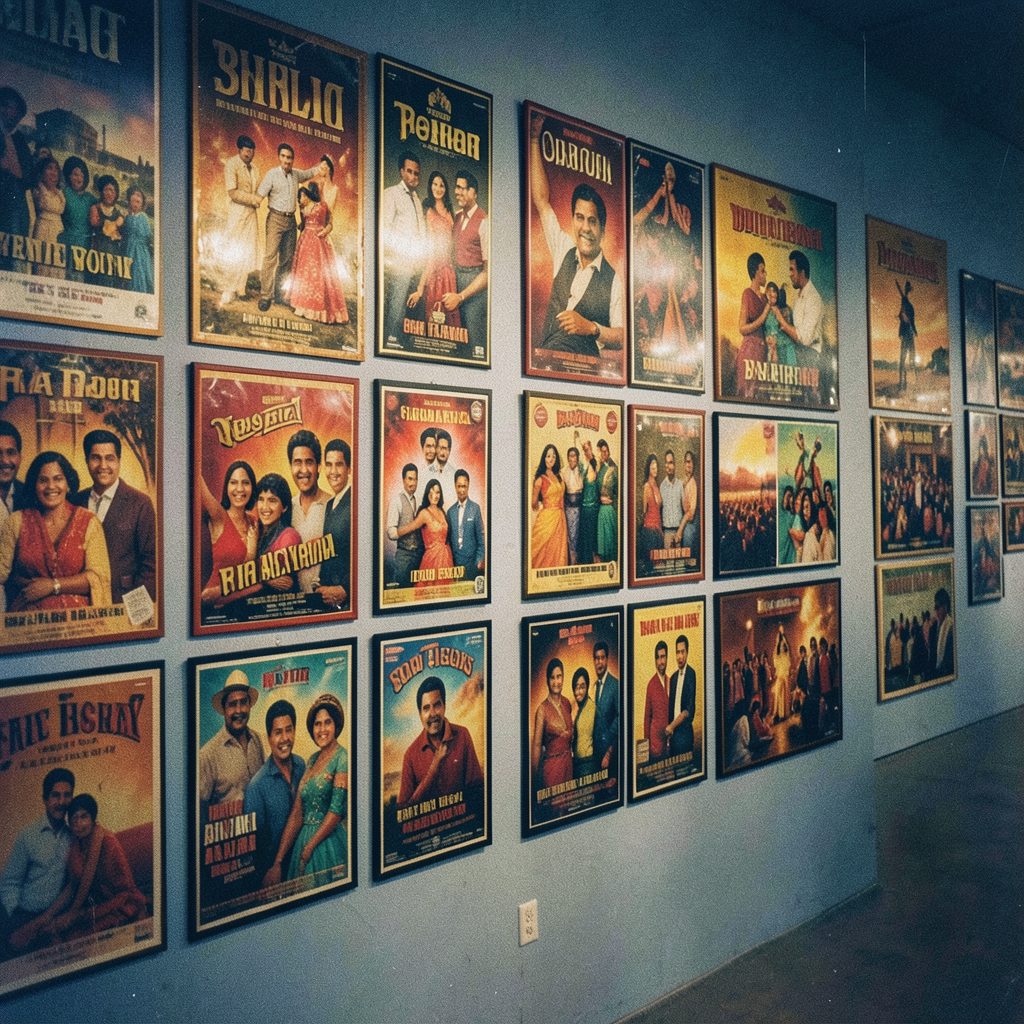
Bollywood films shot in a single setting, when cinema stays put
Most Bollywood productions follow their heroes from Mumbai to Manali, from London to Leh. A smaller, braver set of Hindi films decides that the world outside is a distraction. They build the entire story inside one flat, one house, one shop or one courtroom. The result is a pressure-cooker style of filmmaking that trades spectacle for sweat.
Single-location cinema has a long pedigree in India. Bimal Roy, Guru Dutt and Basu Chatterjee experimented with confined spaces during the parallel cinema wave of the 1970s and 1980s. What has changed is the scale of ambition. A new generation of directors now uses real apartments, working pizzerias and live courtrooms as their stages, often with handheld cameras and natural light.
For Australian viewers, the appeal is more than academic. The Indian diaspora in Sydney's Harris Park, Melbourne's little India precinct and Brisbane's Sunnybank already knows the cultural shorthand of shared flats, joint family homes and small offices. These films land differently here than in, say, Berlin or Buenos Aires. They feel like family.
What follows is a tour of some of the most striking examples, from a Mumbai chawl to a Bihar hillside. A few are streaming now. Others live in festival archives and specialty stores like the ones that once lined Melbourne's Lonsdale Street. Each film proves that a story does not need a thousand cuts to leave a mark.
| Film | Year | Setting | Approximate runtime |
|---|---|---|---|
| Kaun? | 1999 | Mumbai bungalow | 90 min |
| 10 ml Love | 2010 | One-room Mumbai flat | 100 min |
| Court | 2014 | Mumbai sessions court | 116 min |
| Pizza | 2014 | Suburban pizza shop | 104 min |
| The Lunchbox | 2013 | Mumbai dabbawala route | 104 min |
| Trapped | 2016 | Mumbai high-rise flat | 105 min |
| Talvar | 2015 | Delhi NCR residence | 132 min |
| Manjhi – The Mountain Man | 2015 | Bihar hillside | 155 min |
Apartment dramas where the walls talk
Several Bollywood films have turned a single flat into a pressure cooker. Ram Gopal Varma's Kaun? (1999) locks three strangers in a Mumbai bungalow during a downpour and lets paranoia do the rest. Umesh Shukla's 10 ml Love (2010) compresses an entire romance into a one-room flat. Raj Kumar Gupta's Trapped (2016) follows a man accidentally sealed inside a high-rise apartment with no food, water or phone signal.
What ties these projects together is a faith in architecture as narrative. A locked door is a metaphor. A broken window is a countdown. Directors often shoot with available light from windows and balconies, which gives the footage a slightly raw, almost documentary texture that Australian indie film fans already recognise from festival selections at ACMI in Melbourne.
Ingredients that make apartment films work
- A confined geography that forces characters into constant contact.
- A practical problem, such as a lockout, a storm or a missing key, that justifies staying put.
- Limited but specific production design that tells the audience exactly who lives there.
- Sound design built from inside the flat, so the city becomes a hum rather than a presence.
There is also a pragmatic angle. Apartment-bound films cost a fraction of a typical Bollywood production. Crew sizes shrink, location fees vanish, and shoot days drop to two or three weeks. That has made the format attractive to first-time directors trying to break in from cities like Pune and Hyderabad, where many new filmmakers now base themselves.
Family houses that hold their secrets
If apartments are about survival, family houses are about inheritance. Meghna Gulzar's Talvar (2015) plays out almost entirely inside a Delhi NCR residence as investigators reconstruct a real murder case. The domestic setting forces the camera to linger on kitchen counters, prayer rooms and door frames, turning ordinary objects into evidence.
Konkona Sen Sharma's directorial debut, A Death in the Gunj (2016), uses a colonial holiday home in Jharkhand to trap a large ensemble. Every corridor hides a mood, every staircase hides a confession. Older films such as Basu Chatterjee's Sara Akash (1969) and Homi Adajania's Being Cyrus (2005) worked with similar logic, keeping the family inside one building while old resentments surfaced.
For an Australian reader who has watched a similar device work in plays at the Sydney Theatre Company, the parallel is striking. Indian cinema borrows from the same theatrical well. The house is a stage, the family is a cast, and the camera simply refuses to leave.
Workplaces and courtrooms that become worlds
Some of the most gripping single-location Hindi films are set where adults spend their working hours. Chaitanya Tamhane's Court (2014) spends two hours inside a Mumbai sessions courtroom, following a folk singer accused of encouraging a sewage worker's suicide. The pace is glacial, the language mixes Marathi and English, and the location is so specific that visitors to the real courtroom have reportedly recognised the same broken fan.
Akshay Akkineni's Pizza (2014), the Hindi remake of the Tamil original, locks a delivery boy inside a closed restaurant for a night shift. The fluorescent lights, the dough mixer and the parked scooter all become characters. Ritesh Batra's The Lunchbox (2013) widens the lens enough to follow Mumbai's dabbawala network, but the heart of the film lives inside two apartments and the steel tiffin boxes that travel between them.
These films prove that a workplace can be as emotionally rich as a palace. They are also the easiest to find in Australia. Court streams on platforms available locally, while The Lunchbox has been a fixture of Indian film festivals in Melbourne and Brisbane for more than a decade.
Landscape as a single character
Not every confined film is an interior. Ketan Mehta's Manjhi – The Mountain Man (2015) is the clearest example of a Bollywood film built around one landscape. Starring Nawazuddin Siddiqui, it tells the true story of Dashrath Manjhi, who carved a path through a rocky hill in Bihar by hand over thirty years.
The filmmakers returned to the same ridge repeatedly, allowing weather and seasons to alter the mood of the same stretch of rock. The hill is not a backdrop. It is the antagonist, the lover, the monument. Mrinal Sen's Khandahar (1984) and Shekhar Kapur's Bandit Queen (1994) used similar terrain-bound storytelling, but Manjhi is the rare case where a single geographic feature carries an entire three-hour arc.
Films like this translate unusually well for outdoor audiences. Open-air screenings have become a summer ritual in places like Brisbane's South Bank and Perth's Kings Park, where community groups occasionally project Indian classics against a wall of trees. A mountain story feels right in those settings.
Music, mood and the confined frame
Sound design matters more in a single-location film because there is nowhere for the ear to hide. A ringing phone, a dripping tap, a distant traffic horn become the score. Several recent Hindi projects have leaned into this, even reviving retro Bollywood tracks that audiences half-remember from childhood.
The strategy is clever. A familiar melody inside an unfamiliar space triggers nostalgia, and nostalgia makes confined settings feel bigger than they are. The same trick shows up in some Australian indie films that loop surf rock or pub piano into coastal dramas.
Sound choices that make small spaces feel large
- Natural ambience recorded on location rather than replaced in post-production.
- A single recurring motif, played quietly, that signals the passage of time.
- Diegetic music, such as a radio, a phone ringtone or a neighbour's television, that grounds the room.
- Silence used deliberately as punctuation, especially before a key line.
For composers, the challenge is restraint. Background score must fill the room without drowning dialogue, and silence becomes a legitimate creative choice. The best single-location Hindi films treat sound the way a stage play treats lighting — as a presence that can shift a scene without moving a single camera.
If a viewer in Sydney or Melbourne wants to start with one film from this list, The Lunchbox is the smoothest entry point. It is widely available on streaming platforms that operate in Australia, it runs under two hours, and its central premise — mistaken tiffin deliveries between two lonely strangers in Mumbai — needs only a single setting to land its quiet, lasting impact.