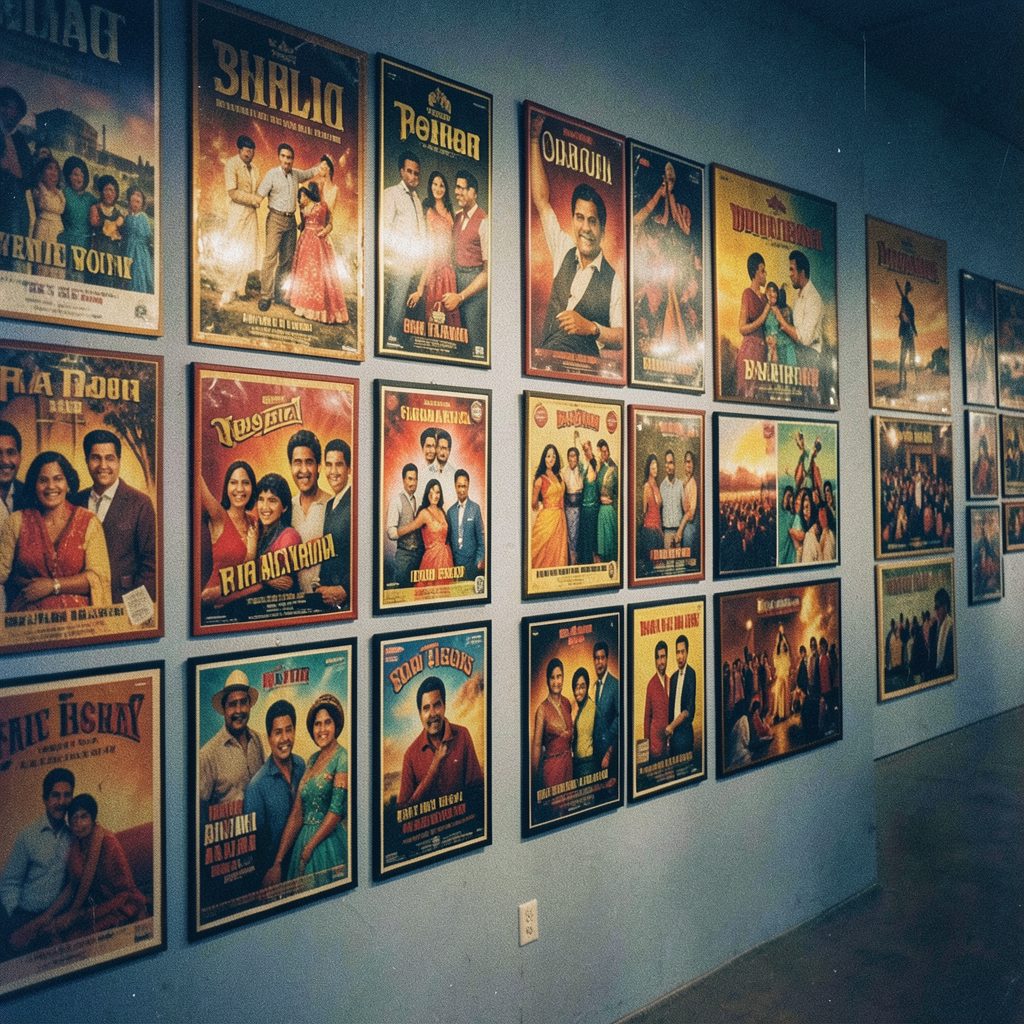

Why Bollywood is adapting classic novels more often
Bollywood's screenwriters are adapting classic novels more often because durable stories provide both ready-made emotional architecture and a way to manage risk. A Partition romance, a Bengali tragedy or an English family epic can arrive with an audience already curious about its characters, while the writer supplies a fresh cinematic context. That combination is increasingly useful as the industry balances star-led spectacle with prestige films.
The revival is visible in adaptations such as Sanjay Leela Bhansali's Devdas, drawn from Sarat Chandra Chattopadhyay's novel, and Shyam Benegal's Train to Pakistan, based on Khushwant Singh's 1956 book. Vishal Bhardwaj's Shakespeare trilogy widened the appeal of familiar classics, although Othello, Macbeth and Hamlet are plays rather than novels. The sources differ, but the underlying wager is the same: audiences recognise the story's emotional stakes, and filmmakers offer a new political or visual reading.
This is not a wholesale replacement of original Hindi scripts. Masala entertainers still drive much of the theatrical business, and streaming has not eliminated theatrical exhibition. Rather, literary adaptation has become a stronger option for films aiming at adults, festival audiences and viewers seeking subtitled Indian cinema. It also lets a writer address questions of caste, gender, faith and power without presenting them as entirely new.
Familiar stories, fresh production pressure
Classic material starts with useful dramatic scaffolding: a conflict, characters under pressure, reversals and a thematic question. That does not make adaptation easy. A screenplay must compress a novel's interior life, remove narration and make settings visible. The advantage is that the writer can test how much of the source's power comes from plot alone, or from performance, space and sound.
Bhansali's Devdas demonstrates how familiar material can be reshaped through spectacle rather than treated as a museum piece. Sarat Chandra's tragic romance has been filmed repeatedly, allowing each version to reflect its own era. The 2013 adaptation of Bankim Chandra Chattopadhyay's Saraswatichandra similarly placed an iconic Bengali novel within Hindi television cinema, introducing its central conflict to a wider domestic audience.
Shakespeare offers another example of the appeal of a well-known dramatic engine. Maqbool relocated Macbeth to contemporary Mumbai, Omkara transformed Othello into a volatile political romance, and Haider placed Hamlet in Kashmir. Each film keeps the source recognisable while using its dialogue, motifs and moral choices to explore contemporary Indian pressures.
The economics of a borrowed narrative
Commercial logic matters as much as literary prestige. Copyright rules can make adaptation cheaper, although a public-domain novel does not automatically produce a free film. India's usual term of protection is the author's life plus 60 years, while Australian copyright generally extends to life plus 70 years. A book can therefore be free to adapt in one country and protected in another, making international rights due diligence essential.
A classic title can also reduce marketing uncertainty. A recognisable story offers international distributors a clear discussion point, while a major star can become the public face of a work whose original author may be unknown to mainstream audiences. The film gains cultural authority for festival programmers and subtitles for global streaming services, and prestigious platforms can use it to signal that they support ambitious Indian filmmaking.
Adaptation offers controlled risk, although it is not the only form. Remakes offer a proven commercial blueprint, and original scripts can draw on equally recognisable conventions. The advantage of a classic is that its emotional outline is already established: viewers know enough to become invested, yet the details of the new production remain unpredictable.
Streaming changes the value of depth
Streaming has strengthened the business case for adult-oriented storytelling because a premium film or series can lead a service's wider slate. Programmes are no longer judged only by immediate broad appeal. Literary adaptation can help fill months of release schedules with material that supports careful performances, multilingual settings and themes requiring more time than a conventional interval action film allows.
Indian streaming has already provided several strong examples. Vikram Seth's A Suitable Boy became an internationally discussed series through its BBC and Netflix presentation. Neel Mukherjee's The Year's Afternoon was reworked as Trial by Fire, while Shrikant Mahadevan's debut novel became The Test Case. These projects treat the source as a foundation for a longer narrative rather than simply a plot to be condensed.
Theatrical audiences remain important, particularly where a literary film receives awards attention and a long release. Mumbai's festival circuit, subtitled screenings and later streaming availability can extend a film's life across formats. Digital platforms have increased access to Indian films with subtitles, making cultural specificity less of a barrier than it once was, although they have not removed the commercial pressure to keep stories legible and emotionally immediate.
Classic material meets contemporary politics
Classics are attractive because their themes can travel without losing their edges. A story about family obligation, public shame, inherited authority or forbidden love can support a contemporary argument while remaining recognisable as narrative entertainment. Haider, for example, uses Hamlet's grief and fractured identity to examine nationalism, disappearance and the political life of Kashmir.
Adaptation also brings difficult material with it. Devdas retains the destructive romanticism and social restrictions of its era, forcing contemporary viewers to consider whether spectacle challenges those structures or preserves their appeal. Manto, assembled from stories by Saadat Hasan Manto, found fresh force in the changing relationship between writers, the state and public speech. Such works use literary memory as a source of tension rather than simple nostalgia.
The real craft lies in cultural translation. Turning Bengali, Urdu, Marathi or English prose into Hindi cinema involves carrying across dialect, class, religion and assumptions about respect. A phrase may survive the screenplay, while the hierarchy hidden behind it disappears. Research and editorial judgment become as important as visual invention when a classic is being moved between languages, periods and regions.
Australian audiences and the local screen culture
Australian viewers have their own substantial experience with literary adaptation. Films such as Picnic at Hanging Rock and The Dressmaker sit alongside a strong tradition of adapting Australian novels, while state-supported projects through Screen Australia have made source material a familiar part of local filmmaking. Indian adaptations therefore enter a market already alert to changes of voice, period detail and narrative compression.
The local routes into Bollywood and Hindi cinema are varied:
- Sydney's Parramatta Little India connects major Indian diasporic communities with regional cinema, celebrity coverage and cultural events.
- Melbourne's ACMI and Melbourne International Film Festival provide subtitled Indian cinema a place within the city's strong repertory and film-curiosity culture.
- Australian public libraries, school reading programs and book clubs keep literary classics visible as shared cultural objects beyond specialist publishing circles.
- Belvoir and Sydney Theatre Company in Sydney, along with La Boite in Brisbane, regularly place Shakespeare and other classic works before Australian theatre audiences.
- Screen Australia and Australian literary adaptations create a domestic market accustomed to films that transform books rather than reproduce them literally.
Bollywood still occupies a specialist place in Australia. Hindi films may have limited theatrical runs, appear through subtitled festival programmes or arrive through streaming catalogues, while fan events in Sydney, Melbourne and Brisbane add a communal dimension. Australian viewers bring strong adaptation literacy, but they cannot be assumed to share the Bengali, Urdu or Hindi literary references underlying every film. That gap creates both a challenge and a source of discovery.
The adaptation ledger: promise and pitfall
An adaptation succeeds when it understands the source's emotional logic while changing the story for a new medium. Fidelity to every line can produce sluggish cinema, while excessive freedom can erase the character's motives or the culture that made the work resonate. The strongest results treat the classic as a conversation between versions rather than a contest over which one is correct.
Several choices determine whether that conversation works:
- Preserving the emotional purpose of important scenes, even when dialogue and circumstances change.
- Making each changed setting, period or political context necessary rather than decorative.
- Using performances to complicate the source rather than merely imitate its tone.
- Building visual and sound languages that belong to the new production.
- Researching social detail and handling inherited prejudice with clarity rather than reverence alone.
These choices explain why some literary adaptations endure while others feel like familiar plots wearing new costumes. A classic can supply emotional scale, but the adaptation still needs a distinct cinematic voice, and streaming commissions have expanded the appetite for such ambitious Hindi films and series. The point to remember is that Bollywood's return to classic novels uses enduring stories to examine new actors, political realities, formats and audiences without surrendering the pleasure of a narrative already known.