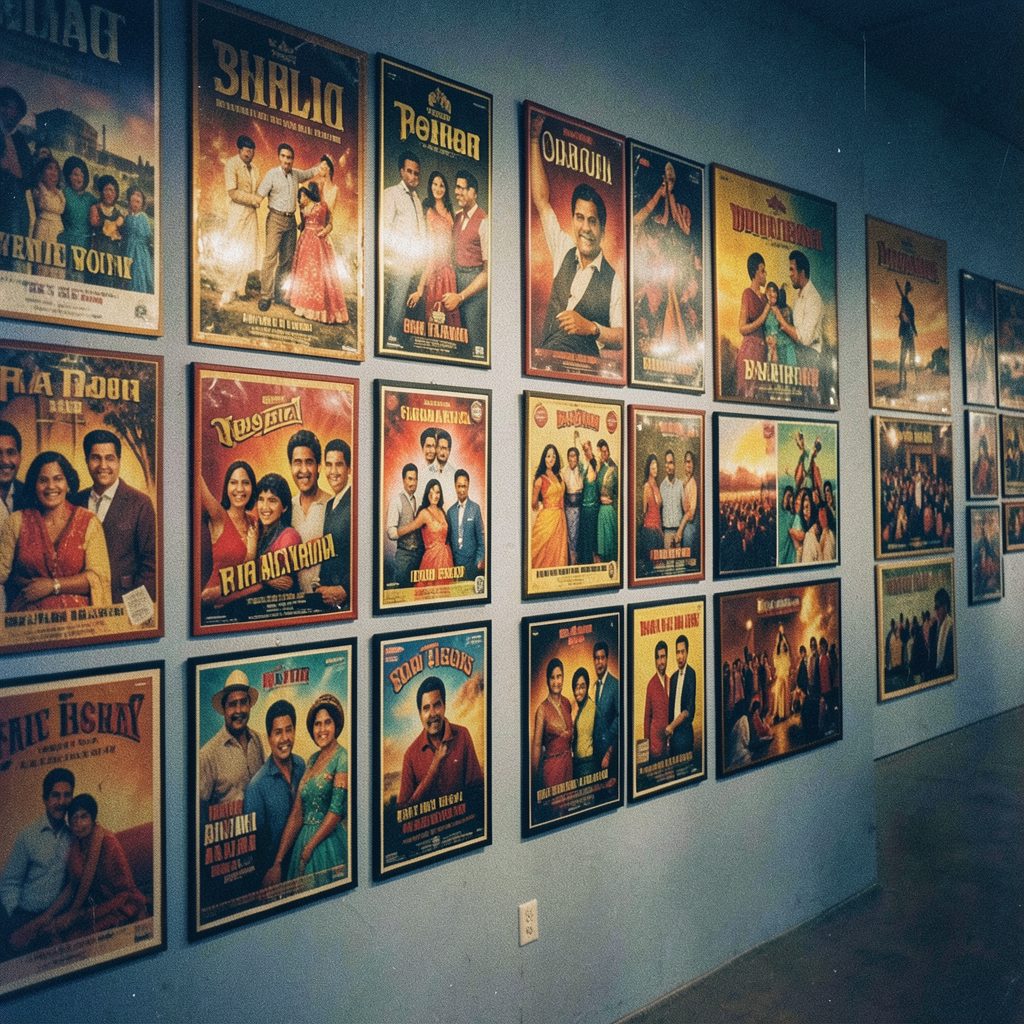

Regional stars reshape Bollywood's mainstream casting
The question of why Bollywood's directors are casting regional cinema stars for mainstream roles has moved from industry speculation to a visible trend. Actors who built audiences in Kannada, Telugu, Tamil, Malayalam, Bengali and Marathi films now appear in Hindi projects and multilingual productions. This is changing where a film finds its audience and how a star’s commercial value is measured.
Earlier examples, including R. Madhavan’s Hindi breakthrough after his Tamil career, showed both the promise and the limits of such a move. The current wave is supported by streaming, younger viewers comfortable crossing language barriers and production companies willing to issue several soundtracks. It also unsettles the old hierarchy in which Bollywood supplied India’s default leading face.
A wider audience arrives with regional talent
A regional star often arrives with fans, press coverage and experience of carrying a film in another language market. For a Hindi production, that can mean stronger opening-day interest in Bengaluru, Chennai, Hyderabad or Kolkata. It also allows distributors to approach audiences that a debutant cannot readily reach.
| Casting route | Main benefit | Main pressure point |
|---|---|---|
| Hindi-film newcomer | Clear positioning for Hindi promotion | Little demand before release |
| Regional star in a Hindi film | Existing fans and cross-language curiosity | Typecasting and accent questions |
| Multilingual original | One performance can serve several markets | Complex dubbing, budgets and schedules |
| Bollywood actor in a regional film | Reciprocal publicity and broader appeal | Risk of flattening regional identity |
The economics are strongest when the crossover adds a genuine audience rather than merely a famous name. Regional publicity can help a Hindi film travel, while Hindi distribution gives a performer access to an entirely separate market. Neither advantage guarantees a hit, but both reduce some of the uncertainty surrounding a new release.
Why directors look beyond Hindi stardom
Commercial logic starts with reducing uncertainty. A known regional star can bring advance demand, distributor familiarity and a publicity cycle that stretches beyond Hindi-speaking cities. Producers also gain access to fan communities organised around particular stars, genres and regional identities.
Casting can also sharpen the film itself. A Bengali, Tamil or Kannada performer may bring a specific social register, dialect and rhythm when the script calls for it. Hindi cinema’s long-standing assumption that its leading face should already belong to its dominant audience is weakening as films depict India’s cities and families with greater linguistic diversity.
The role has to carry cultural weight
Recent Hindi projects have given performers from other industries substantial roles. Maidaan placed Aishwarya Lekshmi opposite Aamir Khan, Gyaarah Gyaarah gave Keerthy Suresh a Hindi police lead, and Sikandar Ka Muqaddar cast Rashmika Mandanna in an action-comedy. Each performer arrived with recognition earned in Tamil, Malayalam, Telugu or Kannada cinema.
Recognition does not guarantee chemistry or credibility. Directors must consider screen time, motivation, accent and the relationship between the performer and the surrounding cast. An accent can be coached, while cultural specificity cannot be replaced by a costume. The strongest choices make the performer’s background part of the character rather than a marketing hook.
Language is becoming a release strategy
Digital distribution has made language a release strategy rather than a sealed border. Jai Bhim reached Hindi viewers through a dubbed version, RRR connected Telugu stars NTR Jr and Ram Charan with Alia Bhatt, and Ayanthaan was made in Tamil and Hindi simultaneously. These projects treat linguistic identity as part of a film’s commercial reach.
Dubbing still carries cultural and economic inequalities, yet it changes the calculation for independent producers as well as major studios. A title can now circulate through subtitled catalogues across India and the diaspora without requiring separate productions. Regional audiences also scrutinise subtitled releases closely, rewarding performances, songs and stories capable of crossing language boundaries.
Australia is a revealing side market
The 2021 Australian census recorded roughly 685,000 residents born in India. Melbourne and Sydney have particularly large Indian communities, while Brisbane also has a visible Indian cultural presence. Hindi, Tamil, Telugu, Kannada, Malayalam and Punjabi are spoken in Australian homes, creating several pathways into Hindi and regional cinema.
Many Australian viewers encounter Indian films through subtitled streaming services such as Netflix, Stan and Prime Video. The Indian Film Festival of Melbourne, along with local community screenings, provides another route for discovery. These are curated markets rather than a Bollywood-sized theatrical ecosystem, but they reward films that communicate across language and cultural barriers.
Bollywood songs already have a strong place in Australian social life. They commonly appear at Indian weddings in Melbourne and Sydney, in club and karaoke playlists in Brisbane, and during Diwali concerts and dance programs. That familiarity lowers the barrier to watching a mainstream Hindi film; some viewers then follow the performer into subtitled regional releases. Australia remains secondary to India’s box-office market, so its strongest influence is as an additional revenue stream and a visible diaspora audience.
Risks remain where crossover is treated as a shortcut
Crossing languages can also harden stereotypes. A performer may be offered roles outside their strengths, while a director reduces regional identity to an accent, cuisine or manner of comic timing. Once an actor is marketed as a specialist in one type of character, the industry can become as restrictive as any traditional star system.
The economic advantage also narrows once a regional performer becomes bankable. Higher fees, larger entourages and more demanding publicity schedules can offset the value of the original fan base. A famous name may secure a strong opening weekend, but weak writing, limited chemistry or a hollow character can still produce a short theatrical life.
A more flexible star system is taking shape
The distinction between a Bollywood star and a regional star is losing force. Reciprocal casting now gives Hindi actors roles in Telugu, Tamil, Kannada and Malayalam films, while established performers from those industries move into Hindi projects. Directors increasingly assemble ensembles around character, performance and audience rather than a single dominant celebrity.
Scale alone does not make a film culturally durable. Reviews, music, humour and emotional storytelling determine whether a crossover opening becomes a lasting audience. Regional viewers expect authenticity, while mainstream viewers need a clear reason to enter the film’s world. The successful examples satisfy both conditions without erasing their source industries.
The durable model treats language as an asset to be shared. The next concrete step for a producer considering this route is to commission a Hindi-market teaser and a subtitled home-market teaser, test both with matched audience groups, and use recall, completion and viewing-intent data to set the release plan.