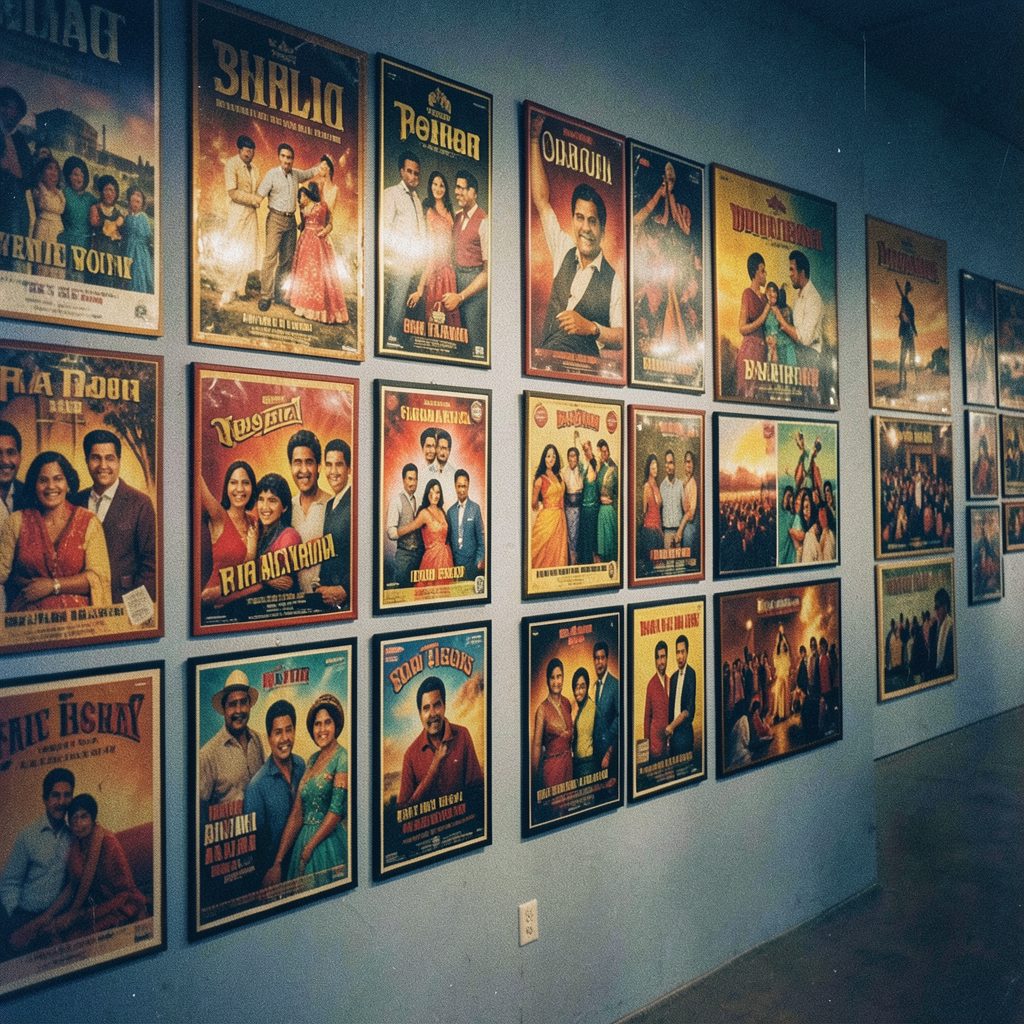

Why Bollywood's child actors are moving into lead roles smoothly
Understanding why Bollywood's child actors are transitioning to lead roles more smoothly now points to a change in the career pipeline rather than a sudden rise in child-star quality. Earlier, a successful child performance could vanish when its performer aged out of the role. Casting, storytelling and distribution now increasingly allow young actors to remain visible as their characters mature.
For Australian viewers, this shift appears in subtitled films, imported streaming series and multiplex bookings in Sydney, Melbourne, Brisbane and Adelaide. Families often plan outings around school holidays or weekend matinees, then continue a story at home through streaming. Because local choices are shaped by dubbing, classification and platform availability, a performer who can hold both family and adult audiences has a strong route into this market.
From a child role to a continuing career
The key change is continuity. A child actor may now move from a supporting part into a franchise, a recurring series role or an ensemble with a clear adult trajectory, rather than waiting for an entirely new introduction. This lets casting teams reward familiarity and gives audiences an emotional bridge built over several projects.
Production design supports that bridge. Scriptwriters can stage a character’s progression instead of replacing one actor with a lookalike, while filmmakers can test younger performers in age-specific drama, comedy and action. Indian child-artist rules covering working hours and schooling also encourage structured shoot schedules, tutoring and adult supervision. These safeguards cannot manufacture a lead, but they can help a genuine performer gain experience without treating education as an afterthought.
Why adult roles now follow more naturally
Hindi cinema’s definition of a lead has widened. A young performer can carry a film through youthful romance, family conflict or a coming-of-age mystery without being asked to imitate a fully formed adult. Directors are also giving established child performers morally complicated roles, allowing them to prove range before a conventional star launch.
The worldwide appetite for high-stakes storytelling is evident in collections of gripping legal dramas, while Bollywood increasingly places young actors in courtroom, crime and family narratives. Familiarity can help with initial attention, but retention depends on performance. The smoothest transitions occur when youth is treated as part of the actor’s range, not as a marketing shortcut.
Streaming and fandom changed the handoff
Streaming has created more intermediate rungs on the ladder. A film, web series or voice performance can introduce a young actor to a new country, generate clips and discussion, then lead to a larger part before the performer reaches the centre of a theatrical release. Catalogues and global platforms also allow an audience to watch the progression rather than encountering only the finished star image.
Technology adds another layer. Coverage of virtual reality fan sessions shows how performers can meet audiences in immersive settings, answer questions and make a film world feel personal. For a former child actor, this kind of continuity can convert childhood recognition into a durable adult fan relationship without relying on one breakthrough hit.
Australia makes the economics of that relationship tangible. The Australian Classification Board determines ratings used by cinemas and adopted by many streaming services, while the eSafety Commissioner’s Children’s Code sets child-safety duties for online services likely to be accessed by under-18s. For distributors, those frameworks influence age suitability, visibility and the subtitles used across Australian catalogues.
The old route compared with the current route
The change is evolutionary rather than a clean break. Studios still use child performers for particular roles, and some transitions remain abrupt. The clearer difference is the number of tested pathways now available between a first appearance and a lead credit.
| Factor | Earlier pathway | Current pathway |
|---|---|---|
| Audience entry | One-off film or family supporting role | Recurring series, franchise or digital-first exposure |
| Script strategy | Adult roles offered after a visible age gap | Roles written to develop with the performer |
| Distribution | A narrow theatrical window | Theatrical release supported by streaming and overseas catalogues |
| Child-care model | Schooling fitted around short shoots | Planned tutoring, capped hours and adult supervision |
| Industry goal | Immediate star image | Sustainable lead-player pipeline |
In Australia, the current pathway can move from a subtitled streaming discovery to a weekend booking at Hoyts or Event Cinemas in Melbourne or Sydney. A successful local opening can then support international promotion, while the same performance remains accessible through local streaming services. That mix gives a developing actor several ways to turn recognition into longevity.
Signs the transition is becoming durable
The early signs usually appear before a film reaches cinemas:
- A first-billing role that develops an existing character rather than starting from zero
- Recurring franchise or series work that keeps the performer present between projects
- Interviews and posters that present the actor as the film’s central character
- A varied slate spanning age-appropriate drama, action, comedy or romance
The stronger evidence appears after release:
- Box-office performance that holds beyond the first weekend
- Streaming completion and repeat viewing rather than a brief social-media spike
- Continued press coverage as the actor discusses craft, not just celebrity
- New projects that test a different register without erasing the audience already built
These indicators matter because a transition survives only when professional growth, audience trust and distribution line up. A strong trailer can create curiosity; sustained availability across films, platforms and public appearances builds a career that can eventually support an ensemble.
A smoother path still requires adult stamina
The remaining obstacle is expectation. Once audiences recognise a child performer, they may expect constant novelty, while studios may offer an adult role with none of the support that made the childhood phase work. Mature transitions therefore require sensible schedules, education, emotional care and roles calibrated to actual ability, with producers ready to adapt rather than demand instant stardom.
For Australia, the next test will be a former child actor carrying a major Hindi release across its Australian opening weekend, overseas theatrical run and subsequent streaming release, without a recast or narrative reset.