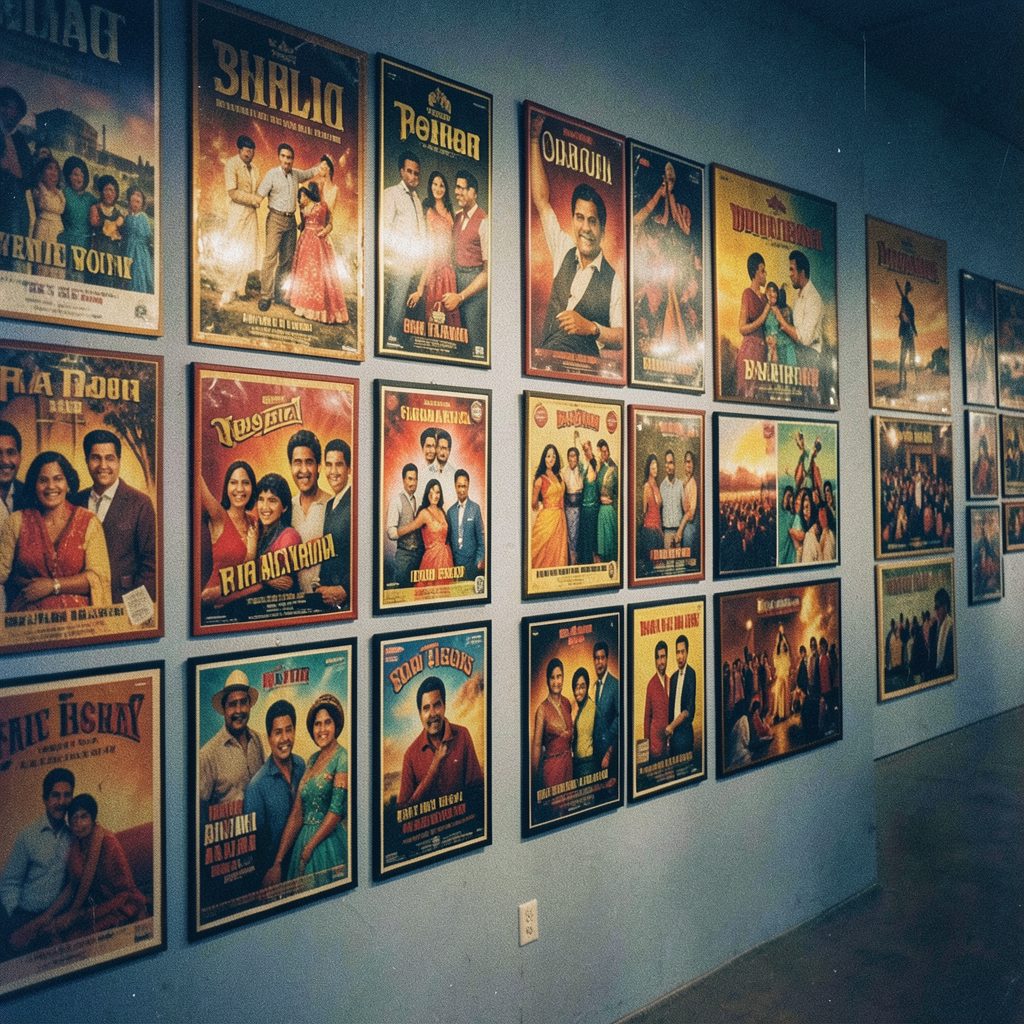

The rise of Bollywood's short film competitions for new talent
Short films have always offered actors, directors, writers, editors and composers a quicker way to make an impression. A contained story can fit a production schedule measured in weeks, while its restricted budget forces choices that are often missing from feature-length work. For emerging talent, that combination makes a short film a credible demonstration of craft rather than an abstract promise.
Competition has turned this proving ground into a structured pathway. Production companies, streaming platforms, industry associations and film schools now use short-film contests to discover contributors, test concepts and create searchable talent pools. A single entry can reach a casting director, a festival programmer and a prospective collaborator without requiring a conventional feature-film audition.
For Australian viewers and creators, the trend is worth examining because India’s expanding digital audience has created opportunities that parallel Australia’s own compact film market. Local screens remain active, mobile viewing is routine and public events are governed by clear rules, yet practical experience, visibility and creative control still determine who gets the next opportunity.
Why short films became a talent pipeline
Bollywood has spent years identifying talent through assistantships, casting calls, reels and the unpredictable visibility of feature films. Short-film contests add another mechanism: a defined brief attracts many applicants, while a selected group receives direct feedback from people working inside the industry. The format concentrates evaluation around a finished piece that can be watched from anywhere.
This is particularly useful for people without a family connection or a traditional agency representation. A disciplined short can reveal how an actor handles silence, how a director controls a limited location, or how an editor turns limited material into rhythm. It can also show that a writer understands Hindi dialogue, tone and audience without needing a large budget to hide weak structure.
Competitions are reshaping auditions
Many contemporary briefs operate like miniature productions. Entrants receive a theme, a genre, a character constraint or a required prop, then submit a film within a fixed deadline and runtime. That pressure creates a useful first screening test. A casting director can judge concentration, visual confidence and screen presence in minutes rather than waiting for a feature project to enter production.
The second stage often matters as much as the prize. Juries may hold script sessions, offer masterclasses or pair selected filmmakers with mentors. Feedback on pacing, sound design, casting and distribution can alter an entrant’s next project. These conversations build professional relationships, and judges frequently remember strong work when a feature, advertisement or series is being staffed.
Some contests also offer development support, festival access, production equipment, agency introductions or a chance to develop a larger project. Winners should still read the rules closely. A sponsor may claim festival exclusivity, require first viewing rights or retain certain promotional uses. The prize is valuable, but contract terms determine how freely a filmmaker can reuse the film later.
The digital audience matters
Competition films are judged for cinema, yet they are often discovered on phones. Indian audiences routinely move between YouTube, Instagram and streaming platforms, where a strong opening image can determine whether a short receives any attention at all. Vertical framing, captions and immediate sound design have become practical skills for filmmakers whose work must circulate on a small screen.
That habit exists in Australia too. Sydney commuters pass clips on their phones between train stops, while Melbourne tram riders scroll through short-form video during the daily cross-city journey. Creators here also understand the value of a relaxed, informal screening: a pub with a BYO, a café after work or a neighbourhood festival can reach people who would never book a conventional cinema seat.
Judges therefore learn to distinguish genuine audience response from empty metrics. Shares matter, but completion rates, thoughtful comments and people returning for another film often reveal stronger engagement. A competition does not replace cinematic quality with virality. It asks whether a clear idea can hold attention and travel through the noisy digital environment surrounding Hindi entertainment.
What judges really reward
The most noticed entries rarely depend on expensive spectacle. Judges look for a precise visual idea, controlled performances and an edit that understands why each shot exists. Sound can distinguish an amateur entry from a professional one, particularly when the story depends on dialogue, atmosphere or music. Credit discipline also signals that the creator understands a working production set.
Language and representation are equally important. A fresh Hindi story may draw on romance, family, work, migration or urban life without treating any of those subjects as a collection of stereotypes. The strongest filmmakers find specificity within a familiar subject. They also know when restraint will say more than exposition, allowing an actor’s expression or a carefully chosen object to carry the emotional turn.
An Australian perspective on the scene
Australia already has a strong culture of short-film contests. Tropfest, for example, has developed a recognizable model in which screenwriters and filmmakers compete with brief-driven work, while festivals across Sydney, Melbourne, Brisbane, Adelaide and Perth showcase shorts that often cross into wider industry careers. The comparison with Bollywood is not about copying one format; it is about how both markets use limited formats to test new voices.
The local market presents a useful contrast. Australia has a smaller population and fewer theatrical screens than India, but strong festival networks, established streaming services and production activity around several cities. Screen Australia and state-based screen agencies also provide routes that can support shorts, development and producer training, although commercial funding remains selective.
Independent audiences can be reached outside formal festivals through concise event listings and community promotion. Guides such as Cambridge Nights illustrate how practical details—location, start time, event type and social sharing—can turn a niche film night into an ordinary night out. The lesson transfers to any city trying to build an audience for emerging filmmakers.
Local legislation and regulations deserve attention before filming begins. Councils may require permits for equipment, road closures, events or commercial activity in public space. Public screenings must comply with Australian Classification Board labels and state or territory censorship rules, while releases should cover copyright, music, privacy and performer consent. A polished entry can still lose opportunities if its paperwork is incomplete.
Turning a competition into a career
A useful competition entry should do more than place in a list. The filmmaker should retain the film, a clean cast-and-crew list, a short reel, distribution evidence and written feedback from judges or mentors. Those materials can support later applications, particularly when they show a clear role, a completed project and evidence of collaboration with people other than friends.
The strongest career strategy combines different routes. A short demonstrates initiative, an internship provides production access, and independent releases can prove that an audience responds to a particular voice. A feature-film audition still matters, but it becomes more credible when supported by visible work rather than a general claim about potential.
| Career pathway | What it demonstrates | What it can unlock | Main constraint |
|---|---|---|---|
| Competition short | Ability to deliver a complete film under a brief | Jury feedback, mentoring, prizes and festival exposure | Tight deadlines and sponsor terms |
| Production internship | Reliability, technical knowledge and teamwork | Daily industry access, credits and referrals | Less control over creative decisions |
| Independent digital release | Consistency, audience building and entrepreneurial skill | Casting opportunities, revenue and a public profile | Distribution and promotion require constant work |
| Feature-film audition | Screen presence, dramatic range and professional readiness | Commercial and prestige film work | Long waits and highly competitive casting |
The practical takeaway is to treat a competition entry as a verifiable professional credit: finish on time, clear every right, document every role and leave with a film that proves how you think under real constraints.