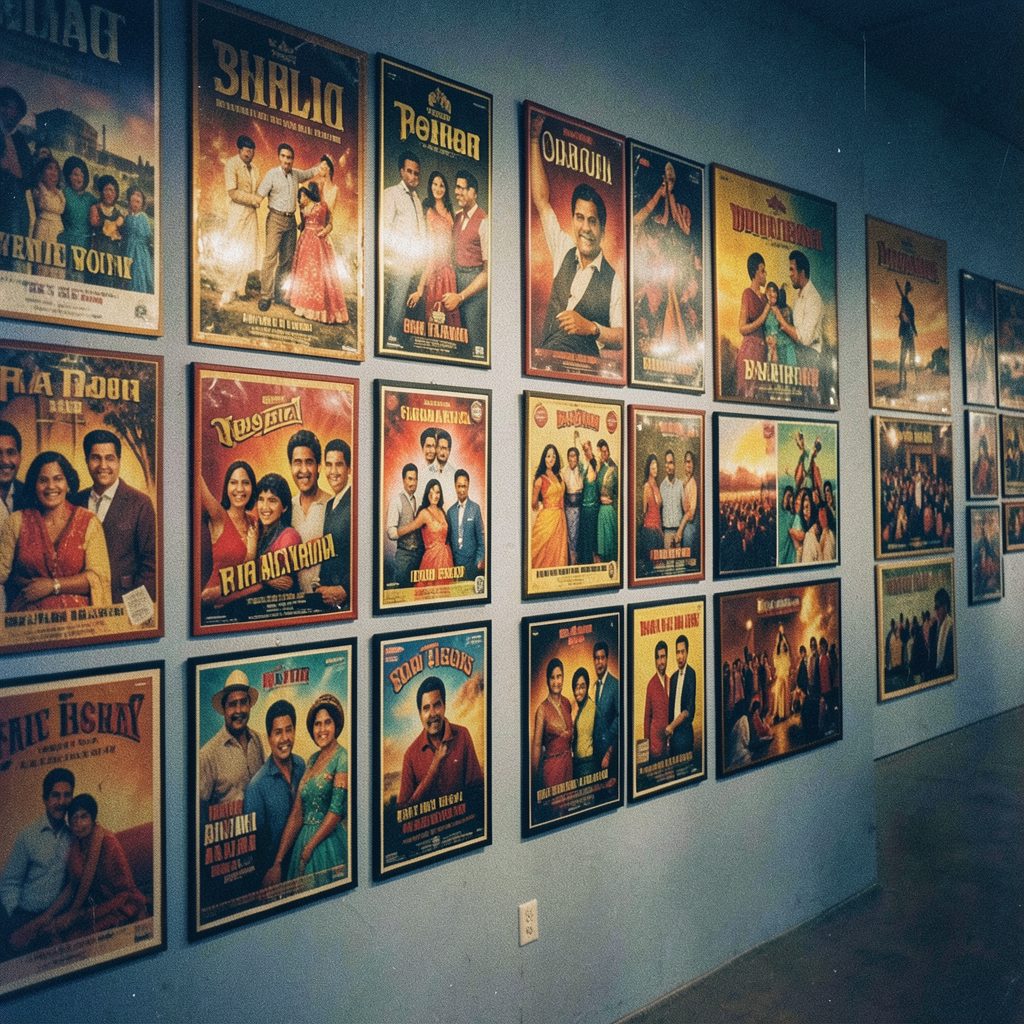

Bollywood's musical romances find a new life on OTT
The revival of Bollywood's musical romances in the age of OTT is reshaping how Hindi cinema uses songs to carry romance. On streaming services, familiar voices, dramatic melodies and callbacks to classics meet viewers who can discover a film through a soundtrack, a clip or an algorithm rather than a cinema queue. The result can feel both fresh and nostalgic.
That mixture is especially potent for global audiences, including Australians, who may have grown up with Hindi songs without seeing the films that made them famous. Streaming offers a direct route into these stories, while younger viewers approach older material through playlists, short-form clips and cover performances. The songs provide an invitation; the narrative supplies the emotional payoff.
A golden-age formula enters the streaming era
Classic Hindi musicals such as Qayamat Se Qayamat Tak, Hum Aapke Hain Koun..! and Dil Se.. built romances around songs that functioned as crucial narrative moments. A song did more than pause the plot: it revealed desire, reshaped a relationship and supplied memories the characters carried for years.
That older grammar is returning in modified form. Amazon Prime Video titles such as Ghoomer, Badhaai Do and The Archies connect romance with performance, nostalgia and sharply designed song sequences. Their appeal lies partly in the contrast between emotional familiarity and contemporary settings, including modern relationships, independent women and characters negotiating careers alongside love.
Streaming has also revived the commercial potential of the “jukebox” romance, in which familiar songs receive new dramatic contexts. Remakes and musical reunions can now reach established fans and curious newcomers simultaneously. Unlike a brief theatrical run, a platform catalogue can keep a title visible for months and give its soundtrack time to circulate after the initial publicity cycle ends.
Why Australian viewers are returning to Hindi musical romance
Australia has mature access to Netflix, Prime Video and Disney+ Hotstar, yet Hindi cinema still occupies a narrower cultural space than in India. Streaming fills that gap without requiring viewers to depend on occasional theatrical bookings. Sydney audiences can also encounter major Hindi releases at Event Cinemas and Vue venues, often around Diwali, before or alongside their arrival on subscription platforms.
Local communities make these stories especially durable. Melbourne's large South Asian population sustains Hindi film clubs, family gatherings and dance events, while Sydney's Indian communities keep both new releases and older songs active. Subtitled Hindi films also fit established Australian festival habits, with Indian cinema appearing at events such as the Melbourne International Film Festival and Sydney Film Festival. English subtitles make these works accessible without erasing their original performances.
Music discovery is another important pathway. A song from a Bollywood romance can reach Australian listeners through Spotify, Apple Music or YouTube during a commute, at a house party or in a community celebration. A viewer may first remember the melody, then investigate the film, and finally explore a complete catalogue of romantic songs from the same era. Streaming turns music into a kind of map leading back to cinema.
The economics of songs, stars and access
The commercial logic of OTT favours familiar elements that can travel easily across borders. Stars provide instant recognition, established music directors offer a sense of occasion, and recognisable melodies can attract viewers beyond the core Hindi-speaking audience. Ghoomer, for example, combines retro romance with the draw of Abhishek Bachchan and Bhumi Pednekar, while The Archies uses a lively songbook to attract younger audiences.
Soundtracks are also unusually valuable promotional assets. A romantic number can become a standalone clip, a dance routine or a playlist centrepiece. That visibility benefits the film, but it can also reduce it to a collection of attractive fragments. The strongest projects recognise that a song should generate attention while remaining inseparable from the characters' choices.
Yet digital abundance creates fierce competition. Thousands of titles compete for a position on a home screen, so visibility often depends on release timing, recommendation systems and social conversation. Australian viewers may have access to hundreds of Hindi films yet remember only the strongest soundtracks. Repeatable franchises, familiar faces and carefully staged musical sequences therefore remain important in a supposedly frictionless digital market.
Comparing theatrical romance with its streaming successor
Romantic musicals fail when songs merely decorate an otherwise thin courtship. The new formats work best when each number changes the power, trust or future of the relationship. A duet can conceal an argument; a solo performance can expose a character who cannot say what they mean. The music matters because the story changes around it.
The clearest differences sit in five areas:
| Element | Earlier theatrical model | Streaming-era revival |
|---|---|---|
| Story structure | Linear courtship shaped by major musical scenes | Flexible timelines, flashbacks and blended relationships |
| Music's role | Extended set pieces built around stars and choreography | Songs can operate as motifs, emotional cues or intimate snapshots |
| Star appeal | Director-led ensemble casting with large-screen spectacle | Familiar performers paired with newcomers for wider recognition |
| Discovery | Trailers, radio, awards shows and cinema visits | Playlists, short-form clips, recommendations and social sharing |
| Distribution | Theatrical run followed later by home entertainment | Immediate global catalogue access, often alongside selected cinema events |
Streaming does not automatically improve the musical romance. Theatres still provide an essential collective experience, and the scale of a great Bollywood dance number can exceed what a domestic screen can convey. The streaming advantage is access: viewers can move between old and new films, investigate a favourite song and watch related performances without waiting for a re-release.
The commercial pipeline is changing as well. Platforms are commissioning more youth-oriented musical entertainment, while independent films can use streaming distribution to reach diasporic audiences beyond major Indian metros. That creates room for romance set in unfamiliar cities, across languages and outside conventional family structures, provided the songs remain specific to each character's world.
A practical blueprint for Bollywood's next musical romance
Producers can build on the revival by treating music as part of the screenplay rather than a late addition.
- Begin with a clear romantic conflict, then ensure each major song alters it in a way dialogue alone could not.
- Give the central couple distinct musical voices so their attraction develops through contrast, disagreement and gradual recognition.
- Use recognisable stars where their presence strengthens the story, without allowing celebrity to replace chemistry.
- Build a modest, repeatable performance world that can travel to concerts, clubs, family homes and intimate locations.
- Release selected songs as listening experiences, with edited film clips that direct curious listeners toward the complete story.
- Coordinate premiere timing with Australian cinema events, South Asian festivals and community celebrations, where communal viewing can extend a title's reach.
For Australian audiences, this approach can connect the immediacy of streaming with the pleasure of watching Hindi cinema in a crowded theatre. It also offers filmmakers a way to preserve the emotional directness of older musicals without treating nostalgia as a substitute for new characters, new conflicts and honest chemistry.
The next concrete step for producers is to commission one low-budget bilingual pilot that tests three original songs before the full production is approved.