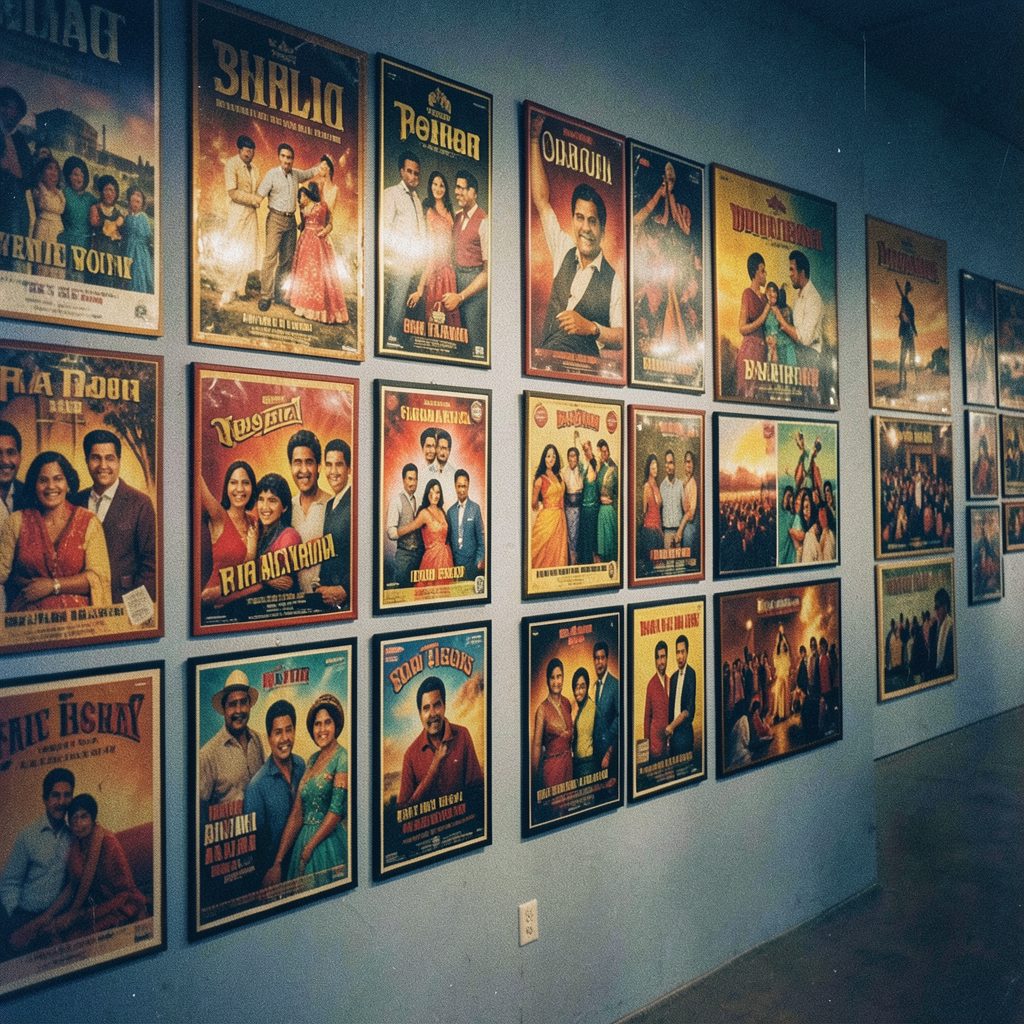

Bollywood's ensemble casts are back in the spotlight
The return of Bollywood's ensemble casts in ensemble-driven plots is reshaping how major Hindi releases build momentum. Instead of one performer carrying every emotional beat, these films distribute urgency, humour and conflict across a group, making relationships themselves a source of suspense.
Hindi cinema has a long history of this approach, from the friendship drama Dil Chahta Hai to the interwoven thriller Kahaani and the sports ensemble Maidaan. What feels new is not ensemble work itself, but its visibility among star-heavy projects where the supporting cast can rival the lead performance in the promotion.
A cast of familiar actors gives a film instant recognition, yet the real achievement is structural. When several characters make consequential choices, a betrayal or sacrifice can alter the entire story. Viewers follow not just who wins, but what each person risks for the others.
That distinction matters for audiences in Australia, where Hindi cinema reaches cinemas, festivals and streaming services through several routes. Understanding why ensemble-driven plots work reveals whether a crowded cast creates shared purpose or merely decorative appearances.
Why ensemble dramas are finding their moment
The recent wave is easy to overstate. Chhichhore, RRR, Dhuruvangal Pathina Roopaiya and Kill offer large-scale ensemble experiences, although they do not use identical narrative machinery. Their prominence still suggests growing appetite for stories where group dynamics drive the plot.
A star vehicle offers clarity: one central objective and a performance built around the lead. An ensemble drama asks viewers to track competing aims, shifting loyalties and partial points of view. That complexity can feel restless, but it creates tension that survives when individual dialogue scenes stop.
Production scale helps explain the format's current visibility. Expensive settings, coordinated action and large physical groups can make a cast feel like one organism, with every entrance or exit changing the balance of power.
Shared conflict gives an ensemble its force
The defining ingredient is not the number of characters but the amount at stake between them. In an effective ensemble plot, every major figure wants something the others cannot ignore. A rescue mission, family crisis or workplace struggle becomes stronger when success for one person means failure for another.
Shared scenes then reveal hierarchy, resentment and loyalty through choices rather than exposition. A quiet character may carry the dangerous secret, while the loudest person may have the least control. Suspense grows from these dynamics instead of depending on one villain to supply all the pressure.
The payoff comes when separate desires converge in a decisive event. By then, earlier arguments, small gestures and off-screen obligations should affect the outcome. Without that preparation, the ending becomes convenient twists rather than the result of a shared conflict.
Supporting actors need narrative authority
Ensemble casting works best when supporting actors receive room to act, not merely screen time. A meaningful role alters the hero's options, supplies information the lead lacks or creates consequences the hero cannot undo. Characters need objectives beyond flattering the central star.
This is where screenwriting faces a commercial temptation. A recognisable face can sell tickets, but a familiar face without narrative purpose turns the group into a parade of appearances. Strong ensemble dramas distribute motives and consequences so each major part feels indispensable.
Directors must also preserve distinct voices. Characters sharing one polished comic register become interchangeable, however talented the performers are. Differences in rhythm, confidence and silence help viewers identify people without repeated names.
Family and friendship frameworks remain central
The most readable ensemble frameworks are embedded in Indian life and popular memory: joint families, old friendships, school reunions, cricket teams, bands and strangers forced into the same situation. These structures supply familiar tensions, so individual ambition can be explored without explaining every relationship from scratch.
Family and friendship stories have been especially effective. Chhichhore turns former classmates into a network of guilt and unfinished loyalties, while Dhuruvangal Pathina Roopaiya follows several men whose separate struggles intersect. Kill compresses rival loyalties into a restricted location, exposing character under pressure.
Such stories can carry particular resonance across the Indian Ocean diaspora, where migration, professional ambition and family obligation are familiar themes. A group drama works when its cultural detail feels lived rather than borrowed, giving universal ideas a recognisable social texture.
How Australian audiences meet Hindi cinema
Melbourne and Sydney have large South Asian communities, with Bollywood viewing habits carried through families, cultural associations and community screenings. These audiences are often more comfortable with Hindi dialogue and cultural references than general cinema-goers, giving niche films and older classics a reliable base.
The wider Australian market is dominated by Hollywood releases and major franchises, so Hindi films usually need strong reviews, festival exposure or a recognisable star to win screen time. Summer drive-ins in New South Wales and Victoria offer another route, pairing holiday dates with the spectacle of a large ensemble.
Streaming has widened the audience beyond major cities. Prime Video, Disney+ Hotstar and selected Hindi titles on Netflix have made subtitles part of an ordinary evening at home. The closure of Video Ezy's Australian stores in 2024 removed a familiar rental ritual as viewing shifted further towards on-demand discovery.
Australia's statutory Classification Board assesses films under federal classification rules, with state and territory cinema authorities applying labels such as MA15+ and R18+. These classifications influence which screenings suit a household, so checking ratings and subtitle availability before booking has become a routine habit for many fans.
Signs that an ensemble story is working
The difference between a busy cast and a genuinely collective narrative becomes clearer through details. Viewers tend to remember films differently when the plot depends on several active choices rather than a sequence of reactions to the hero.
Signs of a genuinely collective narrative
- Each major character changes the outcome rather than only commenting on it.
- Personal loyalties collide in ways that strengthen the central conflict.
- Supporting performers have goals, costs and consequences of their own.
- The climax forces sacrifices across the group, not just admiration for the hero.
Warning signs of a crowded frame
- Celebrity appearances introduce characters who vanish without affecting the plot.
- Early scenes establish personalities but never connect them to a shared crisis.
- The screenplay resets conflicts repeatedly so one character can dominate.
- The climax solves the mystery while leaving most relationships untouched.
Watching for these patterns separates star power from narrative importance. A large cast can create excitement before release, but ensemble chemistry must be built by the writing, staging and performances.
The difference between a star list and a shared story
RRR demonstrates the value of a celebrated supporting cast, but its parallel character arcs remain partly self-contained. Dhuruvangal Pathina Roopaiya and Kill bind their groups through one escalating situation. Both kinds of film can deliver familiar actors, yet only one approach makes collective pressure the engine throughout the plot.
The clearest distinction comes from comparing their narrative functions.
| Dimension | Ensemble appeal | Ensemble-driven plotting |
|---|---|---|
| Cast function | Creates anticipation and star recognition | Keeps several characters active in the central conflict |
| Story engine | Can centre on one hero while others add colour | Makes several characters' choices determine the outcome |
| Performance | Rewards charismatic screen presence | Requires distinct voices and tactical shifts |
| Risk | Looks crowded when appearances lack purpose | Feels diffuse when personal goals never intersect |
| Audience payoff | Satisfies the pleasure of seeing many stars | Delivers collective tension and shared resolution |
This also explains why casting announcements cannot establish an ensemble trend on their own. Marketable names may widen a film's audience, but the comeback matters artistically when the screenplay gives those names common stakes and makes each performance alter the course of events.
For audiences choosing what to watch, the practical takeaway is to look for a cast whose conflicts converge rather than a long celebrity list. In the strongest ensemble-driven plots, every major presence changes the outcome.