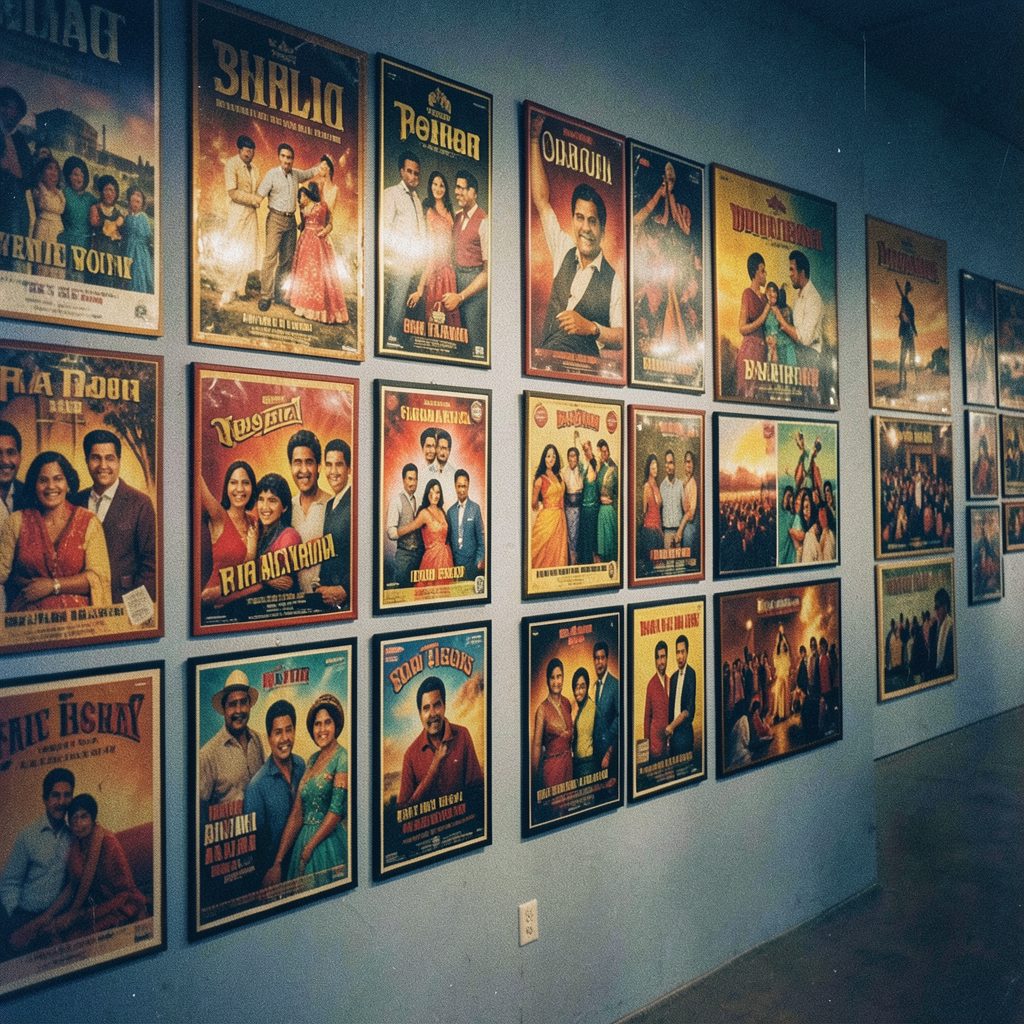

How Bollywood biopics shape public perceptions of history
Bollywood's biopics bring historical figures into contemporary life. Films about leaders, revolutionaries, soldiers, writers and royal figures let audiences encounter the past through performance, music, costume and moral conflict. Their influence on how people imagine Mahatma Gandhi, Subhas Chandra Bose, Bhagat Singh, Rani Lakshmibai, Sardar Vallabhbhai Patel and Jinnah extends beyond the cinema hall.
The impact of Bollywood's biopics on public perception is worth examining as storytelling and public memory. A film can make a remote political decision feel intimate, turn a disputed life into a memorable arc and give a neglected figure a voice. Yet its choices can simplify history, elevate one viewpoint or make a celebrity's presence more persuasive than the evidence. For Australian viewers, these films arrive through streaming, television, festivals and social media, so the question is how an interpretation travels beyond its original cultural setting.
A familiar face makes history feel close
The power of a biopic begins with the face. Audiences may know a leader from a textbook or speech, but an actor's pauses and imagined private moments can make that person seem knowable. Bollywood's song, dance and melodrama can turn an ideological dispute into a human story. Viewers may remember a character's confidence or vulnerability before recalling the political context that made those qualities consequential.
Films such as The Legend of Bhagat Singh, Subhas Chandra Bose: The Forgotten Hero, Sardar and Rani Lakshmibai: The Warrior Queen of Jhansi have introduced younger audiences to figures whose stories are less visible in popular culture. Casting creates an initial frame too: a beloved star invites sympathy, while a controversial performer invites scrutiny. The face becomes a shortcut to history.
The same emotional strategy appears beyond Hindi cinema. A European reflection on reimagining historical couples shows how a familiar relationship can be recast to make distant events legible. In a Bollywood biopic, a political leader might be presented through a marriage, friendship or rivalry, making a large question feel personal without showing the full historical record.
Biographical drama and historical evidence
A biopic is a dramatic argument rather than a neutral archive. Screenwriters compress years into a few scenes, select relationships and use invented or reconstructed dialogue to create momentum. The most persuasive scenes may be the least documentary: a private argument can clarify a public ideology, but it can also imply motives the evidence does not support. Viewers need to distinguish established fact from the filmmaker's interpretation.
This tension appears in films revisiting ideological conflicts. Rang Rasiya uses the relationship between Gandhi and Jinnah to explore partition, faith and political difference. Other portrayals of Patel, Bose and Gandhi ask whether a figure is a unifying national hero, a controversial strategist or a symbol of a political tradition. Each framing affects the vocabulary used for the past, especially when a dramatic contradiction is easier to remember than a long policy history.
Public perception is shaped by what surrounds the film. Music, costume, interviews, social-media clips and a star's reputation become part of the historical image. Younger viewers may meet a figure through a song, a short clip or a reaction video before seeing a full film. That route can create curiosity, but it can also harden a simplified version into fact. Biopics compete with archival photographs, school history and family memory for authority over the national story.
Controversy turns a biopic into a public event
Some Bollywood biopics become controversies before they become films. The 2024 release Jinnah prompted protests and court scrutiny over its treatment of Muhammad Ali Jinnah, turning the movie's interpretation into national news. Publicity may bring attention to a neglected subject. It can also make opponents appear as the film's first and loudest reviewers, shaping expectations before careful viewing.
Controversy has a double edge. A ban, protest or court hearing can increase curiosity, but it can also frame the historical figure through the loudest accusation rather than the film itself. Audiences may arrive ready to confirm a prejudice or condemn a supposed insult. Responsible viewing therefore matters: reviews, political speeches and trailers reveal the public argument around a biopic, but do not replace the complete film.
The same machinery can work constructively. A biopic of a woman ruler, revolutionary or neglected intellectual can bring a historical voice into family conversations and classrooms. Rani Lakshmibai: The Warrior Queen of Jhansi, Sardar and The Legend of Bhagat Singh show how popular cinema can recover figures otherwise reduced to dates in a syllabus. The invitation to investigate can be valuable even when a dramatisation is inaccurate.
Australian viewers add a distinct cultural lens
In Australia, these films arrive through a hybrid media landscape. Sydney's suburban cinemas, Melbourne's Indian-film festivals and South Asian cultural events, and communities in Brisbane, Adelaide and Perth can make a biopic a communal event rather than only a streaming choice. Licensing leaves the local market uneven: a title may appear on Netflix, Prime Video or a specialist platform, then disappear. Festival programmes and community screenings shape which stories are discussed locally.
Everyday habits matter too. An Australian viewer may watch a trailer on a phone during a commute, stream a subtitled film on a laptop, put it on television for a family evening and then encounter reactions on social media. These casual encounters give a historical portrait more chances to lodge in memory. They also expose viewers to competing versions: a fan post, political clip, review and film may make different emotional and factual claims.
Australian rules add another layer. The Australian Classification Board and state and territory film-censorship regimes determine how commercial films are rated and presented, while the Classification (Publications, Films and Computer Games) Act 1995 provides part of the national framework. An age rating can affect what is shown in a school, community hall or family home. Alongside public commemorations such as Anzac Day ceremonies and debates about statues and museum labels, this makes selective memory and national identity familiar questions. Indian history is not Australian history, but asking who is represented and who is omitted travels well.
A practical lens for judging biographical films
A viewer can enjoy a biopic while keeping its claims in proportion. It helps to separate the story being told from the record being invoked, and to distinguish a character's portrayal from a conclusion about the historical person. The comparison below offers a compact way to do that without pretending that drama and documentation serve the same purpose.
| Element | What the film can show | What the viewer can check |
|---|---|---|
| Motivation | A clear dramatic reason for a decision | Dates, speeches, diaries and contemporary reporting |
| Relationships | Emotional context for alliances and conflicts | Private correspondence, rival accounts and later biographies |
| Public image | How a leader may be remembered today | Who made the film, what was included and what was left out |
| Audience response | The mood and values a story provokes | Reviews, protest material, box-office discussion and expert research |
The most useful viewing habit is to ask questions after the emotional moment has passed. A powerful performance may create sympathy, but sympathy should not stand in for historical accuracy; a sensational accusation should not be treated as evidence simply because it circulates widely. These habits make a biopic more rewarding:
- Read one reliable biography or a reputable museum history before watching.
- Note when the film compresses time, changes a setting or invents a private exchange.
- Compare the central portrayal with speeches, letters and records from the period.
- Keep the star's reputation, the director's viewpoint and the historical evidence separate.
- Treat online outrage, praise and curiosity as data about reception, not as verdicts on the figure.
The practical takeaway is to treat every biopic as a persuasive doorway into history: it can open a valuable conversation about memory, identity and power, while the historical record remains the necessary anchor.