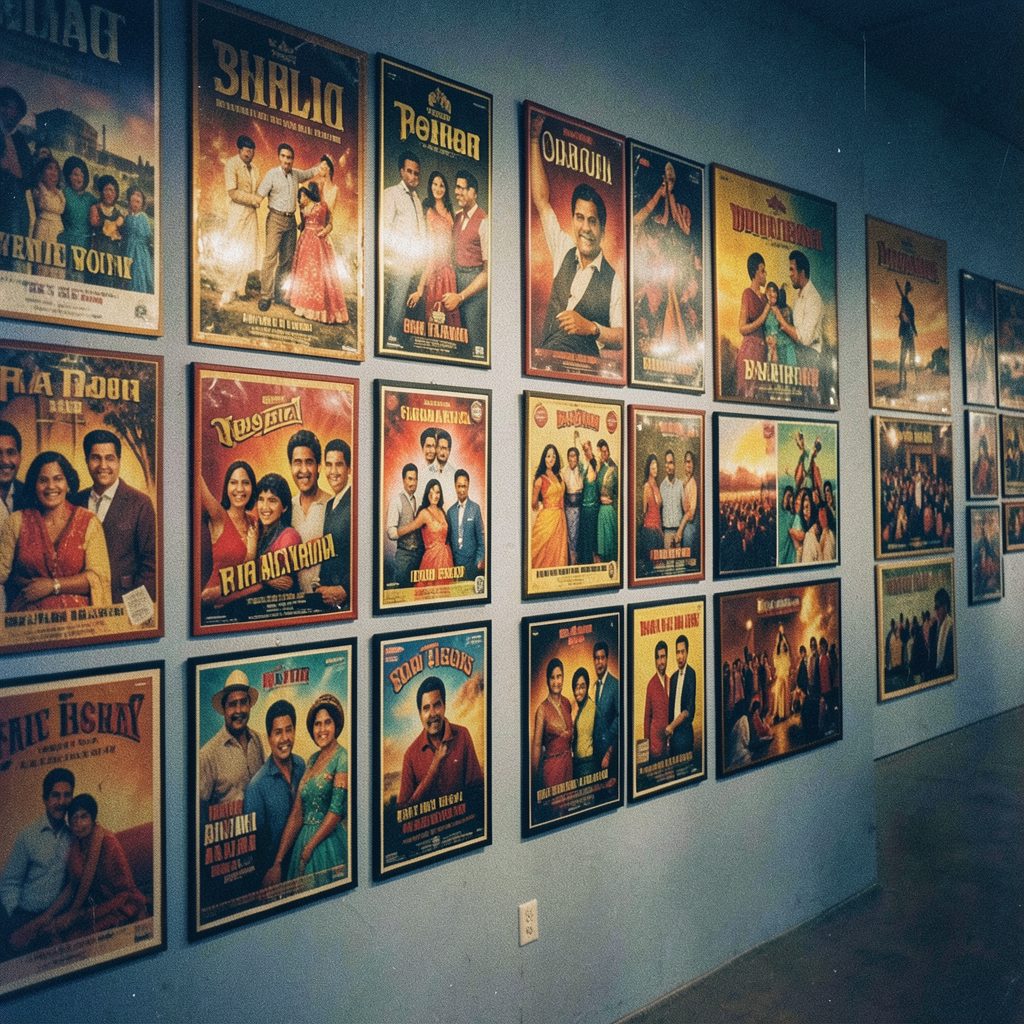

From Bollywood wedding spectacle to intimate vows
Few screen traditions have changed as visibly as Bollywood’s wedding episodes. The evolution of Bollywood’s wedding sequences from lavish to intimate tracks a shift from displaying family prestige to revealing private emotion. A sangeet still needs music, movement and colour, yet the camera increasingly stays close to the bride, groom and relatives whose decisions shape the ceremony.
Streaming platforms and social video have accelerated that change. Clips now travel as song announcements, behind-the-scenes footage and edited highlights, while audiences compare real wedding rituals with film versions. Film-makers must therefore make each gesture readable, and a crowded celebration has to carry character-specific tension as well as spectacle.
For Australian viewers, this shift is easy to place. South Asian communities across Sydney and Melbourne stage weddings in suburban homes, parks and hired venues, often combining mehndi, haldi and sangeet with local reception customs. Hindi films still reach Australia through subtitled cinema releases, streaming services and fan clips, widening the circle for their wedding imagery.
Palaces, processions and the public gaze
In earlier Hindi cinema, weddings often occupied several minutes and several songs at a time. Songs such as “Mere Bhai Ki Shaadi” in Hum Saath-Saath Hain and the elaborate wedding passages in Dilwale Dulhania Le Jayenge treated the celebration as a showcase of stars, sets, choreography and social status. The camera frequently moved outward, introducing guests, relatives and imagined communities.
These set pieces offered more than decoration. Palaces, flower-covered stages and massed dancers expressed the bride’s new family, the groom’s standing and the scale of the alliance. They also gave audiences permission to enter a fantasy of abundance, even when the central relationship was emotionally uncomplicated.
The pleasure lay in preserving a recognisable ritual while enlarging its scale, an approach that also appears in the NHL playoff debate, where expansion is defended as renewal rather than a rejection of the established contest. Bollywood wedding films created spectacle through a similar balance: familiar family moments at the centre, surrounded by an extravagant world.
Music, choreography and the architecture of spectacle
Music has always been the engine of the Bollywood wedding sequence. Older films separated the ceremony into item numbers, each with its own location, costume change and choreographic identity. A heroine might enter a miniature wonderland for one song before the narrative returned to the courtyard for a family ritual.
That shift can be heard in Bollywood’s music catalogue, where enduring baselines and familiar voices sit beside newly composed, scene-led songs. Contemporary composers increasingly build a wedding around one emotional tension, allowing a melody to develop across exchanges between characters instead of functioning as a self-contained performance.
Several visual devices have defined the classic lavish sequence:
- Processional scale: A baraat fills the road with dancers, vehicles and colour, turning arrival into a public event.
- Concert design: Lighting, lasers and elevated platforms transform a family gathering into a staged musical spectacle.
- Architectural fantasy: Palace courtyards, mirrored halls and flower-covered staircases create a world larger than ordinary life.
- Choreographic symmetry: Repeated formations and synchronised movement make individual reactions briefly disappear within the ensemble.
These elements have not vanished from Hindi cinema. Their function has changed. Today’s filmmakers often begin with the grandeur and then cut closer, using the scale to reveal who is uncomfortable, distracted or emotionally isolated within it.
Close quarters create new dramatic space
Modern wedding sequences increasingly gain force from restriction. A bedroom conversation, a dressing room panic or a parent trying to deliver news can carry more tension than a crowd of one hundred guests. The camera records hesitation, eye lines and interrupted conversations, making celebration feel unstable rather than uniformly joyful.
Geeta Aur Patang (2013) uses a wedding to examine class, aspiration and the limited choices available to its central character. Piku (2014) treats marriage through a father’s anxious need to protect his daughter rather than through grand choreography. More recent films including Badhaai Do (2022) treat commitment as a negotiation involving fear, compromise and self-interest.
The difference is partly editorial. Coverage lingers on faces, pauses and small physical gestures, while extended song passages allow reactions to complicate the apparent mood. Silence between songs can become as meaningful as the lyrics, particularly when a character is hiding disappointment behind ceremonial behaviour.
The couple becomes the narrative centre
Wedding scenes once gave heroines an entrance into elaborate musical worlds, but the male viewpoint frequently governed the fantasy. Modern sequences place the bride and groom under equal scrutiny. Their attraction, disagreement and agency matter more than whether the production can afford a palace-sized set.
This change does not automatically make every intimate scene progressive. A close-up can still romanticise an unequal relationship, and a carefully lit private moment can be just as manipulative as an extravagant set. The useful distinction lies in whether the film gives characters meaningful decisions or uses intimacy merely as another visual style.
Sound reinforces this newer emphasis. Regional accents, nervous jokes and overlapping family speech place the celebration within a specific social setting. A polished instrumental number may impress the viewer, whereas a awkwardly paused confession can explain why two people are drifting apart.
Watching the change from Sydney to Perth
Across Australia, contemporary Bollywood imagery enters a highly practical wedding culture. Families combine imported film traditions with the space, climate and social habits of their adopted country. These comparisons make the shift from public grandeur to personal feeling especially visible, since local celebrations rarely resemble the imaginary palaces constructed onscreen.
Australia’s Bollywood audience remains strongest in Sydney and Melbourne, where new Hindi films commonly receive subtitled theatrical runs before moving to digital platforms. Smaller regional audiences encounter releases through streaming, fan communities and social media. That distribution pattern favours emotional clarity because a striking wedding image can travel easily, even when the surrounding story requires more context.
- Suburban scale: Many families in Sydney and Melbourne use home lawns, community halls and park marquees, placing the sangeet circle where a fictional palace courtyard once stood.
- Summer timing: In Brisbane and Perth, heat can move haldi and mehndi towards dawn or dinner, giving handheld coverage and intimate reaction shots practical value as well as dramatic value.
- Cross-cultural blending: Australian reception habits, including buffet stations and formal speeches, sit beside family dances and the bride’s solo ritual, creating the mixed ensemble seen in recent films.
- Regional wedding industries: Wedding musicians, planners and costume rental businesses across Melbourne, Adelaide and Brisbane regularly use Hindi film soundtracks, carrying screen trends into real celebrations.
These local details complicate any simple story of decline. Intimacy can emerge in a lavish setting, and spectacular choreography can still serve a close relationship. What has changed is the priority: personal stakes increasingly determine how much screen space the wedding receives.
The detail worth carrying forward
Bollywood’s wedding sequences now exist as a flexible mixture rather than a replacement of one style with another. Grand processions, musical finales and choreographed ensembles remain central to the Hindi film experience, especially in family-oriented entertainers and song-led spectacles. Their meaning depends on the relationships around them.
The lasting development is a willingness to move between scales. A wide shot may establish ceremony and community, while a close-up can reveal the bride’s fear, a parent’s pride or the groom’s uncertainty. The most memorable wedding scenes remember that visual size is a tool, not the purpose itself.
What the audience should remember is that Bollywood’s wedding imagery becomes strongest when grandeur serves emotion. The largest celebration matters most when the film still knows what each character is hoping to gain, conceal or survive.