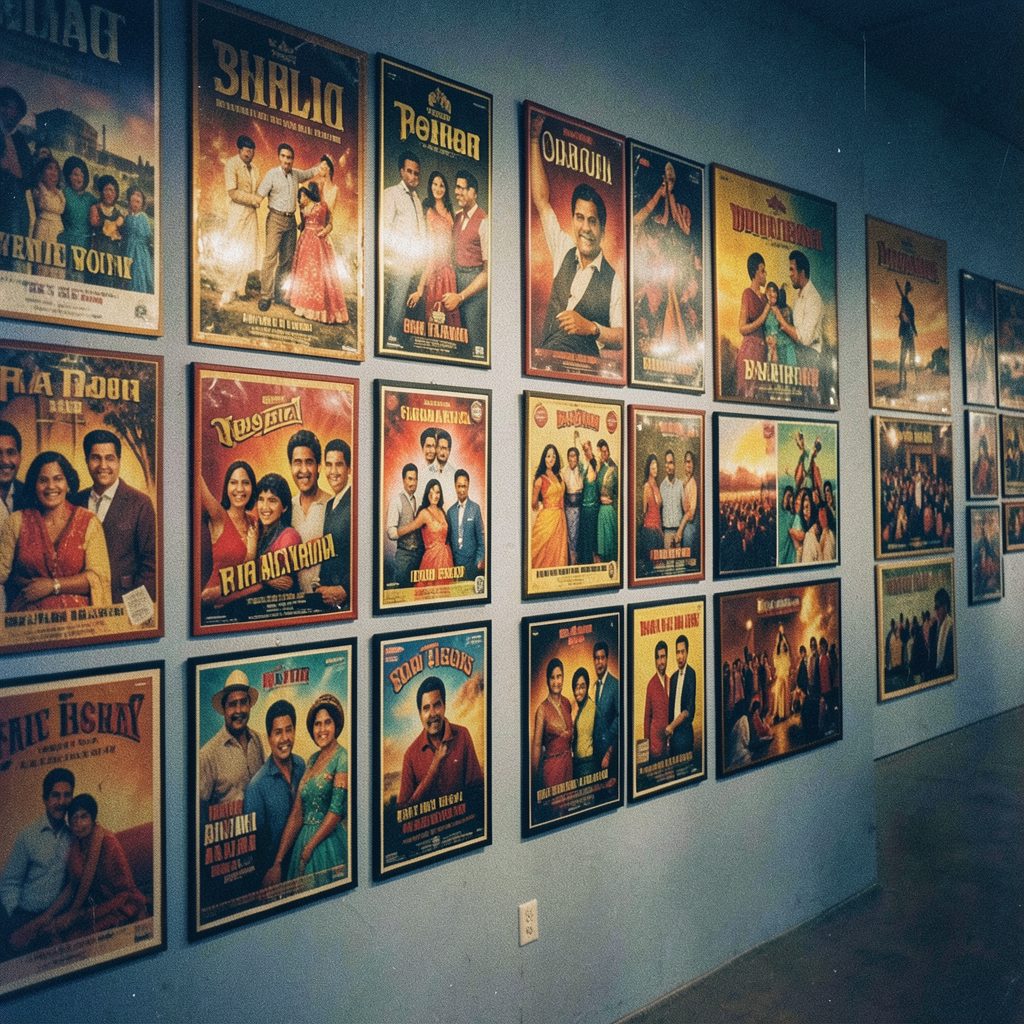

How Bollywood Dialogue Writers Turn Lines Into Viral Catchphrases
A memorable Bollywood line can begin in a script meeting, gain force during rehearsal and become a caption, reaction clip or meme before the film has even left cinemas. Dialogue writers now work in an environment where a sentence must serve the story while remaining recognisable when separated from the scene.
This has changed the craft of Hindi film writing. A catchphrase needs rhythm, emotional clarity and a distinctive point of view. It may be spoken by a hero, villain, parent or comic side character, yet it must sound natural enough for audiences to repeat in group chats, Instagram comments and short-form videos.
For viewers in Australia, the journey often runs through several channels at once. A fan in Melbourne might watch a Hindi release on streaming, share a subtitled clip with friends, then hear the line repeated at a family gathering in Sydney or during a cricket conversation in Brisbane.
The strongest dialogue-driven moments are carefully engineered rather than accidental. Writers study character psychology, audience behaviour, meme culture and the changing economics of theatrical releases. They also understand that a line travels further when it carries an emotion people already want to express.
From Character Voice To Cultural Shortcut
A viral catchphrase usually begins with a character’s specific worldview. The line works because audiences can identify who would say it, what the speaker wants and why the moment matters. A villain’s cold certainty, a parent’s sharp warning or a lover’s exaggerated devotion each creates a different verbal signature.
Writers build this identity through word choice, sentence length and verbal habits. Some characters speak in clipped commands; others use elaborate metaphors or playful insults. When a phrase captures that pattern in a few words, it becomes a cultural shortcut for the feeling behind it.
The line must also survive outside its original context. If viewers can use it to describe a workplace problem, a family argument or a sporting defeat, its reach expands. That is why comic timing and emotional flexibility are as important as literary polish.
Rhythm Makes Hindi Dialogue Shareable
Many memorable lines depend on sound before meaning. Repetition, internal rhyme, contrasting words and a strong final beat help dialogue land in a noisy cinema or a compressed mobile video. Hindi allows writers to shift between formal vocabulary, street language, English phrases and regional expressions without losing momentum.
A line with a clean cadence is easier for actors to deliver and audiences to remember. Writers often test several versions aloud, removing unnecessary words until the sentence feels almost inevitable. The pause before the final phrase can matter as much as the phrase itself.
Romanised Hindi adds another layer for digital audiences. A line may appear in Devanagari on screen, in Roman script in a caption and in an English translation on a streaming platform. Each version needs to preserve the attitude, even when literal translation would sound flat.
Social Media Rewards Emotional Compression
Short-form platforms favour dialogue that communicates an entire mood quickly. A two-second clip can suggest arrogance, heartbreak, revenge or comic frustration without needing the full plot. Writers therefore look for emotional compression: a small number of words carrying a large amount of character and conflict.
This does not mean every sentence should be designed as a meme. Audiences notice when dialogue feels like advertising rather than speech. The most durable lines emerge from a genuine dramatic situation and become shareable because the emotion is immediately recognisable.
Editors and marketing teams may later isolate a phrase for a teaser, poster or reaction reel. A carefully written line can support many formats: a trailer title card, a fan caption, a dubbed clip and a sound reused in user-generated content. Its adaptability is part of its commercial value.
Actors Give Catchphrases Their Final Shape
The page provides the words, but performance determines whether they become memorable. A raised eyebrow, a controlled pause or a sudden change in volume can transform an ordinary sentence into a signature moment. Bollywood dialogue writers increasingly consider how a line will behave in the actor’s mouth, not only how it looks in a script.
Star personas also influence construction. A phrase written for an actor known for intense monologues will have different expectations from one written for a performer associated with understated comedy. The best writing leaves room for personality without relying entirely on celebrity recognition.
Sound design can extend the effect. A beat of silence, a musical sting or a crowd reaction gives the line a reusable shape. When fans recreate the moment on Reels or TikTok, they often reproduce the pause and gesture as carefully as the wording.
Data Helps Writers Read Audience Signals
Studios now monitor trailer comments, search behaviour, meme circulation and audience retention to understand which moments are travelling. These signals can reveal whether viewers respond to a line because it is funny, aspirational, confrontational or unexpectedly relatable. Data cannot create wit, but it can show where wit has connected.
Regional patterns are valuable. A phrase popular in Mumbai may be interpreted differently in Perth, where audiences often encounter Bollywood through multilingual households, university societies, local cinemas and streaming subscriptions. Entertainment publishers tracking wider digital behaviour, including regional media signals, can help identify how a phrase moves across markets.
There are limits to measurement. A line may be quoted frequently because people are mocking it, while a quieter emotional phrase may build influence over months. Writers and producers need cultural reading alongside analytics, especially when humour depends on irony, class, gender or regional context.
Australia Adds Its Own Layer Of Meaning
Bollywood reaches Australian viewers through multiplex screenings, community festivals and platforms such as Netflix, Prime Video and local streaming services. Sydney and Melbourne have particularly active Hindi-speaking audiences, while Perth, Adelaide and Brisbane add strong family and student communities. Release timing matters because audiences may choose between a late-night cinema show, a weekend family outing and a home screening with subtitles.
Local habits shape how lines are shared. A catchphrase can surface in a WhatsApp family group, at a university Bollywood dance rehearsal or in a workplace conversation after someone has watched a trailer. Australian audiences also move easily between Hindi, English and regional Indian languages, so a line may be repeated in its original form and then adapted into local slang.
Classification rules matter as well. The Australian Classification Board considers language, themes and violence, which can affect how a film is marketed or where promotional clips appear. Distributors must also be careful with advertising claims and paid creator partnerships under Australian Consumer Law, particularly when a viral campaign blurs the boundary between fan enthusiasm and sponsored promotion.
A Working Playbook For Dialogue Teams
A practical writing process combines dramatic purpose with portability. Before polishing a potential catchphrase, the team can identify the character’s immediate objective, the emotion viewers should feel and the shortest version that still sounds like authentic speech. Testing the line in rehearsal often exposes awkward syllables or an unclear point of view.
Writers should also consider translation, captions and performance from the beginning. A phrase that depends on an untranslatable pun may work brilliantly in one scene but travel poorly overseas. That is not a reason to remove cultural specificity; it is a reason to provide enough context for audiences in Australia and elsewhere to enjoy the intention.
Useful checks for a dialogue line include:
- Give it a clear character owner rather than making it sound generic.
- Read it aloud at natural speed, then test the pause before its final beat.
- Remove filler words while protecting the emotional meaning.
- Prepare subtitle and Romanised versions that preserve tone.
- Check whether the line can be clipped without misleading viewers.
- Review cultural, classification and sponsorship implications before release.
| Dialogue quality | What audiences notice | Social media advantage | Common risk |
|---|---|---|---|
| Distinctive voice | The line sounds inseparable from its speaker | Easy character association | Forced imitation |
| Strong rhythm | The phrase is satisfying to hear | Better replay and caption use | Repetition without meaning |
| Emotional clarity | The feeling is understood quickly | Works in reactions and memes | Oversimplification |
| Cultural texture | The wording feels rooted in its world | Encourages discussion and remixing | Translation loss |
| Dramatic purpose | The line advances conflict or reveals character | Fans share the scene, not just words | Marketing-first writing |
The next step is simple: select one upcoming Hindi film scene, write three versions of its key line, and test each aloud in the original performance language and in an Australian English subtitle before choosing the final phrasing.