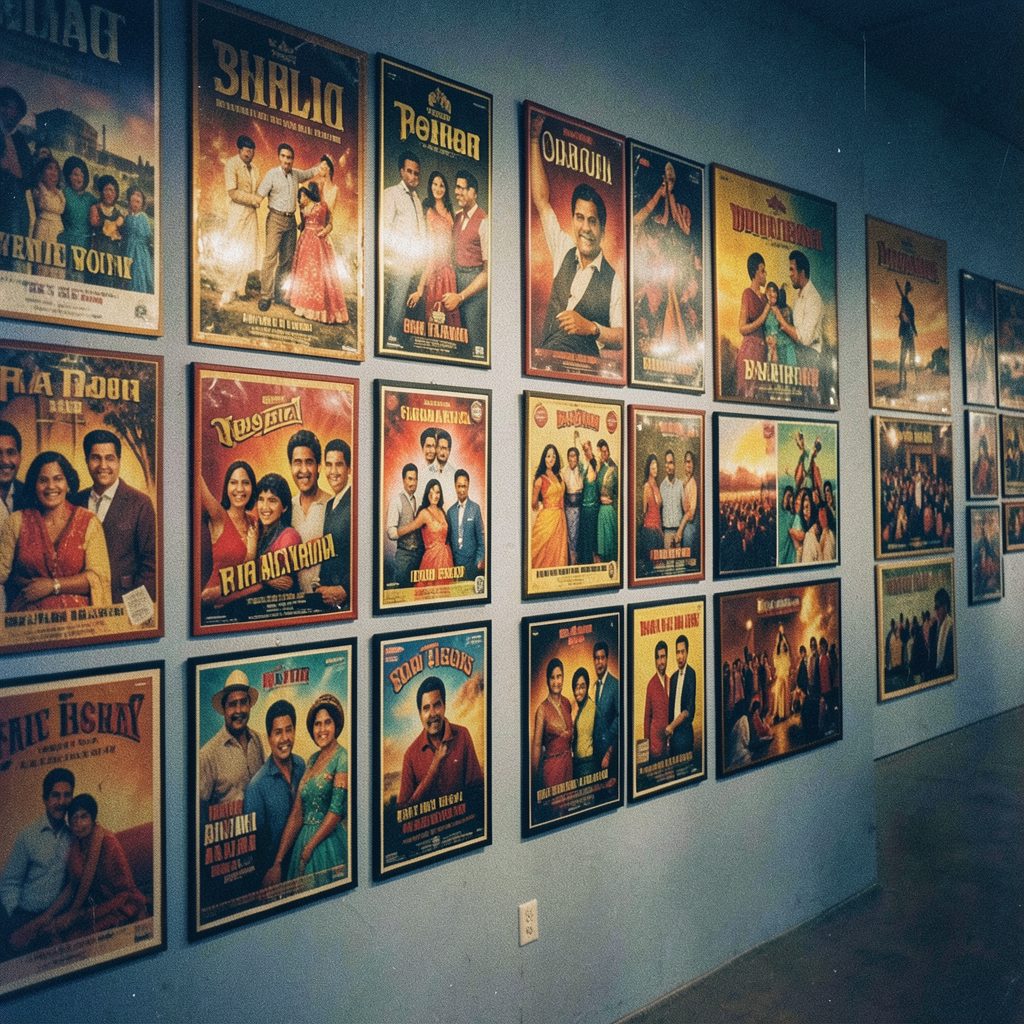

When Bollywood release dates turned into box office brawls
Bollywood’s most heated box office clashes this year were not always the closest contests, and the headline totals do not explain why audiences and trade analysts argued about them. A clash becomes heated when two releases share a date, compete for the same screens and trigger competing claims about who owned the weekend. Some pairings were close fights; others exposed how completely one film could dominate a release calendar.
For Australian viewers, these contests unfold in a different market. A rupee figure from Mumbai or Gurugram is not a direct measure of footfall in Sydney, Melbourne or Brisbane. Local cinemas also work around Thursday previews, school-holiday family trips, Christmas competition and different state taxes and council charges that affect ticket pricing. That makes occupancy, screen allocation and subtitled or dubbed sessions as important as the Indian opening-day number.
The clashes that set the release calendar
Timing supplied the first spark. Eid, Valentine’s Day and the wider holiday period can turn one release into an event while reducing the number of profitable showtimes available to its rival. Publicity then supplied the second. Two teams rarely shared a neutral stage; they sold different promises about genre, family appeal and star power, making the weekend easy to frame as a contest.
Three matchups stood above the rest because they combined a shared Friday with a clear audience overlap. The figures below use rounded trade estimates, since reported numbers vary between gross and net collections and across opening-day cut-offs.
- Stree 2 and Housefull 4 — 14 February: A Valentine’s-week collision between a scaled-up horror-comedy franchise and an ensemble sex comedy. It produced enormous interest, although the result was far from balanced.
- Fighter and Azaad — 2 May: Two contrasting star vehicles arrived on the same day. Bhuvan Bam’s action comedy and Sikandar Kher’s survival drama offered different versions of masculine entertainment.
- Kantara: Chapter 1 and Dhuruv — 22 August: A dubbed regional epic faced an Akshay Kumar action film. The clash exposed the commercial reach of multilingual spectacle within mainstream Hindi cinema.
The distinction matters. Stree 2 versus Housefull 4 was a holiday-window spectacle with a runaway winner. Fighter versus Azaad was a tighter argument over scarce adult audiences and two very different star propositions. Kantara: Chapter 1 versus Dhuruv was more revealing still, because a Kannada spectacle with a Hindi dub dismantled the assumption that language-based cinema had a smaller ceiling.
Stree 2 and Housefull 4 exposed an uneven fight
Stree 2 had an estimated ₹58–60 crore opening, while Housefull 4 managed roughly ₹23–25 crore. By the end of its run, Stree 2 was reported near ₹960 crore worldwide, whereas Housefull 4 remained below ₹100 crore. The arithmetic was never close. Yet calling it an uneven fight does not erase the event value of a crowded Valentine’s-week window.
The contrast came from audience design. Stree 2 paired a recognisable horror-comedy brand with an enlarged story, women-led appeal and music-led promotion. Housefull 4 offered an ensemble of familiar comic actors, broad casting and party-oriented positioning. Their marketing invited comparison, but their propositions were not identical, which helps explain why a supposedly shared audience divided so quickly.
Music also gave Stree 2 an advantage that no second-day collection could replicate. For comparison, this Japanese soundtrack guide shows how a score can become the promotional identity of an animated film, a useful reminder that soundtracks often travel farther than plot summaries. In Australia, that advantage would be visible at Hoyts and Event Cinemas in Sydney and Melbourne, while Housefull 4 was more dependent on youth-oriented comedy tags and broad ensemble casting to fill conventional screens.
Smaller contests revealed different audience problems
Fighter and Azaad on 2 May produced the opposite kind of heat: little box-office mass and plenty of narrative. Bhuvan Bam’s Fighter opened near ₹11–12 crore, while Sikandar Kher’s Azaad began around ₹4 crore. Their eventual worldwide estimates were roughly ₹30–35 crore and close to ₹12 crore. Both were modest, yet coverage treated the date as a test of whether a creator-led blockbuster and a lean survival drama could find separate audiences.
Kantara: Chapter 1 and Dhuruv on 22 August added the most commercially instructive pairing. The dubbed Hindi version of Kantara opened around ₹14–16 crore and crossed ₹230 crore worldwide, while Dhuruv opened near ₹7 crore and finished around ₹50 crore. Kantara’s scale came from spectacle, music, a broad family profile and strong regional roots; Dhuruv relied on Akshay Kumar’s action-star recognition and a tighter urban audience.
These contests should not be flattened into a single league table. One measured an established franchise absorbing a comedy release; another compared two risky propositions; the third tested whether subtitling and dubbing could open mainstream doors. The noisy argument was often strongest where the numbers were weakest, while the most commercially important clash produced less social-media friction.
Australia’s local market changed the reading
Australia supplied a useful control group. In Brisbane, Adelaide and Perth, the pool of screens is smaller than in Mumbai, so two simultaneous releases can affect each other more sharply. Conversely, a strong regional or diaspora audience in Sydney and Melbourne can give a subtitled film an opening that national Indian figures conceal. Reporting local occupancy in Australian dollars is therefore more informative than translating a rupee headline into a neat dollar value.
Local habits also shape the result. Australians commonly use the Hoyts, Event Cinemas and Village apps to book ahead, while independent venues such as Dendy and Palace cater to specialised tastes. School holidays bring family groups, and Christmas turns multiplexes into an all-day social venue. Australia’s market is also dominated by major Hollywood tentpoles, limiting promotional space and screen time for subtitled Indian releases. Legislation adds another layer: the Australian Classification Board assigns local ratings under the National Classification Code, so a film’s Indian certificate alone tells an Australian viewer very little about suitability.
- Thursday previews and Friday footfall: Early attendance gives the clearest indication of demand, while the first full Saturday counts whether that demand held.
- Screen count and showtimes: Two films can post healthy figures while competing for fewer large screens, premium seating and desirable evening sessions.
- Occupancy and ticket yield: A busy subtitled hall may achieve excellent occupancy but contribute less revenue than a conventional auditorium with cheaper seats.
- Classification and language access: Local ratings, subtitles, dubbing and accessible screening times affect who can attend and how quickly a film builds word of mouth.
A low Australian gross does not automatically mean weak overseas demand, and a high one does not guarantee profit. Attendance can be diluted across many sessions, while a sold-out subtitled hall can look impressive in occupancy terms but contribute less overall revenue. Studios also disclose differently, making verified weekend footfall from cinema chains more comparable than selective social-media claims.
What to watch when the next films collide
The next collision will be easier to judge if the noisy weekend narrative is separated from evidence that can actually be checked. Screen counts show supply, previews reveal demand before the full opening, and the second-day hold indicates whether audiences had been overestimated. Music and social conversation can amplify a release, but they do not replace admissions data.
Box-office forecasting also needs a definition of victory. A larger opening, a faster pace of decline, better weekday occupancy or a longer profitable run can produce different winners. Consistent records of those measures provide a fairer comparison than whichever rupee figure sounds most dramatic. The concrete next step is a Friday-morning comparison of actual footfall at Sydney’s and Melbourne’s largest cinemas with each film’s reported Indian net and first-weekend occupancy.