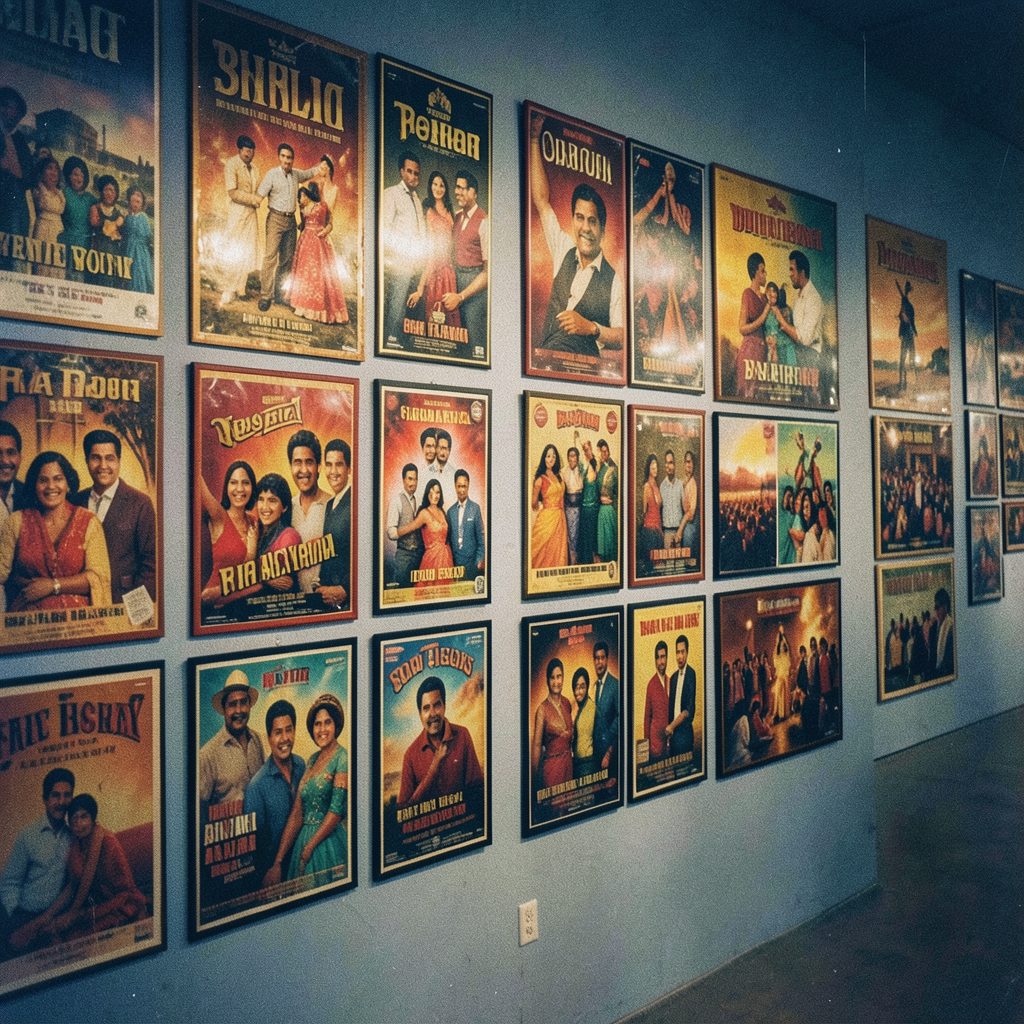

Why Bollywood Remakes of Classic Hollywood Films Often Miss the Mark
Bollywood has long looked West for inspiration. From the silent era through the streaming age, Hindi filmmakers have borrowed plots, characters, and set pieces from American cinema, then resold them to audiences who rarely see the originals.
The pattern has produced occasional gems. "Satte Pe Satta" lifting from "Seven", "Ghajini" riffing on "Memento", "Kaante" channeling "Reservoir Dogs". Yet the hit rate is uneven, and for every inspired adaptation there are two or three that feel watered down, padded out, or culturally tone-deaf.
Australian fans of Hindi cinema occupy an interesting vantage point. Melbourne and Sydney host strong Indian film festivals, Brisbane and Perth have growing diaspora communities, and streaming platforms make both versions of a film just as easy to access. That makes the gulf between source and adaptation unusually visible to viewers here.
Understanding why these remakes stumble requires looking past star salaries and song sequences to questions of pacing, tone, cultural translation, and the way each industry treats its audience.
| Hollywood original | Bollywood remake | Original year | Remake year | Adaptation choice |
|---|---|---|---|---|
| Memento | Ghajini | 2000 | 2008 | Moved action to present-day Mumbai, added a romantic subplot |
| Twin Dragons | Judwaa | 1992 | 1997 | Set the twins in Mumbai, layered in family comedy |
| Reservoir Dogs | Kaante | 1992 | 2002 | Transplanted the heist to Los Angeles, kept the ensemble format |
| Seven Brides for Seven Brothers | Satte Pe Satta | 1954 | 1982 | Kept the seven-brothers premise, relocated the action to a farm |
| E.T. the Extra-Terrestrial | Koi... Mil Gaya | 1982 | 2003 | Recast the alien as friendly, added Hrithik dance sequences |
| Lock, Stock and Two Smoking Barrels | Hera Pheri | 1998 | 2000 | Shifted the crime comedy to a paying-guest house in Mumbai |
The Cultural Translation Gap
Classic Hollywood films are built on specific American assumptions about family, romance, work, and morality. A suburban backyard in a 1990s comedy carries meaning, a Thanksgiving dinner in a drama signals something particular. When those settings are transplanted to Mumbai flats and Jaipur palaces, the texture changes.
Bollywood directors often keep the surface beats but strip away the social context that gave them weight. The result is a screenplay that feels familiar but slightly hollow, like hearing a joke in translation. The beats land, but the resonance does not.
An Australian viewer who grew up watching Hollywood films on free-to-air television has internalised those contexts. When a remake drops the texture, the gap is felt at a gut level before the viewer can articulate it.
When Star Power Overshadows Story
A-list casting is treated as a fix-all in many Bollywood productions. If Shah Rukh Khan or Deepika Padukone is on the poster, the script can be thinner, the direction looser, the runtime longer. The economics show star lists that guarantee a distributor's advance.
Hollywood originals often succeed because their leads have been carefully matched to characters whose flaws are allowed to breathe. In remakes, the same actor is asked to play the role while also being the brand, and the script is rewritten to flatter them.
This is one reason the same director can deliver a strong original and a forgettable remake within five years. The machinery around the star quietly becomes the film.
The Length Problem
A classic Hollywood comedy runs 95 minutes. Its Bollywood remake runs 175 minutes, padded with a second wedding, two more item songs, and a family subplot that appears in the trailer and disappears by the interval. The pacing of the original, which was a feature, becomes a casualty.
Intermissions are part of the ritual for Australian fans too, particularly in suburban cinemas around Parramatta and Liverpool, and at the Hindi film screenings staged at Federation Square in Melbourne. The break is welcome, but the material around it is not always strong enough to justify a three-hour runtime.
Editors who trust silence and trust their audience are rare on the remake circuit. The cuts tend to be defensive, the songs mandatory, and the second half slower than the first.
Music as an Afterthought
In a strong Hindi film, songs are plot. They advance character, mark time, and carry emotion. In a lazy remake, songs are filler, slotted in because the format requires them, scored by a composer who has not seen the rushes.
Hollywood originals rarely depend on original songs for narrative lift. When the remake tries to add music without rebuilding the structure around it, the soundtrack feels grafted on, the way subtitles feel when they have not been timed properly.
For fans who curate playlists around Hindi film music, the gap between a great album and a perfunctory one is obvious. It shapes whether the remake lingers in memory or fades within a week.
Casting Missteps and Cultural Mismatches
Some roles travel poorly. The wisecracking best friend in an American workplace comedy relies on office culture that does not map to Indian workplaces. The wisecracks feel imported, the workplace feel simulated.
Casting the same actor across age groups, registers, and moral tones is a familiar problem. A 45-year-old playing a 22-year-old is a Hollywood tradition too, but Hollywood often hides it with makeup and lighting. In lower-budget remakes, the hiding fails.
Reviewers at ABC Arts and The Guardian Australia tend to flag these mismatches in plain language. The feedback travels back to distributors, who then adjust their marketing, sometimes dropping the "official remake" framing altogether.
The Australian Lens: Why Audiences Here Notice the Gap
Australia's film culture is hybrid by necessity. SBS has broadcast Bollywood films for decades, Foxtel carries Hindi movie channels, and streaming libraries mix regional and international content. Viewers here regularly compare the original and the remake within the same week.
Festival programmers at Sydney's Carriageworks and Melbourne's ACMI have built mini-retrospectives around adaptation, sometimes screening a Hollywood original alongside its Hindi counterpart. The pattern that emerges is that the remakes that work treat the source as a springboard, while the failures treat it as a blueprint.
Distributors in Australia also notice. Boutique labels that once acquired remake rights for the diaspora market now prefer originals with a clear voice, and they report that streaming numbers for remakes plateau faster than for fresh stories. The market signal is consistent.
What Studios Could Change in the Next Adaptation Cycle
- Treat the source as raw material rather than a shot list to recreate.
- Hire a screenwriter who has a personal stake in the world being built.
- Cast against type when the role demands it, even if the marquee value dips.
- Build songs as structural turns that change what the audience knows.
- Cut for the international viewer who will see both versions within a week.
- Test the rough cut with audiences who have not watched the original film.
- Resist the runtime inflation that comes from adding dance numbers by default.
A useful next step is to pick one of the original-remake pairs from the table above and watch both films back to back this weekend, ideally without skipping tracks on either soundtrack, and note exactly where the adaptation feels mechanical and where it starts to breathe on its own.