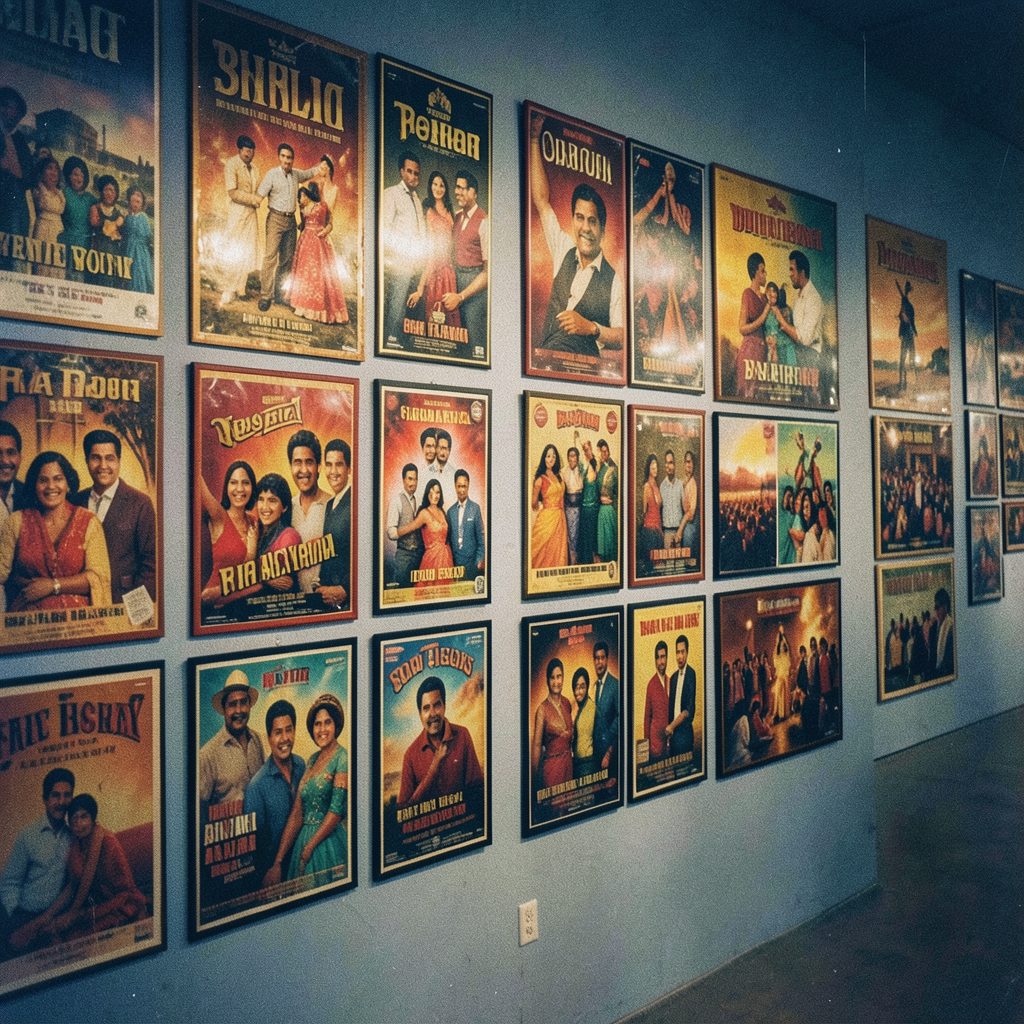

How Bollywood biopics reshape historical memory
Bollywood’s biographical films do more than recount the lives of politicians, soldiers, artists and revolutionaries. They select the moments that deserve a close-up, give private emotions a soundtrack, and turn complex public histories into stories that can be absorbed in a single sitting. That process makes cinema a powerful force in shaping what audiences remember, admire or question.
The impact of Bollywood’s biographical films on historical revisionism is therefore complicated. A film may recover a neglected figure or challenge an established narrative, yet it may also simplify evidence, remove inconvenient context and present interpretation as fact. For viewers in Australia, where Hindi cinema reaches a large diaspora audience alongside curious mainstream viewers, these films operate across several cultural and historical frames at once.
Why biography carries authority
A biopic feels authoritative because it places a recognisable person at the centre of history. Costumes, locations, speeches and carefully recreated ceremonies give the impression of access to the past. When a performer resembles the public figure and the screenplay follows a clear emotional arc, audiences can remember the cinematic version more vividly than a textbook account.
That authority is especially strong when the subject is linked to national identity. Films about Bhagat Singh, Subhas Chandra Bose, Mahatma Gandhi, Rani Lakshmibai or military leaders often frame personal sacrifice as a lesson in citizenship. The individual becomes a symbol, while political disagreements and social tensions are compressed into obstacles surrounding a heroic central character.
The effect is not automatically deceptive. Popular cinema can bring overlooked stories to people who would never read archival material. It can renew interest in speeches, memoirs, court records and oral histories. The risk begins when the emotional force of the performance discourages audiences from distinguishing documented events from invented dialogue or dramatic reconstruction.
Selection turns memory into argument
Every historical film is built through omission. A screenplay cannot include every political faction, social group or competing interpretation, so it chooses a route through the past. The decision to foreground a childhood trauma, a battlefield victory or a final act of martyrdom may reveal the filmmakers’ priorities as clearly as the subject itself.
This is where revisionism becomes a useful analytical term. It does not always mean deliberate falsification. Historical revision can involve recovering a forgotten contribution, reassessing a leader’s motives or disputing a version promoted by earlier institutions. In cinema, however, revision may also become ideological when a selective account is presented as the only legitimate national memory.
Marketing intensifies that process. A dramatic poster, a patriotic trailer and claims that a film reveals “the truth” encourage audiences to treat entertainment as correction. Even a security thriller such as this trailer analysis shows how promotional language can shape expectations before viewers encounter the full story, particularly when national duty and political danger are central to the film’s appeal.
The politics of heroic storytelling
Heroic biopics often rely on a familiar structure: a principled individual confronts a corrupt system, survives betrayal and earns recognition through sacrifice. This form is satisfying because it provides moral clarity. It can also flatten history by making institutions, communities and opponents appear uniformly malicious.
Recent Hindi cinema has shown different versions of this approach. Sardar Udham uses an intimate, sombre style to explore trauma and colonial violence, while Sam Bahadur presents military leadership through discipline, wit and personal loyalty. The Kashmir Files is not a conventional biopic, yet its treatment of collective memory demonstrates how a film can frame a contested past through grief, outrage and a limited set of voices.
The question is not whether a film should be patriotic or critical. The more important question is what its patriotism requires viewers to overlook. A story may honour a soldier while ignoring civilian suffering, celebrate a reformer while minimising disagreements within a movement, or condemn a historical enemy without explaining the wider conditions that shaped the conflict.
How Australian audiences read these films
In Australia, Hindi films are watched in both metropolitan multiplexes and community settings. Sydney and Melbourne regularly host major Bollywood releases, while audiences in Brisbane, Perth and Adelaide also follow opening-weekend results, celebrity interviews and streaming premieres. For many Indian-Australian families, a historical film can become a shared conversation across generations rather than an individual viewing experience.
The local market adds another layer of interpretation. A film screened at Event Cinemas or Hoyts may reach diaspora viewers familiar with the subject’s cultural importance, as well as Australian-born audiences encountering the story for the first time. English subtitles, reviews and social media discussions can make a politically charged narrative accessible beyond Hindi-speaking communities.
Australia’s classification system also shapes the encounter. Violence, language and political imagery are presented within an age-rating framework that differs from India’s certification environment. Meanwhile, ANZAC remembrance culture gives Australian viewers a familiar point of comparison: public memory can honour sacrifice while still being debated through museums, documentaries, memorial services and competing accounts of war.
A practical viewing lens
A thoughtful response to a Bollywood biopic does not require rejecting emotion or entertainment. It requires separating the film’s persuasive craft from the strength of its historical evidence. Viewers can enjoy a performance and still ask whose testimony is missing, which events have been rearranged and why a particular political message appears timely.
Useful questions include:
- Which scenes are supported by public records, and which appear to be invented?
- Does the film distinguish between a character’s beliefs and established historical facts?
- Are women, minorities, workers or civilians given meaningful perspectives?
- Is the opposing side explained, caricatured or removed from the narrative?
The production itself can also provide clues. A film backed by a political campaign, a prominent star persona or a slogan-heavy publicity drive may be pursuing a present-day argument through a historical subject. That does not invalidate the story, but it makes the framing worth examining.
A second set of checks helps audiences move beyond immediate reaction:
- Compare the film with a reputable biography or academic history.
- Read contemporary newspaper accounts where they are available.
- Look for disagreements among historians rather than one supposedly final version.
- Notice how music, editing and camera angles direct sympathy.
- Discuss the film with people whose family or community memory differs from the script.
For Australian viewers, this process can include library resources, university lectures, museum exhibitions and conversations within local Indian associations. The goal is not to produce a single approved interpretation. It is to recognise that historical memory is made through evidence, storytelling and power.
Measuring impact beyond the cinema
A biographical film influences history when its version travels beyond the screen. It may change how a school student searches for a leader, how a family discusses partition or how a political speech refers to a national icon. Streaming platforms extend that reach, allowing a film released in Mumbai to enter homes across Melbourne months or years after its theatrical run.
Its influence is strongest when viewers have limited access to alternative accounts. A polished film can become the default reference point, especially when search results repeat its claims or when celebrity interviews reinforce the character’s image. At the same time, cinema can stimulate useful public debate, prompting historians, journalists and audiences to challenge omissions and investigate neglected evidence.
| Film approach | Historical strength | Revisionist risk | Productive audience response |
|---|---|---|---|
| Heroic political biopic | Makes a public figure accessible | Turns controversy into moral certainty | Compare speeches and independent biographies |
| Military life story | Restores personal and institutional detail | Glorifies command while narrowing civilian views | Examine both service records and social context |
| Trauma-centred historical drama | Gives emotional weight to suffering | Treats one community’s memory as complete | Seek testimonies from multiple groups |
| Anti-establishment portrait | Questions official reputations | Replaces one simplified myth with another | Separate documented criticism from dramatic invention |
The strongest films in this area leave room for curiosity after the credits. They encourage audiences to investigate rather than simply inherit a verdict. Before accepting a biopic as a historical account, record three claims made by the film and verify each against an independent source.