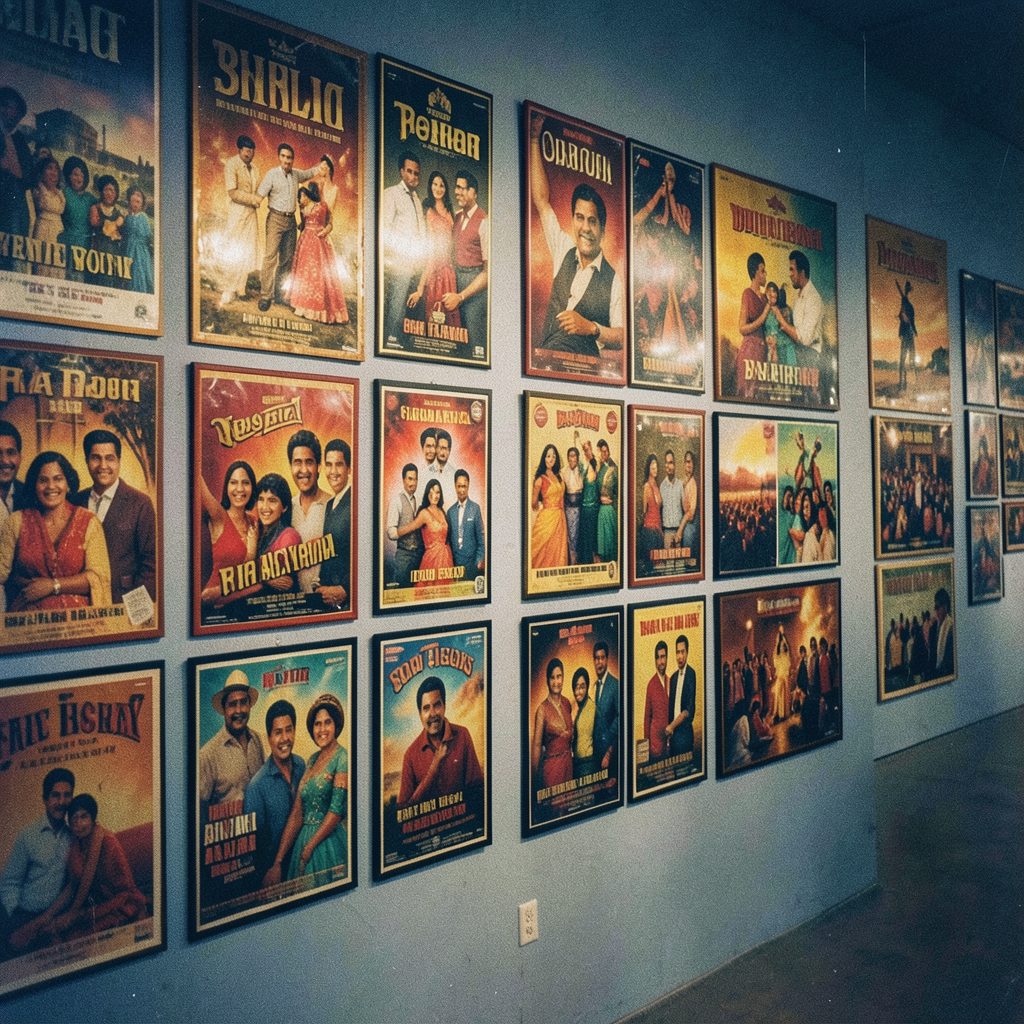

Bollywood Web Series and the Rise of Interactive Storytelling
Bollywood's appetite for reinvention has found a fresh canvas in the streaming era, where web series now experiment with formats that cinema rarely attempts. Among these experiments, interactive storytelling stands out as a format that hands narrative control to the audience, letting viewers shape plot twists through choices presented on-screen. Once confined to global giants like early Netflix experiments, the technique is being adapted by Indian creators who fuse it with the emotional cadence of Hindi drama.
For viewers in Sydney, Melbourne, and Brisbane, these series arrive on local platforms like Stan and Netflix Australia, often within hours of their Indian premiere. The Indian diaspora in suburbs such as Harris Park and Clayton, alongside younger Hindi-speaking migrants, has begun championing this new wave. Local viewing habits, shaped by commute times and late-night streaming patterns, have made the choose-your-own-adventure structure especially appealing.
How Interactive mechanics work in Hindi web series
Interactive storytelling in Bollywood web series relies on branching narratives where a pivotal scene offers two or more outcomes. Viewers select an option with a tap, and the plot unfolds according to that decision, sometimes affecting character arcs across an entire season. The technology uses cloud-based video players that pre-render multiple storylines and stitch them seamlessly without buffering.
The narrative approach borrows from pulp cinema and family drama traditions, embedding choice points at moments of moral conflict, romantic revelation, or revenge. Writers must script several versions of key scenes, while directors shoot alternative endings that feel coherent regardless of which path the audience takes. Post-production teams then map every possible permutation, ensuring continuity holds even when a viewer zigzags between branches.
Some productions embed subtle cues, such as background music shifts or glances toward another character, that nudge audiences toward a particular choice without locking them in. This layer of soft guidance keeps the experience feeling personal rather than arbitrary, a balance that Indian showrunners are still refining through audience testing.
Australian audiences and the pull of choice-based viewing
In Australia, the appetite for interactive content has grown alongside the country's multicultural expansion. Melbourne's Indian community in areas like Glen Waverley and Mount Waverley hosts regular film nights, and several have begun screening interactive web series where the room votes collectively on plot choices, turning a private viewing into a community event. This social dimension transforms what was once a solitary streaming habit into something closer to a Bollywood matinee of the past.
Time zone differences mean Australian fans often access new episodes early in their morning, ahead of the workday, and many report replaying episodes to chase alternative storylines. The Australian Classification Board has also weighed in, requiring clear ratings on interactive branches, particularly when violent or mature content varies across paths. This regulatory framework has nudged Indian producers toward more thoughtful content tagging across the board.
Local streaming services have responded with dedicated categories for interactive content, and marketing campaigns in Sydney's Darling Harbour and Brisbane's South Bank have used pop-up booths where passersby make sample choices on large screens. These grassroots activations hint at how Bollywood is meeting Australian viewers where they already gather.
Australian cities embracing interactive Bollywood
- Sydney's western suburbs, including Harris Park and Parramatta, with strong Indian community ties
- Melbourne's southeast, particularly Glen Waverley, home to many Hindi-language film clubs
- Brisbane, where South Bank pop-ups have introduced the format to casual passersby
- Perth, where Indian cultural associations host monthly interactive screenings
Production houses leading the interactive charge
Several Indian studios have moved quickly to stake a claim in the interactive space. Large production banners known for mainstream Bollywood hits are partnering with streaming platforms to develop choose-your-own-story projects, recognising that engagement metrics, like average watch time and completion rates, climb sharply when viewers feel their decisions matter.
Smaller digital-first studios have taken bolder swings, often working with younger writers and theatre directors comfortable with non-linear scripts. These teams are building interactive frameworks that draw from regional folk tales, contemporary romance, and even supernatural genres popular on Indian television. The aesthetic remains distinctly Bollywood, with lavish song sequences adapted to play differently depending on viewer choices, sometimes skipping a verse or extending a dance break.
A recent trailer drop showcased the potential of the format, and a Happy Ending trailer analysis highlighted how decision points are being woven into traditional Hindi musical moments. That blending of familiar and experimental is exactly what producers hope will hook both longtime fans and a new generation of streamers.
Comparing traditional and interactive web series
| Feature | Traditional web series | Interactive web series |
|---|---|---|
| Narrative control | Fully director-driven | Shared with viewer |
| Production complexity | Linear shoot schedule | Multiple branches filmed |
| Replay value | Limited | High, due to alternate paths |
| Audience engagement | Passive viewing | Active decision-making |
| Content classification | Single rating | Multiple ratings per branch |
| Episode length | Fixed runtime | Variable, based on choices |
This table captures the core differences that Australian streaming executives are weighing as they license interactive Indian content. The replay value alone, often doubling average view time, is reshaping how platforms in Sydney and Perth calculate licensing fees and renewal terms.
What the format demands from writers and directors
Writing for interactive Bollywood web series means preparing for outcomes that may never be seen in the final cut of any given viewer's run. Scripts become intricate decision trees, with dialogue branches that must remain in character regardless of which option is chosen. Writers often work backward from a fixed emotional endpoint, designing choices that funnel audiences toward one of several satisfying conclusions.
Directors face their own challenges. A single scene might be shot eight or nine times, each version tailored to a different narrative path. Continuity becomes a puzzle, since a costume, prop, or lighting change must align with the viewer's earlier decisions. This level of preparation pushes budgets upward, and many productions are now investing in virtual production stages to manage the complexity.
Casting also evolves. Actors must deliver emotionally consistent performances across multiple takes, sometimes portraying characters who have experienced very different events. Training programmes in Mumbai's Film City have begun offering short courses on interactive performance, a sign that the format is being taken seriously at the craft level.
Craft challenges unique to interactive Bollywood
- Scripting multiple coherent endings that all feel emotionally satisfying
- Managing continuity across non-linear storylines and alternate character fates
- Coordinating costume and lighting changes that align with viewer decisions
- Training actors to maintain consistent emotional beats across varied takes
Interactive storytelling is reshaping how Bollywood tells its stories online, and the format is finding warm reception in Australian living rooms from Perth to Parramatta. The blend of familiar Hindi melodrama with viewer-driven plot choices gives the genre a freshness that traditional web series struggle to match. Production houses willing to invest in the extra shooting and writing demands are likely to define the next wave of streaming hits, while Australian platforms will continue adapting their classification and recommendation systems to handle the branching content. The trend suggests that the future of Bollywood web series may not just be watched, but actively chosen by the audience.