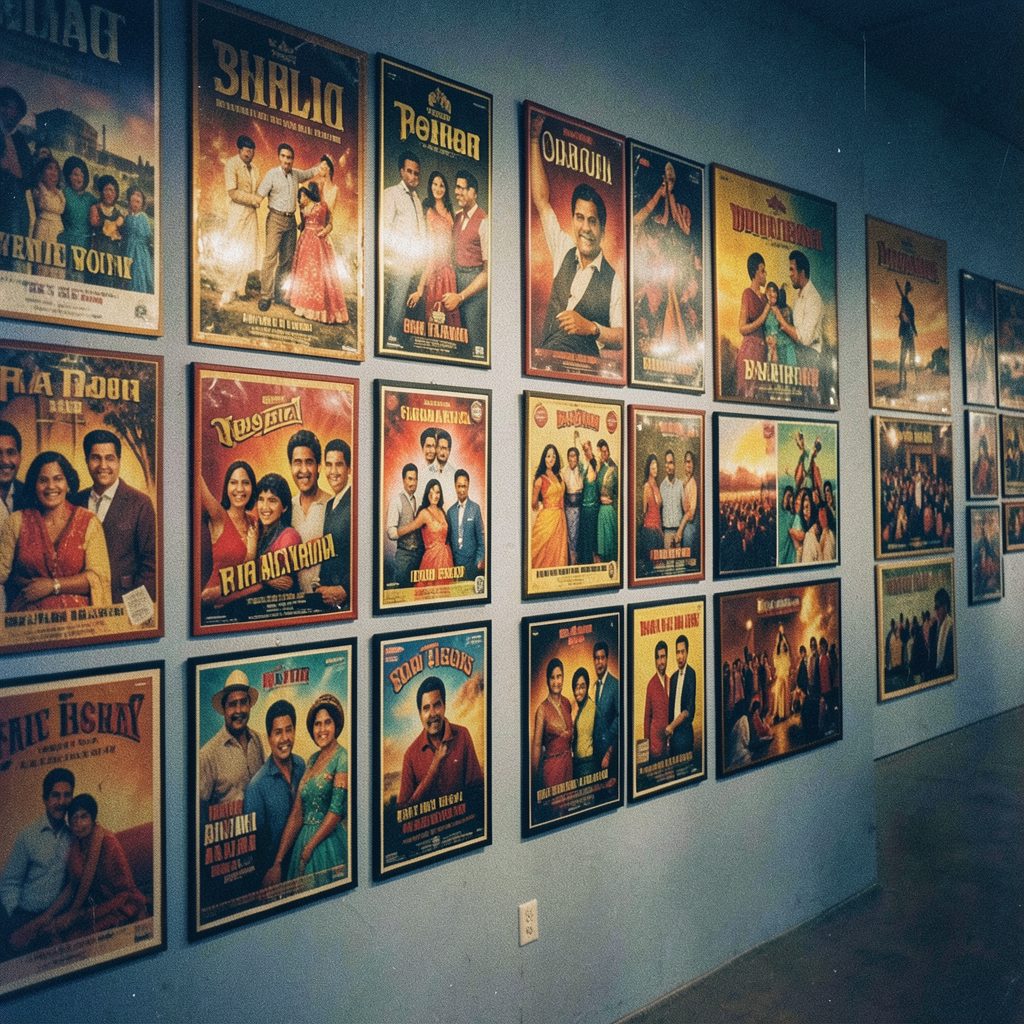
South Indian cinema is reshaping Bollywood action
The growing influence of South Indian cinema on Bollywood's action scenes is visible in the way fights now unfold. A confrontation may begin with a held stare, expand into a circling crowd, and end with a single decisive blow after a burst of percussive music. Hindi filmmakers have absorbed this sense of rhythm, extending it through kinetic camera movement, low angles and editing that briefly withholds a punch. The result is a more theatrical kind of action. Learn more about психология в кино разбор фильмов о ментальных расстройствах.
South Indian cinema offers no single blueprint, since Tamil, Telugu, Malayalam and Kannada films carry distinct rhythms, musical traditions and industrial priorities. Their shared gift to Bollywood lies in a willingness to treat mass entertainment as an emotional event rather than a delivery system for plot. A fight can therefore become an escalating duel between pride, caste, loyalty or family, with choreography and score supplying the drama before dialogue does.
Australian viewers often encounter this exchange outside India's home markets. Streaming makes a Telugu or Tamil film available beside mainstream Hindi titles, while suburban and inner-city cinemas serve audiences fluent in several languages. That viewing context encourages close attention to performance and image, yet each subtitled sequence still has to communicate momentum to an Australian audience used to the broader visual grammar of Hollywood action.
Rhythm becomes the language of impact
Across films such as RRR, KGF: Chapter 1 and Baahubali 2, the action image is built in layers. Bodies turn across space, weapons become extensions of character, and crowds react as a single organism. The camera may track sideways through a melee or snap into a close-up at the instant a fighter regains balance. These techniques have become familiar in Hindi cinema, where a compact street fight can carry the same escalating physical storytelling once associated mainly with the South.
Sound is the quiet engine behind this style. Footfalls, breath, metal impacts and layered drums create an audible map of the contest, while music can rise before violence rather than arrive after it. Bollywood choreographers now synchronize camera, stunt and sound design around those pulses, creating an interval of suspense before impact. The choreography often gives performers room for expressive turns instead of presenting every blow as mechanical acceleration.
Mass spectacle changes the Hindi hero
The exchange is powered by people as much as imagery. Fight choreographers, stunt teams, action directors and technicians move regularly among Tamil, Telugu, Malayalam and Kannada crews, while Hindi projects recruit specialists for elaborate sequences. Their methods reveal how a fall can sell exhaustion, a shoulder rotation can show intent, and a mass of performers can move without flattening the lead performer. That craft knowledge now circulates through sets rather than staying inside a regional industry.
The Hindi hero is changing alongside the choreography. Earlier mass heroes often conquered danger through straight force, whereas newer films favour grudges, strategy, wounded pride and sudden moral limits. Set pieces borrowed from South Indian cinema frequently ask more of an actor than uninterrupted violence: a hero must provoke a crowd, absorb a reversal and choose whom to spare. The spectacle lands harder because the surrounding human stakes remain legible.
Violence has a psychological afterlife
Mainstream violence is often discussed as an escalation contest, yet its force comes from design as well as dosage. A crimson impact shot against a dancer's red costume, a slowed moment beside a charging bull, or a room tilting around two opponents turns bodily danger into a visual idea. Hindi directors are adopting that heightened realism while retaining melodrama, comic beats and devotional or patriotic framing. The screen can feel neither documentary realism nor empty spectacle.
A Russian-language analysis of cinema and mental health helps keep another perspective in view: images of injury can carry grief, trauma or fear, yet fictional violence does not affect every viewer in the same way. Australians also encounter this material through a specific legal framework. The federal Classification Board classifies theatrical releases under the Classification Act 1962, while states and territories enforce distribution laws. An R 18+ classification prevents unaccompanied under-18s from entering, while MA15+ requires an adult companion for viewers under 15.
Australian audiences see the exchange up close
Australian cinemas show why the exchange feels immediate. Across Sydney's western suburbs and around Melbourne's Little India, programmers can cater to fans whose regular viewing spans Hindi, Tamil, Telugu and English. At home, viewers commonly use subtitles or dubbed audio while moving between a streaming app, television and phone. That habit trains them to read rapid lip-sync, gesture and choreography even when the soundtrack is partly inaccessible.
Specialist festivals and imported film weeks extend that demand into Brisbane, Adelaide and Perth, where a smaller pool of screens makes a curated event especially attractive. The commercial market remains crowded: Hollywood retains a powerful draw, local films compete for cinemas, and streaming shortens theatrical attention spans. The site's October release guide illustrates how several star-led Hindi films can target one month. Local audiences often choose among them by tone, including mass kinetic spectacle, character drama or broad comedy.
A regional exchange without one template
Calling this a South Indian takeover misses the reciprocal movement. Bollywood already brought masala structure, urban revenge plots, song-and-action rhythms and some of India's most influential stunt performers to regional cinema. What changed is the balance of visibility: audiences once assumed Hindi cinema would absorb innovations more often than regional industries looked toward Mumbai. Streaming credits, clips and festival programming now make stylistic comparison constant.
The effect is likely to continue without producing a uniform South Indian style. Different crews interpret action through local genres, budgets and audience expectations, and some influences travel from Hindi films back south. The most durable result may be a hybrid action language in which mass choreography, emotional specificity and technical precision coexist. A fight designed around silence can matter as much as one built around maximal kinetic noise.
The strongest examples of this exchange refuse to divide Indian cinema into regional and Hindi camps. They combine the Hindi industry's star power and melodic spectacle with the South's mastery of physical storytelling, ensemble scale and mythic momentum. That collaboration can give a punch more weight, a silence more menace and a hero's victory greater emotional cost.
Bollywood's action future is already being shaped across languages. The films gaining most are not defined by one region's signature; they use many cinematic languages at once, and audiences in Australia and elsewhere can see that shared grammar unfolding on a local screen.