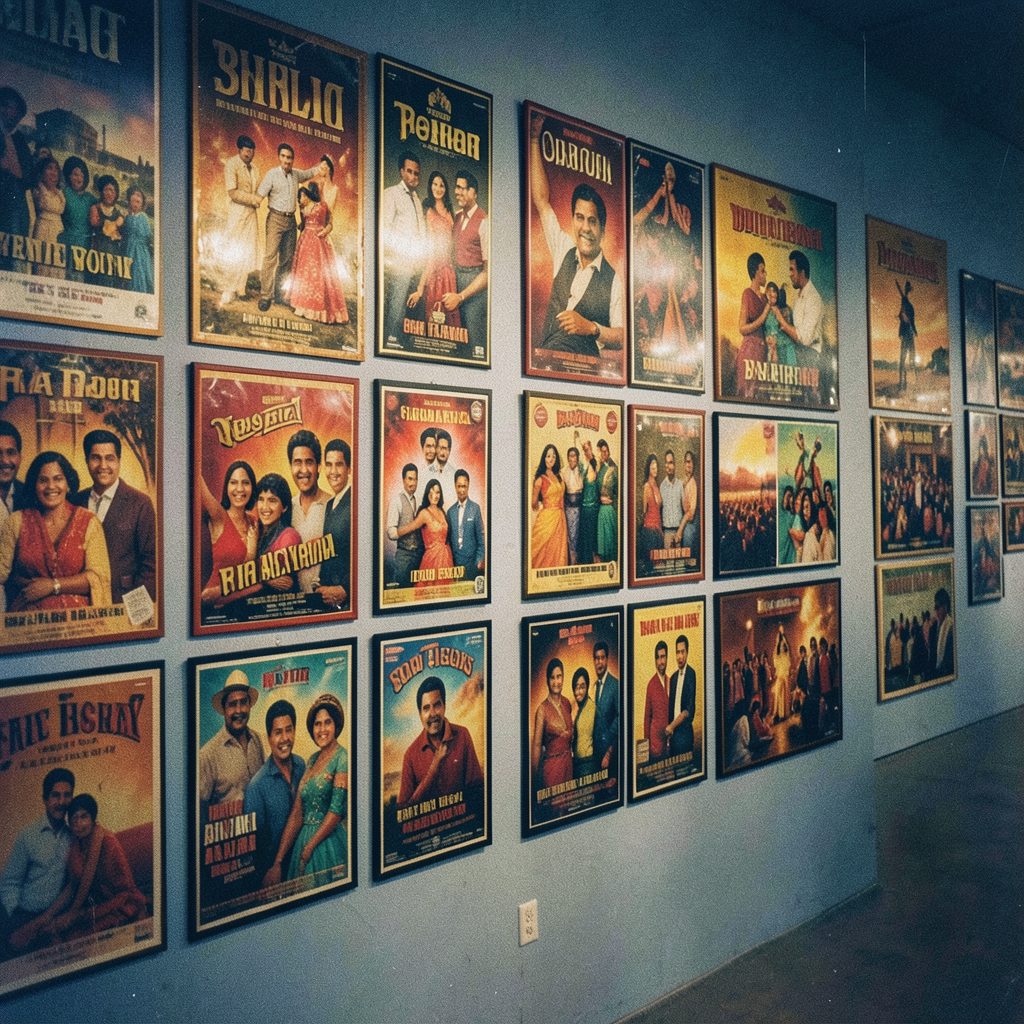

Sacred melodies on the silver screen: Bollywood's devotional journey
Hindi cinema has long carried a quiet spiritual current beneath its spectacle, threading temple bells and Sufi chants through love songs and dance numbers with a grace that few other film industries manage. From the black-and-white devotionals of the 1950s to the chart-topping spiritual ballads of recent years, the genre has absorbed social change, religious reform, and the simple hunger of audiences for meaning in their entertainment.
For viewers in Australia, where Bollywood arrives almost simultaneously with its Mumbai release through streaming platforms, SBS broadcasts, and diaspora cinema circuits, this thread offers a familiar cultural anchor. The country's large Indian community, concentrated in suburbs like Parramatta and Harris Park in Sydney and Glen Waverley in Melbourne, treats the form as both art and inheritance. What follows traces how a humble musical tradition became one of commercial cinema's most enduring creative engines.
The golden era roots: bhajans and classical foundations
The earliest devotional songs in commercial Hindi cinema grew directly from the concert tradition. Composers like Naushad and S.D. Burman drew from classical ragas and the stylings of temple performers, producing numbers such as "Madhuban Mein Radhika Naache Re" from the 1960 film Kohinoor alongside tracks that blended bhajan phrasing with filmic storytelling. These were not religious documentaries but full-blooded entertainments that used sacred vocabulary to dramatise longing, virtue, and moral triumph.
Playback singing, the studio practice of recording vocals separately from the filmed actor, allowed for astonishing vocal purity. Lata Mangeshkar and Mohammed Rafi could embody divine characters or the simple devotee without breaking narrative spell, a technique that gave devotional music its commercial advantage. The audience expected transcendence, and the studios delivered it in three-minute packets.
Sufi influences and cross-religious harmonies
As the 1970s unfolded, devotional cinema expanded beyond Hindu bhajans. Films such as the 1977 musical Hum Kisise Kum Naheen and earlier classics like Pakeezah allowed qawwali and Sufi poetry to occupy narrative space, treating shrines, dargahs, and the syncretic traditions of the subcontinent as natural settings for romance and adventure. The qawwali from the 1956 film Mera Saajan had already shown that mystical music could be popular without becoming preachy.
This openness mirrored a social reality that Indian audiences recognised instinctively. Bollywood, unlike many other film industries, has rarely policed sectarian lines in its music. A single soundtrack might pair a Krishna lullaby with a Sufi remembrance, and listeners accepted the blend as ordinary. The films themselves treated devotion less as theology and more as a shared emotional language.
The 1990s shift: devotion meets drama
The 1990s brought a new mood. Directors like Subhash Ghai, Mani Ratnam, and later Sanjay Leela Bhansali injected devotional songs into epic melodramas where the spiritual stakes felt intensely personal. Dil Se, Hum Dil De Chuke Sanam, and the temple-set sequences in Om Shanti Om showed that devotion could be a pop moment without losing its weight. The bhajan-inflected drama became a reliable commercial formula.
This was also the decade when cassette culture spread devotional compilations into small-town India and the wider diaspora. In Australia, the arrival of these tapes in family-run video stores in western Sydney coincided with the rise of local Diwali street festivals, where the same soundtracks would echo from temporary stages. The music had become both soundtrack and cultural ambassador.
Modern auteurs and spiritual ambition
The past two decades have seen devotional music take on a more auteur-driven shape. A.R. Rahman, Vishal Bhardwaj, and Amit Trivedi have composed numbers that treat spirituality as a creative palette rather than a formula. "Kun Faya Kun" from Rockstar reimagines Sufi meditation as stadium rock, while tracks in Swades use bhajan structures to argue for civic conscience, a quiet political move that resonated with second-generation Indian-Australians navigating questions of identity from Melbourne to Brisbane.
The most ambitious modern devotional tracks appear in period dramas. Films like Bajirao Mastani, Padmaavat, and the Tanhaji series use bhajans, kirtans, and Marathi devotional forms as plot machinery, signalling history, region, and faith simultaneously. These are songs the audience is expected to absorb, not hum in the car. Australian streaming subscribers now encounter them within weeks of Indian release.
Soundtrack economics of the sacred
Behind the artistry sits a clear business logic. Devotional songs in commercial Hindi cinema are reliable performers on music charts because they reach listeners who do not otherwise follow film music. Religious broadcasters, temple sound systems, and devotional YouTube channels all license these tracks, generating royalties that ordinary romantic numbers cannot match. Composers and lyricists know that a single well-placed bhajan can extend a film's commercial life by years.
The economics also shape how the songs are written. Lyricists tend to favour simple, repeatable phrases that can be chanted, while composers aim for melodic patterns already present in temple music. This produces songs that travel easily across languages and faiths, a quality that benefits distributors. When a film opens in Australian multiplexes in suburban Parramatta or in Melbourne's Indian-film festival circuit, the soundtrack is already familiar.
Diaspora reception across the Indian Ocean
Reception in Australia adds a particular layer. The Indian-Australian community treats devotional cinema as a touchstone during life-cycle events, weddings, housewarmings, and the annual Diwali gatherings in Sydney's Darling Harbour and Melbourne's Federation Square. Music from films like Kabhi Khushi Kabhie Gham or My Name Is Khan often accompanies these rituals, blending Bollywood iconography with the lived spirituality of the diaspora.
Australian media regulation also plays its part. The Australian Classification Board has occasionally required edits or consumer advice on films with strong religious imagery, particularly when sectarian themes are depicted. Producers are aware that content consumed through SBS, Netflix Australia, and Stan reaches households where multiple faiths coexist, and the most commercially successful devotional tracks tend to emphasise shared human experience over specific sectarian claims.
Streaming, reissues, and the algorithm age
The biggest recent change in devotional film music has come from the platforms. Spotify Australia, Apple Music, and YouTube's algorithm now treat bhajans and Sufi tracks as a distinct listening category, generating playlists that mix vintage Lata Mangeshkar recordings with contemporary Rahman compositions. Older songs from the 1960s regularly outperform newer releases in Australia because diaspora listeners build family playlists around them.
Reissue labels and Bollywood-focused podcasts have also reawakened interest in the back catalogue. Listeners who discovered Mughal-e-Azam through a high-definition restoration are now exploring the devotional tracks of Pakeezah or Mera Naam Joker with fresh ears. Streaming has turned what was once a niche archive into a living library, and Australian fans are among the most active international consumers of these catalogues.
Listening paths worth following this year
- Queue A.R. Rahman's "Kun Faya Kun" from Rockstar alongside the original qawwali recordings that inspired it, available on most major Australian streaming services.
- Revisit Lata Mangeshkar's bhajans from the 1960s through curated Bollywood archives on YouTube and the Australian-broadcast SBS radio programming.
- Book tickets for the next Indian Film Festival in Melbourne or Sydney to see restored prints of devotional classics on the big screen.
- Attend a local Diwali celebration in Parramatta, Harris Park, or Federation Square, where film soundtracks typically accompany cultural performances.
- Build a playlist that pairs 1950s bhajans with contemporary Sufi tracks from Rockstar and Bajirao Mastani to trace the genre's melodic line.
- Track reissue announcements from labels like Saregama and Sony Music India, whose remastered catalogues reach Australian shelves through JB Hi-Fi and online retailers.
- Subscribe to one of the Australian-based Bollywood podcasts that discuss older devotional tracks alongside new releases.
For anyone seeking to understand contemporary Hindi cinema, devotional music is one of the most rewarding entry points available. The genre carries decades of cultural negotiation, cross-faith dialogue, and pure melodic craft, and it is more accessible in Australia today than at any previous moment. A good place to begin is the first bhajan in a 1950s classic, played through decent speakers, and followed wherever the melody leads.