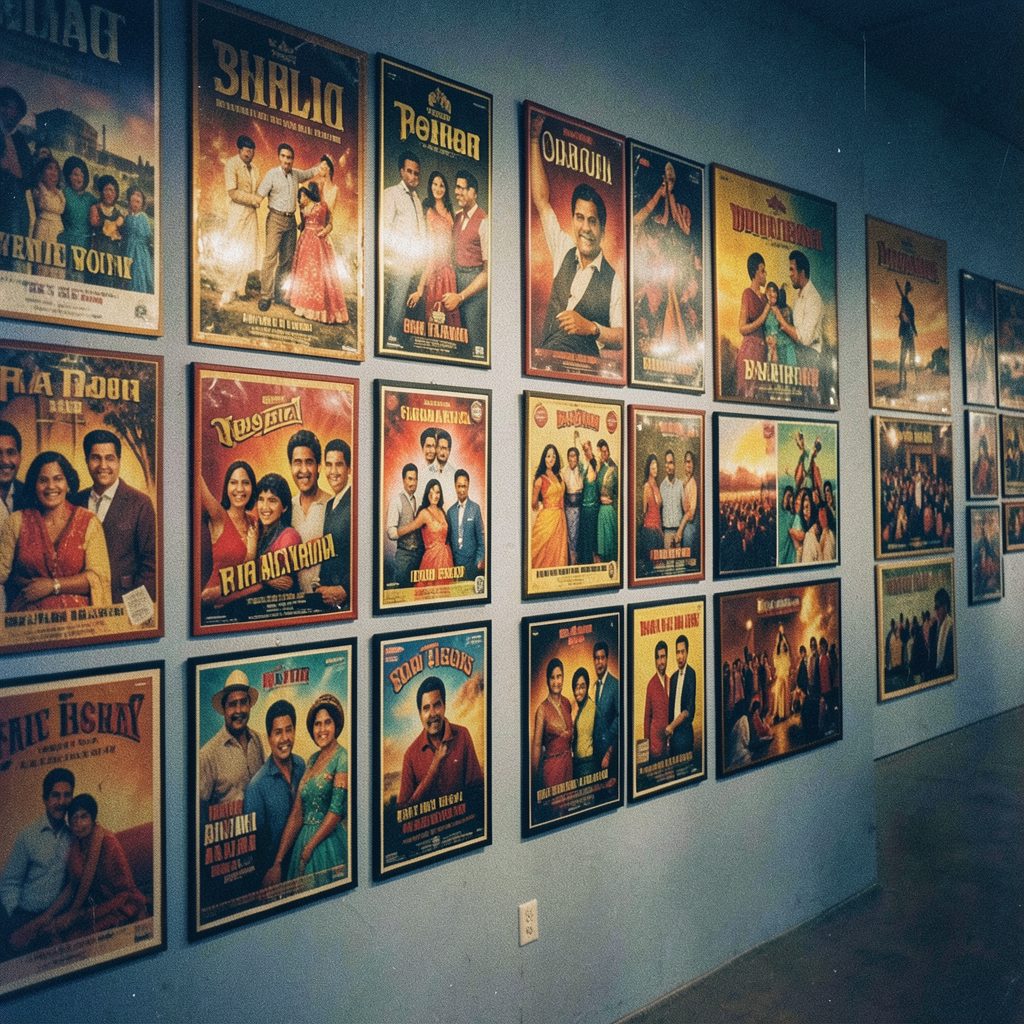

Bollywood villains evolving beyond cardboard cutouts into moral puzzles
For decades, the villain in a Hindi film arrived with a snarl, a moustache twirl, and a motive thin enough to see through. Whether the antagonist was seizing a village's land, kidnapping a heroine, or settling a feudal grudge, the role rarely demanded nuance. Audiences cheered when the hero thumped him in the climax and the popcorn went back in the bag.
That template is dissolving. Recent Hindi films have handed the bad guy something closer to a backstory, a conscience, and sometimes even the script's best lines. The shift is reshaping how stories land at the box office, on streaming charts, and at the post-movie chai debates across Australia.
Down Under, Bollywood fans have long mixed Hindi cinema into a wider film diet that includes Hollywood blockbusters, SBS specials, and local festivals. The Melbourne Indian Film Festival, Harris Park gatherings in western Sydney, and screening nights at suburban community halls in Dandenong have helped audiences discover an Indian film can offer more than escapism. These venues have quietly become cultural laboratories where fans dissect every frame and roll their eyes at tired tropes.
Streaming has accelerated the change. When a viewer in Parramatta or Footscray can pause, rewind, and dissect a character's choices, the writing has to reward that attention. Villains now arrive on screen as fully drawn people rather than plot devices, and the Hindi film industry is learning to meet that gaze.
The old formula and where it began to crack
Classic Bollywood antagonists operated on simple fuel: greed, revenge, lust for power, or hereditary hatred. Films like Sholay and the potboilers that followed cast villains whose only job was to be defeated. The hero's morality was proven by contrast, and the bad guy rarely got a monologue longer than two sentences.
The first cracks appeared in the late 1990s and early 2000s, when writers began folding social context into their scripts. Titles such as Satya and Company showed audiences that a Mumbai underworld figure could carry moral weight. Suddenly the antagonist had office politics, family pressures, and quiet regrets. Audiences in Mumbai, Delhi, and the Sydney diaspora started arguing about whose side they were on, and heroes of those films often looked one-note next to such layered work.
International influences played their part too. As more Hindi cinema watchers binged prestige television, the writing had to reward close attention. Shifts in screenwriting training in Australia, including programs linked to the Australian Film Television and Radio School and the Victorian College of the Arts, encouraged local writers of South Asian background to bring psychological depth to genre material, and that sensibility fed the Hindi film pipeline in subtle ways.
Greyer shades arriving on screen
Today's Hindi film rogues arrive with layers. Some are corrupt officers whose families depend on the bribes. Others are tech entrepreneurs whose ambition has hollowed out their ethics. A growing number are women written with the same moral density once reserved for leading men. Performers including Vijay Sethupathi in thrillers, Taapsee Pannu in courtroom dramas, and Manoj Bajpayee in The Family Man have pushed the antagonist into the spotlight.
The trick is sympathy without forgiveness. The strongest examples earn understanding without earning redemption. They make choices the audience might recognise from a workplace dilemma, a family dispute, or a late-night argument about money, just dialed up several notches.
Australian viewers picking up films at their local Indian grocer in Granville, scrolling SBS On Demand, or queuing at a Hindi premiere in Melbourne's CBD have noticed the difference. Discussion threads on Facebook groups from Parramatta to Perth often debate a film's antagonist more than its hero.
Writers drawing from real-world anxieties
Screenwriters now borrow from headlines rather than mythology. The environmental anxieties of the Ganga, the start-up pressure cooker of Bangalore, and the bureaucratic maze of passport offices all feed into villainous portraits. The bad guy is less a villain alone on a mountaintop than a person shaped by a particular pressure system.
This grounded approach has filtered into smaller productions. Independent titles on Zee5, SonyLIV, and the international Netflix catalogue now offer stories where the antagonist could be a neighbour, a colleague, or a brother-in-law with a different worldview.
Producers who travelled the world via the Sydney Film Festival, the Melbourne International Film Festival, and Hobart's repertory screenings have absorbed storytelling traditions that prize psychological depth over pure spectacle. The prestige currency of those events has translated into writing-room budgets for character detail, and audiences can feel the difference on screen.
Stars chasing the dark side
Leading men are no longer content to play the squeaky hero. A-listers including Shah Rukh Khan, Ranveer Singh, and Hrithik Roshan have begun producing and starring in projects where the central character is closer to a wronged outsider than a knight in shining armour. The commercial logic is sound: an entirely angelic lead in an industry that also thrives on anti-hero franchises is harder to market than a character with real psychological flaws.
When a bankable star trades the halo for a shadow, the writing has to reward that risk. Films like Kabir Singh, where the protagonist walks a knife edge between devotion and toxicity, showed that audiences will sit with an unlikeable lead if the script earns its keep. Performances once reserved for villains are now a marquee draw, and the box office is responding.
Female stars are picking up the gauntlet as well. Performers such as Alia Bhatt, Vidya Balan, and Deepika Padukone have played characters whose flaws are central rather than decorative. The leading roles now stretch across the gender line, and the moral weight of the chase shifts accordingly.
Comparing old and new villain archetypes
The shift is best read as a maturity curve rather than a fad. The next breakdown shows how the two models stack up across key storytelling beats, and how the new framework treats the antagonist as the audience's second-most-important relationship in any given Hindi feature.
| Element | Classic Bollywood villain | Modern Hindi film antagonist |
|---|---|---|
| Primary motivation | Revenge, greed, territorial rage | Psychological wound, systemic corruption, ideological belief |
| Backstory | Barely sketched, often hereditary | Fully drawn, with family, class, and regional context |
| Screen presence | Functional, set-piece to set-piece | Sustained, character-driven across the runtime |
| Audience reaction | Booed at interval, forgotten by credits | Argued over in group chats, quoted in memes |
| Moral framing | Absolute evil, no ambiguity | Moral ambiguity, sometimes sympathetic |
| Story trajectory | Crushed in the climax, rarely revisited | Killed, exiled, or left morally unresolved |
Traits that define today's Hindi film antagonist
- A backstory shaped by a specific social pressure, not a generic grudge
- Dialogue that argues for the character's worldview rather than the hero's
- Moments of vulnerability that complicate the audience's contempt
- A story trajectory that resists a clean moral conclusion
Where Australian audiences catch the new wave
- Melbourne Indian Film Festival screenings and post-film Q&As
- SBS On Demand's curated Bollywood collections
- Harris Park cinemas and suburban community halls in Dandenong
- Streaming premieres timed to Indian release dates that match Australian schedules
The next Hindi feature at a local festival, the next Bollywood addition on SBS On Demand, or the next trending thriller on a streaming platform will likely offer an antagonist worth arguing about long after the credits roll. That is the practical shape of the new wave in Indian cinema, where the most layered character is no longer the one wearing the white hat.