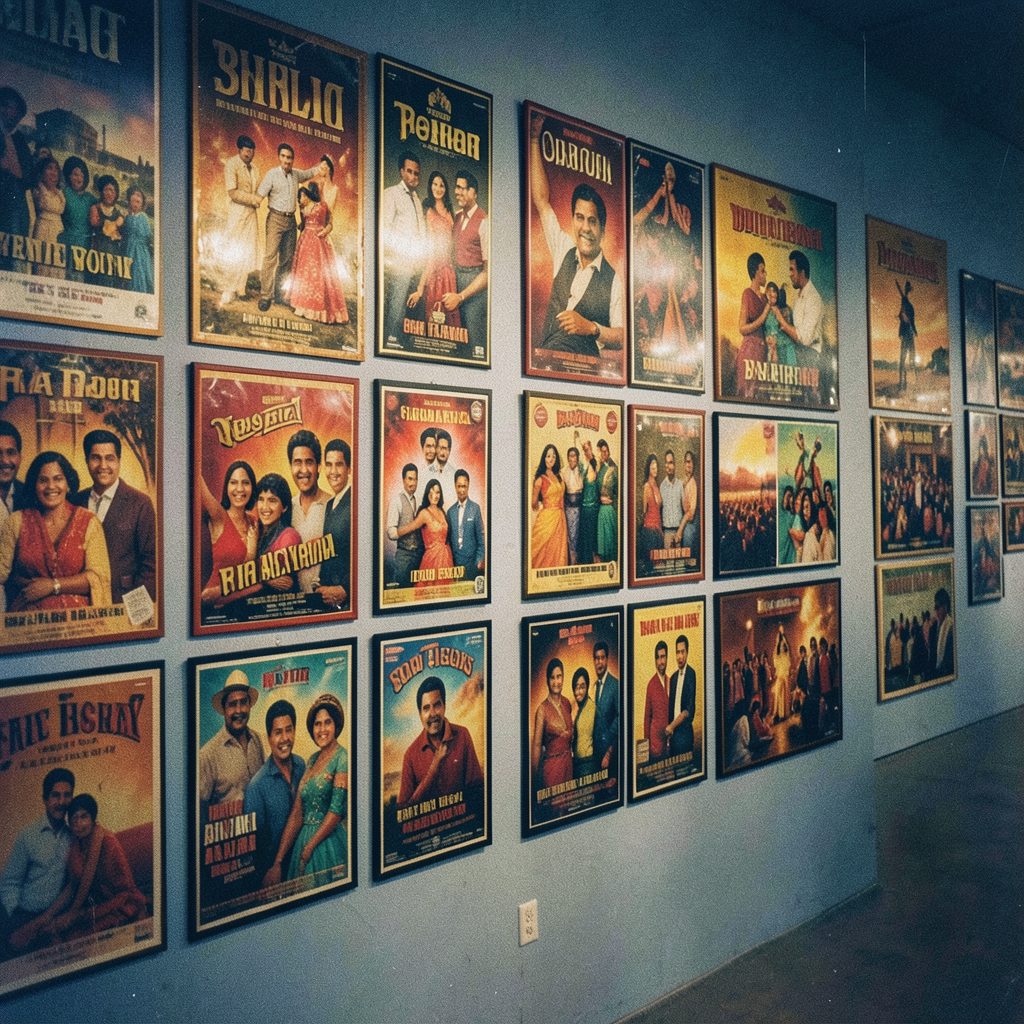

How Bollywood studios use data analytics to predict hit songs
The Hindi film industry has long traded in melody, choreography and a generous dose of instinct. Composers and lyricists once relied on gut feel and the strength of a star's appeal to decide which songs would anchor a release. A new layer has since settled over the process: predictive analytics, drawn from streaming behaviour, social media sentiment and historical chart performance, now shapes everything from song count to release strategy. The change is happening far from public view, but its effects are audible in every new soundtrack that streams out of Mumbai.
Streaming has been the catalyst. India became one of the fastest-growing music markets in the world during the 2020s, with Spotify, JioSaavn and Apple Music each reporting tens of millions of monthly active users. Bollywood soundtracks, once dominated by radio play and television premieres, now compete inside curated playlists, mood libraries and short-video feeds. Studios have responded by treating every song less like an artistic statement and more like a product launch that needs forecasting tools.
For listeners in Australia, the impact shows up sooner than many fans expect. Melbourne and Sydney host some of the largest South Asian diaspora communities outside the Indian subcontinent, and Bollywood tracks regularly chart on local Spotify regional breakdowns. When an algorithm flags a particular beat pattern as likely to travel, Australian audiences often hear the song weeks before its official single release. The technology is no longer operating in a distant film city; it is shaping playlists on phones from Parramatta to Footscray.
What sits behind this forecasting push is a mix of machine learning, behavioural research and old-fashioned market testing. Music supervisors inside studios such as T-Series, Zee Music and Yash Raj Films now work alongside data teams who previously sat in e-commerce or financial services. The crossover is producing one of the more unusual collaborations in Indian entertainment: number crunchers sitting beside lyricists, with both groups trying to predict whether a chorus will stick.
| Method | Data inputs | Primary use | Strengths | Limits |
|---|---|---|---|---|
| Streaming analytics | Skip rates, save rates, playlist adds | Testing unreleased demos with sample audiences | Real listener behaviour | Biased toward existing fans |
| Social listening | Hashtags, reel mentions, lyric searches | Tracking pre-release buzz | Captures cultural momentum | Easy to inflate through paid activity |
| Composer track record modelling | Historical film scores, singer pairings | Choosing talent for new projects | Reduces creative guesswork | Penalises newcomers |
| Audio fingerprinting | Tempo, scale, hook density | Comparing new songs to past hits | Objective musical features | Misses lyrical and emotional weight |
| A/B release testing | Two versions, listener response | Choosing final single edit | Direct head-to-head data | Expensive for smaller banners |
Where the data comes from
The raw material feeding these predictions is more varied than the public tends to realise. Streaming platforms supply anonymised listening patterns, including the all-important skip rate, which tells a studio within seconds whether a chorus earns a second play. Social platforms add another layer, with Instagram Reels, YouTube Shorts and even X providing real-time sentiment scores on teaser clips. Studio research teams then cross-reference those figures with historical data from past releases to build a probability score for each new track.
Mobile carrier partnerships also play a role. In India, bundles that include free music streaming have made it possible for labels to see aggregate listening across millions of prepaid accounts. This gives studios a more representative picture of tier-two and tier-three city audiences, not just the metropolitan elite. For Bollywood, that breadth is critical: a film can be declared a hit or a flop based on small-town turnout, and the data pipelines now reach those viewers directly.
Reading the listener
The most sophisticated part of the process is the model itself. Studios use a combination of supervised machine learning, which trains on past hits and misses, and natural language processing, which scans social posts for emotional cues around a track. A song associated with words like "heartbreak," "longing" and "rain" might score higher for a winter release, while words like "dance," "celebration" and "friends" point toward a wedding-season push. The categories are not new, but their speed and scale are.
Listener behaviour outside India is also weighed more heavily than it once was. Studios track how South Asian diaspora audiences respond, and Australian cities such as Brisbane and Perth are now part of that map. A chorus that performs well among listeners in western Sydney suburbs is taken as an early signal of global pull. The diaspora functions almost like a focus group, with each city's response feeding back into the prediction engine.
Composers, lyricists and the algorithm
The human side of the process has not disappeared; it has been reorganised. Composers such as Pritam, A.R. Rahman and Tanishk Bagchi are briefed with data sheets that flag which melodic structures, instrumentation choices and tempo ranges have travelled well. Lyricists receive guidance on recurring phrases, rhyme patterns and emotional registers that have historically produced saves and shares. The brief still leaves room for artistry, but it draws clearer lines around the sandbox.
The shift has also opened doors for newer names. Smaller studios use analytics to de-risk debut signings, giving a first-time composer a measurable chance rather than relying solely on a senior producer's gut. This has slowly widened the field of credited talent on big-banner soundtracks. Similar data pipelines shape other entertainment verticals, including streaming series coverage, where sites like Walking Dead news track audience reactions to episodes and trailers. The same hunger for predictive power shows up wherever audience attention is the prize.
Marketing budgets and predictive scoring
Once a song is locked, the data team scores it on a scale that helps determine the marketing push. A high-confidence track might earn a multi-city radio campaign, a string of influencer partnerships and a synchronised dance-challenge rollout on Instagram. A medium-confidence track is often held back for album release day, given less promotion and used as a slow burner. A low-confidence track can be quietly buried or used as background flavour in the film itself.
The economics of this approach are significant. Bollywood's music-and-marketing budget can run into the hundreds of crores for a tentpole release, and shaving even ten per cent off wasted promotion is meaningful. Studios are also using predictive scoring to decide how many songs a film needs. Where once every soundtrack offered six or seven tracks by default, data now supports leaner line-ups of three to four carefully chosen songs, with each one expected to carry weight.
The Australian connection
Australian audiences engage with Bollywood music in ways that did not exist a generation ago. Live shows, diaspora festivals in Melbourne's outer suburbs and the long-running presence of Hindi film clubs in universities keep the demand visible. Streaming data confirms it. Local listeners frequently feature in early predictive charts for songs that will later dominate global playlists, which is why Indian studios now keep dedicated analysts watching Australian trends.
Why Australia matters to the model:
- A mature digital payment culture makes subscription streaming the norm rather than the exception, giving analysts clean, sustained listening data.
- Strict privacy expectations, anchored in the Privacy Act 1988, push platforms to handle listener data carefully, which in turn shapes the kinds of information studios can access.
- A multicultural habit of celebrating film music from many traditions gives Bollywood tracks a fair hearing against local pop and international pop on shared playlists.
- Cities such as Sydney, Melbourne and Brisbane host large South Asian communities whose early listening behaviour often predicts wider reception.
Privacy, consent and the rules of the game
Data-driven prediction does not operate in a vacuum, and Indian regulators have started to pay attention. The Digital Personal Data Protection Act, passed in 2023, sets fresh ground rules for how personal information can be collected, stored and processed. Studios relying on listener behaviour to forecast songs now have to ensure that the data they use has been lawfully gathered, that users have been informed, and that the analytics do not inadvertently expose individual identities. The law is still being implemented through subordinate rules, but the direction of travel is clear.
Australian readers will recognise the spirit. The Privacy Act 1988 and the Australian Privacy Principles set similar expectations, and the Office of the Australian Information Commissioner has been active in cases involving data misuse by global platforms. Studios that operate across both jurisdictions, including those with Australian distribution partners, are now building compliance into their analytics stacks from the start, rather than bolting it on later.
Key compliance points studios now build around:
- Explicit consent flags on first-party streaming apps before any listener data is shared with third-party analysts.
- Anonymisation standards that strip device identifiers before data is used in training sets.
- Audit trails that show how a particular song's score was calculated, in case of dispute.
- Data retention limits so old listening records are deleted once they have served their predictive purpose.
What the numbers miss
For all the technical sophistication, the models still have blind spots. A song's emotional weight, its cultural resonance, or its connection to a particular film moment can be hard to quantify before release. The numbers are getting sharper, but the magic of a memorable melody still slips past them. Studios know this, which is why analytics sit beside the writers rather than in place of them.
The interesting years ahead will be those in which prediction becomes more accurate without flattening the cultural variety that gives Hindi film music its appeal. Australian audiences, with their habit of embracing soundtracks from every continent, are well placed to notice whether that balance holds.
The clearest takeaway is that the next big Bollywood hit is unlikely to arrive by accident. Composers remain the creative heart of the soundtrack, but they are now working inside a feedback loop that includes skip rates, reel counts and diaspora engagement scores. Australian listeners are part of that loop, whether they know it or not, and their streaming habits carry genuine weight in which songs Indian studios choose to push.
Some of the most loved Bollywood songs of the past few years, from Kalank to Kesariya, outperformed early analytics predictions and quietly reminded the industry that data is a guide, not a verdict. The studios that thrive will be the ones that learn to read the numbers without being held captive by them, and that respect the cultural conversations playing out in living rooms from Mumbai to Melbourne.