Why Bollywood trailers keep getting shorter as teasers rise
For a generation of Hindi film fans, the trailer used to be a three-minute occasion, broadcast on television with countdown clocks and anchor commentary. That ritual has quietly faded. The new rhythm of Bollywood marketing revolves around a tightly produced teaser that lasts anywhere from forty to ninety seconds, often the first and only thing a viewer sees for weeks before the longer cut arrives. Even in places geographically distant from Mumbai, like Sydney and Melbourne, where the Hindi film audience is sizeable but tightly knit, the change registers in how quickly people scroll past a full-length trailer they would once have queued up to watch.
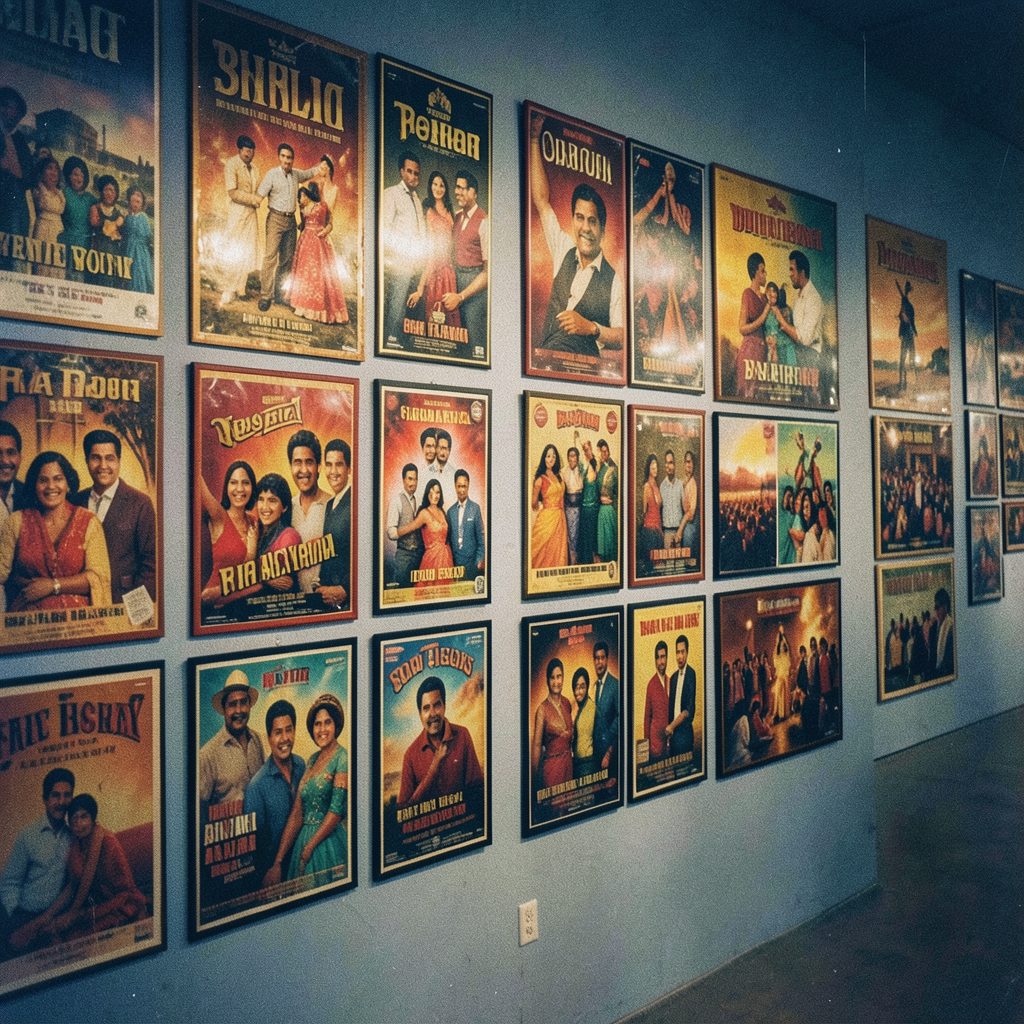
The reason sits inside the algorithm. A clip that hooks within five seconds travels further than a mood-piece montage, and studios have noticed. Australian streaming subscribers on Binge and Stan already know the feeling: marketing for major global franchises on those platforms comes as a cascade of short, brand-built clips rather than single television events. Bollywood has caught up, and its release calendars now slot a first-look poster, a teaser, a promo song, character posters and finally the trailer in a sequence that builds anticipation through layered reveals instead of one big drop.
Scroll behaviour matters just as much. A viewer spending an arvo half-watching a feed between coffee and school pickup scrolls past almost everything. A teaser that lands on Instagram Reels between cricket highlights and a Coles ad feels native to that stream. A full trailer dropped without warning often feels like a disruption, which is why the platforms, not the studios themselves, have become the real editors of how a film is first encountered today.
The economics close the loop. A sixty-second teaser can be cut from the same footage as a two-and-a-half-minute trailer at a fraction of the post-production cost, and it can circulate freely without tipping key plot turns. When the budget per asset is closer to a single digital ad than a theatrical reel, studios can tease repeatedly across the months leading up to Diwali or Republic Day, even while the final cut is still being finished.
The anatomy of a modern Bollywood drop
The launch of a major Hindi release now follows a recognisable sequence. A first-look poster appears at an off-peak hour to seed early traction, then a teaser a few weeks later focuses on a single star moment, then character posters, then a promo song, and only at the end does the full trailer arrive. Each asset does a small job rather than trying to do everything. For an Australian viewer watching from the outer suburbs of Brisbane or Penrith, that sequence often plays out across WhatsApp groups before it ever surfaces on YouTube.
The trade-off is between reach and depth. A teaser travels further because its runtime fits the platform. A full trailer does the harder work of setting up plot, tone and cast chemistry, which is exactly why fewer studios bother with three-minute versions anymore. Ninety seconds has become an unofficial ceiling, and many recent theatrical campaigns never cross two minutes at all.
What the runtime data shows
The shift shows up clearly in the runtimes studios are now choosing. Recent campaigns almost never produce teasers longer than eighty seconds, while full trailers cluster between a minute and a half and two minutes. Drops built first for Reels and Shorts tend to be tighter than theatre-led edits, which still favour landscape framing for big-screen viewing.
| Film title | Teaser runtime | Trailer runtime | Primary platform for teaser |
|---|---|---|---|
| Fighter | 58 seconds | 1 min 52 sec | YouTube + Instagram Reels |
| Dunki | 1 min 12 sec | 1 min 38 sec | Instagram Reels |
| Jawan | 53 seconds | 1 min 47 sec | YouTube + X |
| Sam Bahadur | 49 seconds | 1 min 28 sec | YouTube |
| Pathaan | 1 min 4 sec | 1 min 41 sec | Instagram + YouTube |
| Bade Miyan Chote Miyan | 1 min 16 sec | 2 min 2 sec | YouTube + X |
The pattern is consistent across genres, from action thrillers to biopics, suggesting that the runtime ceiling is being set by platform behaviour rather than genre convention.
Why teasers travel further than trailers
Audiences behave differently today than they did when film promos aired during prime-time news. Younger viewers stumble across a film through a thumb-stopping moment, replacing the old pattern of scheduled broadcasts, and that moment has to land before a finger swipes. A teaser sells that moment. A full trailer, however polished, has to hold attention for the length of a coffee break, which is harder than it looks.
Studios are also using teasers as audience-testing tools. A teaser that performs well in its first forty-eight hours tells marketers which hook to expand in the trailer and which scenes to bury. Both Jawan and Pathaan worked this way, treating the teaser as focus-group research rather than a finished advertisement. The trailer then plays back, in effect, what the audience had already responded to.
How Australian fans experience the new cycle
In Australia, Bollywood fandom has been served by a mix of diaspora screenings at Hoyts in capital cities and Foxtel's Bollywood-focused movie packages. Today that audience watches across Netflix, Binge and Stan, often while the film is still in theatres back home. The teaser-trailer split suits this kind of split-screen viewing because a short clip moves through group chats faster than a long one, and a viewer can decide quickly whether to book a Gold Class seat for opening weekend or simply catch the film on the small screen later.
Local interest also spikes around Australian theatrical releases of major Hindi titles, especially during school holidays when families head into the city for a matinee at Parramatta or Chatswood. Those audiences are not necessarily watching trailers at length on YouTube; they are catching glimpses through reels and shorts the same way they catch news of the Big Bash or the Boxing Day Test. The marketing has adapted by meeting fans where their thumbs already live, and that adaptation has not been lost on the South Asian media buyers working out of Sydney and Melbourne.
What a teaser drop actually tells you
A few details carry more weight than the running time does. Pay attention to the following signals:
- The audio mix, since studios often tuck a piece of the background score or a new song under the dialogue to test reaction.
- The closing frame, because a single stark image usually signals a serious film while a montage of character shots points to a mass entertainer.
- The window between the teaser and the full trailer, with a gap under two weeks suggesting the studio is testing appetite quickly.
- The first platform the studio pushes, because a drop on Instagram Reels is built for mobile viral loops while a YouTube 16:9 cut targets desktop and television viewers.
- The episode of promo songs that follows, since the choice of which song is released first tends to reveal how the studio ranks its commercial priorities.
- The cast composition visible in the frame, which is now often used to settle contract rumours before the trailer does the work itself.
In Australia, where many fans watch Hindi cinema on a laptop during a quiet afternoon rather than on a cinema screen, every one of these cues matters more than the runtime does on its own. The decision to watch, to book a ticket, or to wait for streaming now happens inside the first ten seconds of one short clip, and that is the moment Bollywood studios are increasingly building for.
The shift away from the long theatrical trailer is unlikely to reverse. Faster mobile networks, shorter attention spans and the rise of multi-platform streaming have made the teaser a safer investment than the extended cut. Bollywood will keep producing both, but the order is now settled: tease first, then reveal, then hold the frame for ninety seconds at most before the next reel takes over. For any fan who plans their viewing around the marketing rather than the marketing plan, the trailer remains the film in miniature. The teaser is becoming the film in haiku.