
How Festivals Are Bringing Classic Bollywood Stars Back to the Big Screen
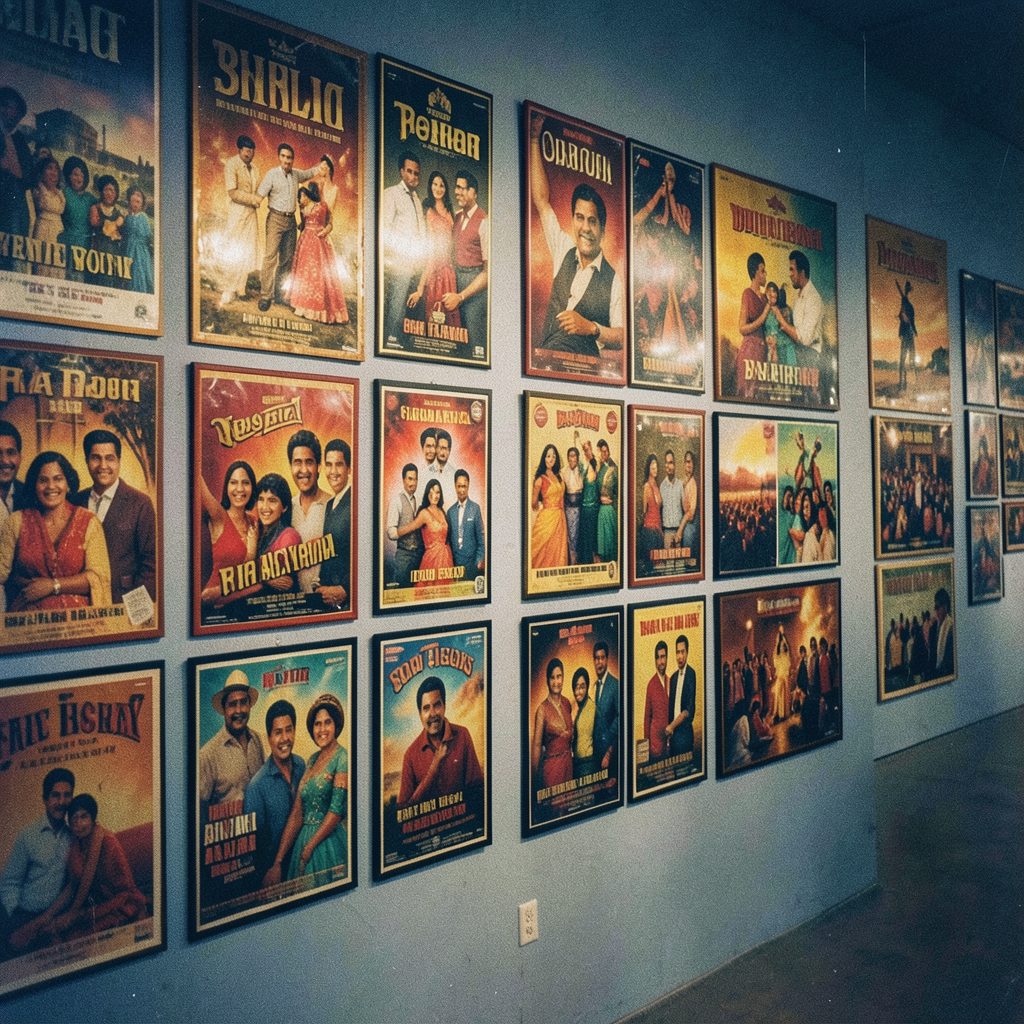
Bollywood retrospectives have moved from dusty archival halls to glamorous festival centrepieces. Curators across India are reassembling the legacies of actors who defined Hindi cinema's golden age, treating their filmographies as cultural events rather than museum pieces. The shift reflects a wider hunger among viewers for context, craft and the kind of cinematic charisma that feels increasingly rare on streaming platforms.
Audiences down under have taken notice too, following the through Mumbai and Goa from Melbourne's ACMI and the Sydney Film Festival's growing Bollywood sidebar. Australian distributors have started importing 4K restorations, and local Indian film societies in Brisbane and Perth are packing out community halls with themed screenings. The global appetite for vintage Hindi cinema has never felt more deliberate, or more carefully packaged.
The Festival Circuit Rekindles Interest in Vintage Stars
The recent wave of tributes began with figures like Dilip Kumar, Dev Anand and Rajesh Khanna, whose birth centenaries fell within a tight five-year window. Festival programmers realised they could not let such milestones pass with a single screening, so they began stitching together full retrospective programmes. The result is a calendar of events where a single actor's career becomes a curated journey, with prints pulled from the National Film Archive of India and private collections alike.
Curators now treat these retrospectives as scholarly events, taking long-shelved classics and re-presenting them with new notes, restored scores and live commentary. The approach borrows from Cannes Classics and Venice's Biennale College Cinema, but the subjects are distinctly desi. Nargis, Meena Kumari and Madhubala have all received recent multi-film spotlights, with programmers pairing their most famous hits with lesser-known commercial flops that reveal hidden range.
From IFFI Goa to MAMI: The Major Stages for Tribute
The International Film Festival of India in Goa remains the biggest stage, drawing the largest crowds and the most substantial restoration budgets. Its recent edition featured a sprawling Dilip Kumar retrospective, including a print of "Mughal-e-Azam" that had been painstakingly rescanned from the original camera negative. MAMI Mumbai Film Festival takes a more experimental approach, often spotlighting the industry's cult favourites, whose reputations take time to build.
Regional festivals have joined the effort too. The Kolkata International Film Festival has dedicated cycles to Bengali cinema's overlap with Bombay's studios, while the Jaipur International Film Festival leans into costume dramas. The variety matters because not every classic actor thrived in mainstream Hindi films; some, like Guru Dutt, found their greatest expression in productions that struggled at the box office but aged into masterpieces. Their stories often demand a more discursive festival setting, and regional programmers have been happy to oblige.
Restoration Projects Revive Long-Shuttered Classics
None of these retrospectives would work without a robust restoration pipeline. The National Film Archive of India, the Films Division and private outfits like the NFDC facility in Pune have been racing to save deteriorating prints. Some of the work has been funded by streaming platforms looking to expand their libraries with prestige Hindi titles, while overseas partners have contributed scanning equipment and technical know-how.
The fruits of this labour show up on festival circuits. Recent global pop culture coverage has noted how fans travel across continents to catch rare screenings of these restored prints, with copies of "Pakeezah" or "Mere Mehboob" selling out auditoriums within minutes of programme announcement. The economics have shifted too, with restored classics now commanding premium ticket prices in several international venues.
International Festivals and the Indian Diaspora Connection
Toronto, London and Singapore have long hosted Bollywood screenings, but the retrospective wave has given those programmes new shape. The BFI Southbank in London regularly hosts weekend marathons devoted to Amitabh Bachchan's angry young man period, while the Singapore International Film Festival has built entire sidebars around Raj Kapoor's socialist musicals.
These programmes feed a diasporic audience that spans generations, from grandparents who watched first-release screenings in cinema halls to grandchildren discovering the films through festival calendars. That diaspora connection runs deep in Australia, particularly in suburbs like Sydney's Harris Park and Melbourne's Broadmeadows, where Hindi film clubs have started partnering with local cultural centres to bring restored prints to neighbourhood venues. The screenings often feature introductions by visiting scholars from India, giving the events a genuinely transnational flavour.
Curatorial Choices in Framing an Actor's Legacy
Programme directors walk a tightrope when shaping these tributes. Lean too heavily on the hits and the retrospective turns into a greatest-hits reel. Lean too far into the obscure and you risk alienating curious newcomers. The most successful programmes balance both, pairing the obvious crowd-pleasers with carefully chosen deep cuts that reveal an unexpected range.
The choices also reflect contemporary concerns. Curators have been keen to foreground the work of actresses who were often sidelined in their era, giving their performances a longer runway than commercial cinema ever did. Waheeda Rehman, Asha Parekh and Saira Banu have all received recent spotlights, with programmers contextualising their stardom against the industry's gender dynamics. The framing makes these events feel less like nostalgia exercises and more like revisionist histories, asking audiences to reconsider the icons they thought they knew.
How Australian Audiences Engage with These Programmes
Australian viewers engage with the trend through a mix of streaming, festival attendance and grassroots screenings. SBS and SBS On Demand have long carried classic Hindi cinema, but the restoration wave has prompted a new round of acquisitions, with premium 4K transfers now appearing on local platforms. The Sydney Film Festival's Bollywood strand has grown from a single evening to a full weekend, and ACMI in Melbourne runs themed seasons that pull from international restoration projects.
Local audiences respond with characteristic irreverence and warmth. A Bondi screening of a restored Shammi Kapoor film drew a crowd that cheered dialogue lines the way locals might chant at the SCG. In Perth, the Indian Film Society of Western Australia hosts monthly screenings at the Lotus Theatre, often pairing classics with contemporary shorts to bridge generations. The appetite is clearly there, and festival programmers have started to plan Australian tours alongside the Indian premieres.
What to Watch Next: Festival Highlights for Curious Viewers
For viewers keen to dive into the retrospective circuit, a handful of starting points offer a manageable entry into the canon. With restoration projects multiplying and international venues expanding their Bollywood offerings, there has never been a better moment to explore vintage Hindi cinema beyond the usual crowd-pleasers.
- Catch the restored "Mughal-e-Azam" when it tours Australian festivals, where the colour grading and sound design justify the ticket on their own.
- Look out for retrospective packages on Waheeda Rehman, whose filmography spans commercial hits and auteur favourites.
- Subscribe to newsletters from the BFI, MAMI and TIFF to track when these cycles touch Australian venues.
- Follow distributors like Madman Films and Masala Films, which sometimes pick up restored prints for local release.
- Join local Indian film societies in Harris Park, Broadmeadows or Karawara for community screenings with introduced talks.
The diversity of these options reflects a festival culture that has learned to balance scholarly context with mainstream appeal, giving curious viewers plenty of room to map their own journey through the classics.
The festival circuit's renewed focus on classic Bollywood actors offers something that streaming algorithms rarely deliver: context, ceremony and a shared sense of occasion. For viewers in Australia and beyond, the programmes are a reminder that Hindi cinema's past is not a sealed archive but a living conversation. Keep an eye on festival calendars, subscribe to restoration updates, and make the effort to see these films on a big screen whenever the opportunity arises. The classics deserve a place in the spotlight, and as this successful film series shows, the most enduring legacies keep finding new ways to surprise audiences.