From Streets to Stardom: Bollywood's Rags-to-Riches Stories
Bollywood has always traded in stories of transformation. The hero climbs out of poverty, the heroine outwits the villain, and the downtrodden wins the day on a Friday release. Yet the most powerful narratives in the industry have been the ones lived by the stars, where life wrote the script and the leading actor was simply trying to make rent.
For fans in Australia, these stories carry a particular charge. In suburbs like Harris Park in western Sydney and the Indian heartland of Dandenong in Melbourne's south-east, second-generation kids know what it means to watch a family grind through twelve-hour shifts at a servo or a newsagency. There is a quiet thrill in seeing a desi face on a giant screen at Event Cinemas George Street on a Saturday arvo, knowing the road behind that face was paved with rejection and resolve.
The early struggles that shaped Bollywood's biggest names
Long before the entourages and the air-conditioned vanity vans, Bollywood's elite were part of an industry that paid almost nothing to its newcomers. Extras earned a few rupees a day. Junior artists slept on film studio floors between shoots. The lucky ones found work as spot boys or production assistants; the unlucky ones went home.
This old apprenticeship model weeded out all but the most stubborn. Out of thousands who arrived in Mumbai every year chasing the cameras, only a fraction were still standing a decade later. Those who survived learned a discipline that stayed with them through fame, which is why audiences continue to trust them with weighty roles well into their sixties.
From Delhi's narrow lanes to Mumbai's film studios
Shah Rukh Khan remains the textbook example. Raised in a rented house in central Delhi, he was still at university when his parents passed away within a year of each other. He arrived in Mumbai with a few hundred rupees in his pocket and a sweater his mother had knitted for him. He slept on benches, queued at casting offices, and was rejected for being too dark, too thin, or simply too unfamiliar for the screen.
Television gave him his first foothold through the serial Fauji, and from there he clawed his way into films. By the late 1990s he was a phenomenon. The boy who once queued for vada pav outside a Matunga stall was now selling out stadiums across the globe, including tours that have drawn huge crowds to arenas in Sydney and Melbourne.
Stars who once slept on railway platforms
The platform stories are not apocryphal. Rajinikanth, now a demigod in Tamil and Hindi cinema, worked as a Bangalore transport conductor and reportedly slept on station platforms before he was noticed by a director in Chennai. Nawazuddin Siddiqui, the man who would later anchor Gangs of Wasseypur, lived in a cramped room in Goregaon for nearly a decade, surviving on small-time bit parts and the patience of his family back in Uttar Pradesh.
These were not one-off tales. They were the rule rather than the exception, and they explain why Bollywood's older generation treats fame as something to be earned rather than displayed.
| Celebrity | Where they started | Defining struggle | Career span |
|---|---|---|---|
| Shah Rukh Khan | Lajpat Nagar, Delhi | Lost parents young, arrived in Mumbai nearly penniless | 1992–present |
| Rajinikanth | Bangalore bus conductor | Slept on platforms, no industry contacts | 1975–present |
| Vidya Balan | Palakkad, Kerala | Told she wasn't 'pretty enough' for heroine roles | 2003–present |
| Kangana Ranaut | Bhambla, Himachal Pradesh | No film background, single-minded move to Mumbai | 2006–present |
| Nawazuddin Siddiqui | Budhana, Uttar Pradesh | A decade of small roles before Gangs of Wasseypur | 1999–present |
Women who rewrote the rules of Bollywood
The struggle looked different for the women. Vidya Balan has spoken openly about being told early on that she did not have the conventional looks to play the heroine. Producers passed her over for the slim, fair-skinned leads the 1990s loved. She persisted, and films like The Dirty Picture and Tumhari Sulu eventually made her one of the most bankable names in the industry.
Kangana Ranaut's story is even more pointed. From a small Himachali village with no cinema tradition, she moved first to Delhi and then to Mumbai with almost no contacts in the film world. She was dismissed as a small-town girl with no polish. Her response was Queen, Manikarnika, and Thalaivii, films that required her to carry entire productions on her own shoulders.
The South-to-Mumbai pipeline that changed everything
A surprising number of Hindi cinema's biggest names actually began in the southern film industries. Kamal Haasan, Rajinikanth, Prabhas, and more recently the Tamil-Telugu crossover stars all crossed the Vindhyas to claim the bigger Bollywood box office. Each carried not just a regional accent but the work ethic of an industry where newcomers are paid less and tested more.
This south-to-Mumbai pipeline is a reminder that Bollywood's dream factory has never been a single city. It is a network of regional industries that feed into a Hindi-language mainstream, and the rise of pan-Indian cinema has only made that network stronger and more competitive.
How these stories land with audiences from Parramatta to Dandenong
For the Indian diaspora in Australia, these arcs land with extra weight. Harris Park, Parramatta, and the suburbs around the Indian precincts of Melbourne are full of families who rebuilt their lives from scratch. Parents who arrived with suitcases in the 1980s and 1990s often took whatever work was on the table, from driving cabs to running convenience stores, while their children studied hard to break into professional careers.
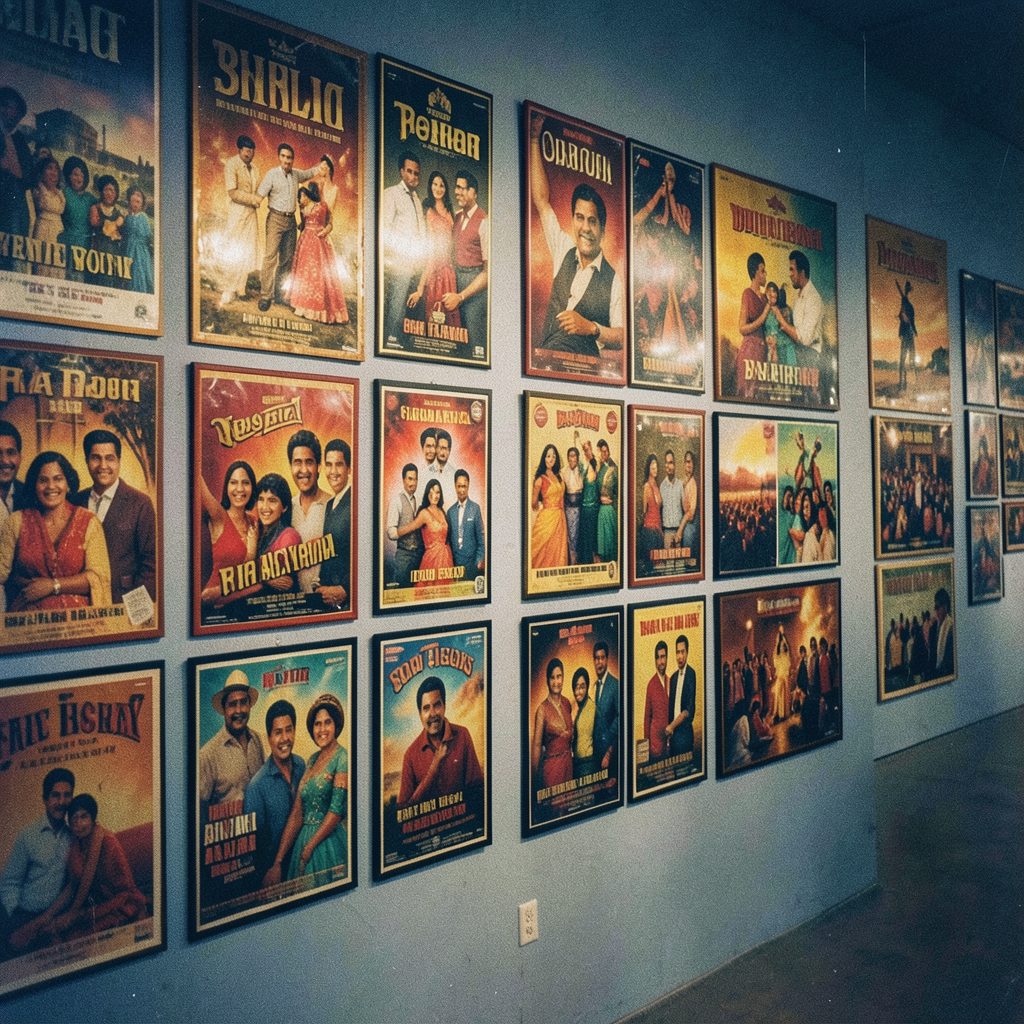
The annual Indian Film Festival of Melbourne has become a kind of homecoming for many of these stories. Bollywood posters hang in the windows of jewellery shops in Sydney's CBD, and Binge and Stan now carry more Indian content than ever, allowing fans to follow stars from their first flop to their biggest hit. The familiarity of seeing a desi star go from rags to riches is, for many Australian families, the same story playing out in their own lounge room.
Where Australian fans can experience these legends today:
- The Indian Film Festival of Melbourne, held annually since 2010
- Bollywood screenings at Event Cinemas George Street in Sydney's CBD
- Hindi film retrospectives at ACMI in Melbourne's Federation Square
- Pop-up premieres hosted in Harris Park community halls
- Growing Hindi-language libraries on Stan, Binge, and Netflix Australia
Lessons for young dreamers watching from Australian shores
The common thread in all these journeys is unglamorous. Years of small work, years of rejection, a stubborn refusal to leave Mumbai when every reason said to. The stars who made it were not always the most talented at the start; they were the ones who stayed.
Common threads in their journeys:
- Most arrived in Mumbai with no industry contacts or insider references
- Survival jobs came well before any acting jobs, often for many years
- A defining breakthrough role almost always came late in their careers
- Family sacrifice and quiet persistence marked every breakthrough
- Public persona was built on private discipline, not overnight luck
For young Australians of migrant heritage, the lesson is that the script is rarely as clean as the films suggest. There is no director shouting "action" in real life. There is only the choice to keep going when no one is watching, which is the same choice made by every parent running a shop in Dandenong or driving a taxi through Parramatta. Anyone scanning Bollywood headlines today can see the pattern repeating with the next wave of talent, where newcomers from smaller towns and humbler backgrounds are slowly replacing yesterday's dynasties. The next chapter of Indian cinema will almost certainly be written by dreamers from places no one has heard of yet, and the practical lesson is that the breakthrough rarely announces itself before it arrives.