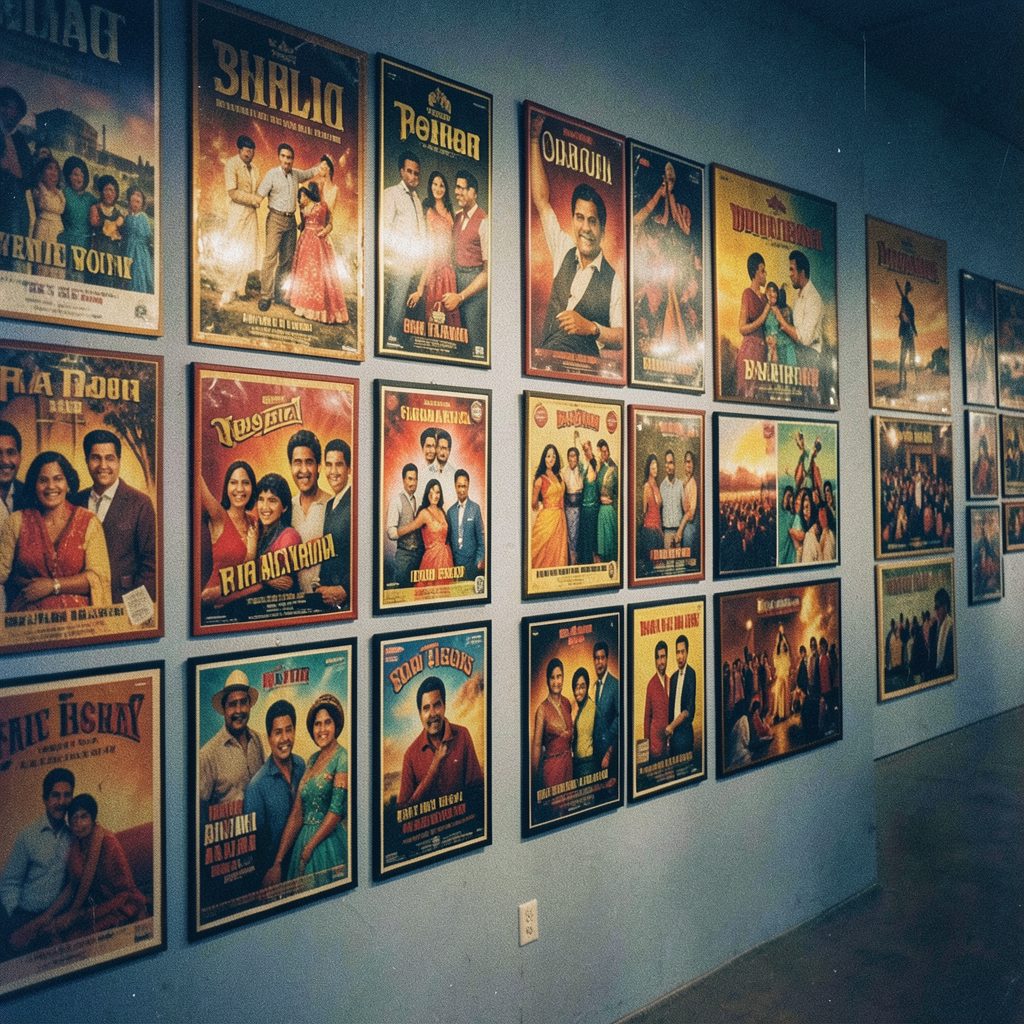

Bollywood’s Most Controversial Censorship Battles
Bollywood censorship has never been limited to trimming a few seconds from a song or muting a line of dialogue. The Central Board of Film Certification (CBFC) has often become the centre of arguments about religion, sexuality, caste, politics, history and artistic freedom. Directors, producers, actors and activists have challenged decisions in court, while audiences have turned banned or heavily edited films into major cultural talking points.
For Australian viewers, these disputes can look familiar yet operate within a different system. Hindi films reach cinemas in Sydney, Melbourne, Brisbane and Perth through specialist distributors, while streaming platforms bring older controversies to homes far beyond India’s theatrical market. Australia’s classification framework may permit material that creates a crisis in India, but local release versions can still reflect commercial edits, distributor choices or regional sensitivities.
| Film | Main dispute | Outcome in India | Why it still matters |
|---|---|---|---|
| Bandit Queen (1994) | Sexual violence, profanity and representation of Phoolan Devi | Released after legal intervention and cuts | Established a major free-speech precedent |
| Fire (1996) | Same-sex desire and conservative protests | Initially released, then withdrawn and restored | Made queer representation a national censorship issue |
| Black Friday (2004) | Alleged impact on an ongoing criminal case | Delayed for years | Raised questions about prior restraint |
| Udta Punjab (2016) | Drug use, politics and regional image | Released after limited cuts | Strengthened the argument against excessive edits |
| Padmaavat (2018) | Historical interpretation and Rajput identity | Released after title and content changes | Showed the force of protest outside formal censorship |
| Lipstick Under My Burkha (2017) | Female desire and “lady-oriented” storytelling | Released after an appeal and cuts | Challenged gendered ideas about acceptable cinema |
How the certification system became a battleground
India’s CBFC is formally a certification authority, yet public debate often treats it as a censor. Its certificates determine whether a film receives unrestricted exhibition, adult-only access or a refusal. Because theatrical distribution remains vital to Bollywood, even small delays can affect marketing campaigns, advance bookings, overseas premieres and satellite rights.
The system has also been criticised for inconsistent standards. A violent action sequence may survive with limited changes, while an intimate scene, political slogan or reference to a religious figure can trigger extensive objections. This unevenness has encouraged filmmakers to seek judicial review, especially when cuts appear ideological rather than connected to age suitability.
Bandit Queen became an early landmark. Shekhar Kapur’s film portrayed rape and the brutal life of Phoolan Devi with an intensity that prompted objections from her family and others. The Bombay High Court’s intervention helped establish that disturbing content cannot automatically be removed simply because it is uncomfortable. For film scholars, the case remains a defining example of the conflict between dignity, realism and artistic expression.
Films that pushed sexuality into public debate
Deepa Mehta’s Fire confronted censorship through a lesbian relationship between two married women. The film was certified and released in 1998, but protests led to cinema disruptions and the removal of prints in some locations. Critics claimed the story attacked Indian family values, while supporters argued that the reaction proved why queer characters needed visibility.
The film’s importance grew because the controversy moved beyond the certificate itself. Political groups pressured exhibitors, and the government ordered a review before the film was eventually allowed to return to screens. In Australia, where Hindi-language films have long circulated through Indian community cinemas and festivals, Fire was often discussed as both a relationship drama and a test of whether diaspora audiences could access stories excluded from mainstream Indian exhibition.
Lipstick Under My Burkha faced a different but related form of gatekeeping. The CBFC initially objected to sexual scenes, abusive language and what it described as a focus on women’s fantasies. Its “lady-oriented” reasoning became notorious because it appeared to define female desire as inherently unsuitable for public cinema. The Film Certification Appellate Tribunal later cleared the film with cuts, turning its release into a widely followed argument about sexism in film regulation.
Politics, history and the price of delay
Anurag Kashyap’s Black Friday was held back because authorities feared it could affect legal proceedings connected with the 1993 Bombay bombings. The film was based on investigative material and presented multiple perspectives, but its delay demonstrated how censorship can operate through timing. A film may eventually be cleared, yet a postponed release can weaken publicity, financing and box-office momentum.
Udta Punjab produced one of the sharpest modern confrontations between a filmmaker and the CBFC. The film’s depiction of drug abuse in Punjab was interpreted by some critics as politically damaging, particularly because it appeared close to a state election. The board demanded a large number of cuts and the removal of references to Punjab. After the Bombay High Court ordered a more limited change, the film reached cinemas with its central argument intact.
The dispute revealed a key difference between classification and image management. A film can warn about addiction without endorsing it, and a regional setting can be essential to the story rather than an insult to that region. Australian audiences may recognise the issue through local debates over whether a film damages the reputation of a city, suburb or community. The market may be smaller than India’s, but distributors still consider political controversy when booking screens in Melbourne or Sydney.
When protest becomes informal censorship
Padmaavat showed that official certification is only one part of the release process. The historical epic faced threats, vandalism and intense protests from groups who objected to its interpretation of Rajput history. Although the film was eventually certified after changes to its title and disclaimers, theatres in several areas remained vulnerable to intimidation.
The controversy raised a difficult question: can a film be considered legally cleared if exhibitors fear physical disruption? Formal censorship may end at the certificate, but informal pressure can continue through protests, social-media campaigns, threats against performers and demands for boycotts. This is particularly significant in Bollywood, where a film’s visual spectacle and opening weekend are closely tied to its commercial survival.
For viewers tracking releases from Australia, access can therefore vary by platform and territory. A film unavailable in Indian cinemas may appear later through an international streaming deal, festival screening or home entertainment release. A streaming guide may help audiences compare where titles are listed, but availability should always be checked against legitimate local services and Australian classification information.
What viewers should consider when watching disputed films
Censorship battles are easier to understand when a film is separated from the headlines surrounding it. Viewers can assess what was removed, why the stated reason was given and whether the cuts changed character development or political meaning. These checks are useful for Australian audiences, who may be watching a version classified under the Australian Classification Board rather than the original Indian release.
- Compare the Indian certificate with the Australian rating and consumer advice.
- Look for reliable reporting on cuts, title changes and delayed releases.
- Distinguish a court order from a voluntary edit made by a distributor.
- Consider whose perspective the film presents and whose testimony may be missing.
- Check whether a protest concerns content, historical accuracy, marketing or public safety.
- Watch the restored or director-approved version when it is legally available.
The Australian market adds another layer to the discussion. Hindi films may receive an M, MA 15+ or R 18+ classification, allowing material that would have created severe objections in India to remain available with age restrictions. At the same time, community screenings connected with Diwali, university societies and Indian cultural organisations may attract family audiences, making distributors cautious about explicit content even when the law permits it.
These films also sit within a longer Bollywood tradition of negotiating social boundaries. Looking back at Sharmila Tagore’s early career shows how performers and filmmakers have repeatedly tested ideas about respectability, glamour and women’s agency. The language of censorship changes, but the argument over who gets to define “appropriate” cinema remains remarkably persistent.
Bollywood’s censorship history is ultimately a record of competing authorities: the certification board, courts, governments, protest groups, exhibitors and audiences. Fire made sexuality visible, Black Friday exposed the consequences of delay, Udta Punjab challenged political editing and Padmaavat demonstrated how street pressure can shape a release after certification.
For Australian viewers, the practical takeaway is to treat a certificate as one piece of evidence rather than the whole story: check the local classification, identify whether cuts were imposed or voluntary, and compare the available version with the film’s documented release history.