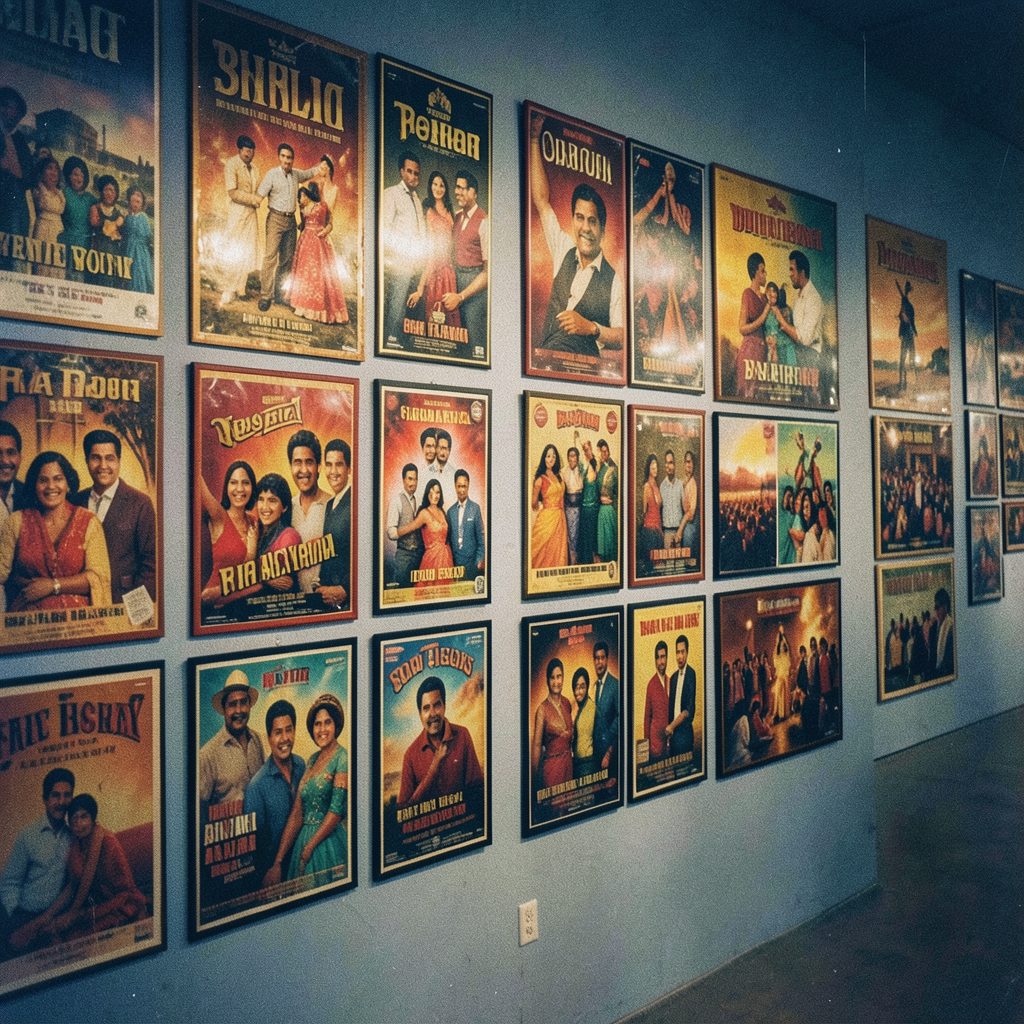

Bollywood's most iconic on-screen friendships through the years
For more than seventy years, Hindi cinema has treated friendship as something close to religion. Plot points hinge on it, song sequences lean on it, and a strong bond between two or three characters often carries the emotional weight a Western drama might put into a love story. Australian viewers who grew up with Hindi films on SBS, or who queue at Federation Square for the Indian Film Festival of Melbourne, know exactly what this feels like. The friendships are loud, loyal, occasionally ridiculous, and almost always the reason a film survives in memory long after its release date.
There is also a recognisably Aussie reason these friendships land so well. The mateship that Bollywood celebrates on screen — the willingness to drop everything for a mate, the bickering that hides real affection, the group that becomes a chosen family — maps neatly onto the way people talk in Sydney pubs or share a brew at a Carlton coffee spot. Whether you are streaming from a Perth share house on a quiet Sunday arvo or catching a community Diwali screening at a local cinema, these are the pairs and trios that have shaped how a generation understands the genre.
Dil Chahta Hai and the birth of urban bonding
Before 2001, the Hindi film friendship usually arrived wrapped in melodrama. Farhan Akhtar's directorial debut changed that. Dil Chahta Hai sketched three college friends in a modern Mumbai that felt startlingly familiar to viewers anywhere — Akash (Aamir Khan), the wisecracking mama's boy, Sameer (Saif Ali Khan), the soft-hearted romantic, and Siddharth (Akshaye Khanna), the brooding artist. Each friendship revealed a different register of love, from petty jealousy to unspoken loyalty in a hospital ward.
The film also put Goa on the map as a setting for friend-bonding trips, which still pulls Australian backpackers to the Indian coastline every winter. Songs like "Tanhayee" and the title track became staples at home Diwali parties across Brisbane and Adelaide, played loud enough to wake the neighbours. Few films balanced humour, heartbreak, and adult conversation so cleanly, and the trio remains the template other ensemble dramas compare themselves to.
Jai and Veeru, the brotherhood that started it all
No list of on-screen friendships in Indian cinema can skip past the twosome from Sholay. Ramesh Sippy's 1975 western-followed two small-time crooks, Jai (Amitabh Bachchan) and Veeru (Dharmendra), who took on a dacoit for a village they had no real reason to save. The famous motorcycle scene, the jab-and-joke rhythm, and the way Veeru fusses about his turban while Jai stays stoic — every element became part of Bollywood's shared vocabulary.
For diaspora audiences in Australia, the duo's hold is partly nostalgic. Many older viewers at Indian Film Festival of Melbourne screenings will tell you Jai-Veeru was the first friendship they saw on screen that felt brotherly in the Indian sense of the word. The scene where they rebel together, banter, and eventually stand back-to-back against a larger force still gets quoted in group chats between mates who have only ever met online. Even the way families sing "Yeh Dosti" together during community gatherings ties back to this pairing.
Munna Bhai and Circuit, comedy with a pulse
Rajkumar Hirani's Munna Bhai M.B.B.S. and Lage Raho Munna Bhai turned a gangster and his sidekick into the warmest odd couple in modern Hindi cinema. Sanjay Dutt plays Munna, the would-be reformer who believes in treating patients with love, while Arshad Warsi is Circuit, the loyal follower who will tag along into any hospital ward or Gandhigiri demonstration. The chemistry feels like two brothers who never quite grew up, and many of their best lines still get tossed around in cricket banter.
Australians of Indian background especially value the pair because the films travel well on streaming platforms such as Stan and Netflix AU, where they sit comfortably beside other comfort rewatches. The friendship holds even when the plot goes heavy, and the family-friendly humour makes the films easy to recommend to non-Indian mates who want a window into a corner of popular cinema. Few sequels kept an on-screen bond this intact, and the duo's reunion beats still play well at late-night hostel gatherings.
Three Idiots and the pressure of expectations
Rajkumar Hirani's 3 Idiots is many things at once — a satire on the coaching-mill education system, a romance, and a study of long-term friendship between three engineering students. Rancho (Aamir Khan), Raju (R. Madhavan) and Farhan (Sharman Joshi) arrive at college with different fears and stay together through exam failures, family pressure, and an unexpected reunion at a wedding.
The "give me some sunshine" sequence and the late-film reveal of Chatur's speech have become touchstones in classrooms around the world. In Australia, the trio is often the first Hindi film shown to high school friends learning Hindi at community weekend schools from Parramatta to Footscray. The friendship's appeal is partly the gentle mockery of expectation: each friend rescues the others from the versions of themselves they were supposed to become. It is the kind of film that rewards rewatching on a slow weekend arvo, alongside a casual brekkie.
Hera Pheri, the silliest friends anyone could have
Priyadarshan's Hera Pheri (and its sequel Phir Hera Pheri) gave Hindi cinema the most quotable trio of would-be schemers. Baburao (Paresh Rawal), Raju (Akshay Kumar) and Shyam (Suniel Shetty) spend most of the runtime trying to get rich through plans that collapse before they begin. The lines, especially "25 din mein paisa double" and Baburao's many grumbles about his tenants, are referenced in everyday Aussie-Indian group chats the way other mates quote Kath & Kim.
The friendship is built on insults, yet the trio chooses each other when things get serious. For Australian viewers, the films work as Saturday-night background entertainment, the sort of thing you half-watch while firing up the barbie with mates in the backyard. The cast's willingness to commit to nonsense without losing the underlying warmth is what makes the bond feel earned rather than scripted. It is friendship with the volume turned up, and that is exactly why the trilogy travels across decades.
| Friendship | Key film | Year | Bond type | Why it endures |
|---|---|---|---|---|
| Dil Chahta Hai trio | Dil Chahta Hai | 2001 | Urban college mates | Defined modern Hindi ensemble drama |
| Jai & Veeru | Sholay | 1975 | Sworn brothers | Set the blueprint for screen pairs |
| Munna & Circuit | Munna Bhai M.B.B.S. | 2003 | Reformer & sidekick | Heart under the humour |
| Rancho, Raju & Farhan | 3 Idiots | 2009 | College trio | Friendship against the system |
| Babu, Raju & Shyam | Hera Pheri | 2000 | Schemers & survivors | Quotable, rewatchable chaos |
Friendly picks worth a stream
- Dil Chahta Hai (2001) — the cleanest entry point if you want friendships that feel grown-up.
- Sholay (1975) — a foundational watch, ideally in a group setting where everyone can sing along.
- Munna Bhai M.B.B.S. (2003) — perfect comfort viewing for a Friday night in.
- 3 Idiots (2009) — pair it with friends who have never seen a Hindi film.
- Hera Pheri (2000) — best enjoyed with a group chat running alongside.
The simplest way to enjoy any of these films is the way their makers intended: with company, even if the company is a mate in the next room looking up from their phone every few minutes. The screen friendships only truly land when the room itself feels a little more connected. Drop the popcorn bowl between the couches, let the volume sit a notch too high, and the on-screen bond tends to drift straight into the off-screen one.