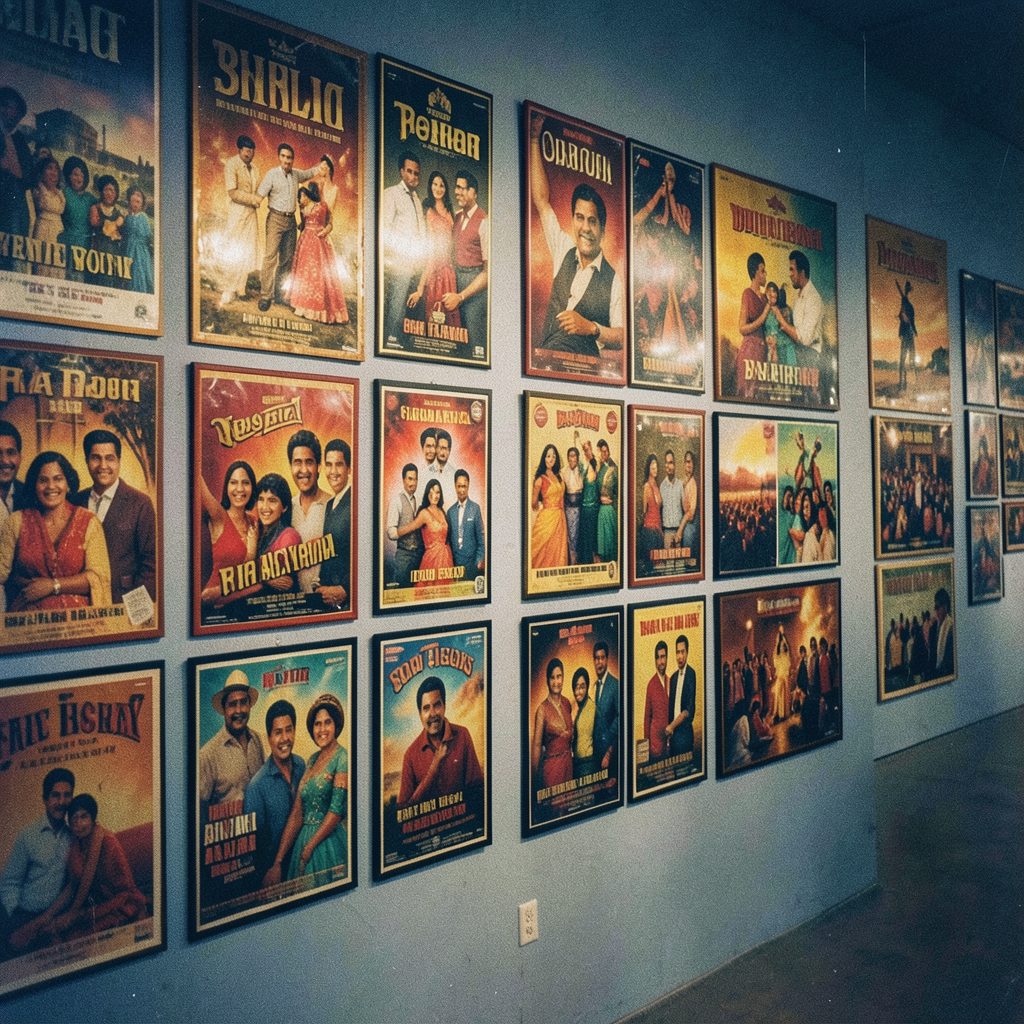

Bollywood's Most Memorable Character Deaths
Hindi cinema has a peculiar relationship with endings. Audiences from Hyderabad to Sydney's Harris Park queue for matinee shows not just to be thrilled but to be moved, and nothing moves a Hindi film crowd quite like a well-orchestrated screen farewell. In a tradition where scores swell into a final hymn and the camera holds on a face that will not return, these mortal exits serve as emotional punctuation, cultural commentary, and the most reliable engine of mass catharsis.
The impact of these scenes stretches far beyond a two-hour runtime. Fans flood social feeds with teary confessions, and diaspora communities in places like Melbourne, Perth, and suburban Liverpool turn theatres into spaces of shared grief. A Bollywood death is rarely quiet. It arrives as an event, summoned by years of music buildup, and lands like a verdict on the living characters left behind.
Looking back across decades of song-dance tragedy reveals a pattern. Directors use final scenes to compress social messages into a single frame - poverty, patriarchy, communal division, terminal illness - turning a screen corpse into a sermon. Some of those sermons linger long enough to reshape how Australian streaming platforms curate their catalogues, and how families of Indian descent pass grief rituals across oceans.
The Sacrificial Martyrs Who Take Everything With Them
Few archetypes resonate as potently as the man who knows he is dying and arranges his affairs with beatific calm. Preity Zinta's student character in Kal Ho Naa Ho still triggers widespread sobbing whenever the print plays on SBS World Movies reruns, because Shah Rukh Khan's Aman steps aside so a friend might marry the woman they both love. The composition is textbook Bollywood: light shines through venetian blinds, a heart monitor beeps, and a farewell dialogue arrives like scripture.
Salman Khan carried similar weight in Tere Naam, his third-act hospital pass after a catastrophic accident ending the agony his lover had already endured. These sacrificial exits speak directly to South Asian audiences raised on stories of bhai selflessness, and they explain why late-night screenings still draw packed houses at Blacktown's Hoyts whenever one airs.
The trope even touches modern ghost stories. SRK's parting shot in Darr's closing montage and Aamir Khan's wanderer in Laal Singh Chaddha both lean on the martyr's quiet approval of life without him, leaving the heroines to carry an inherited sorrow outward into their own adult lives.
Lovers Who Find Death As The Only Vow
Romantic tragedies are a Hindi specialty, and the genre arrived fully formed with Qayamat Se Qayamat Tak, whose two young leads die in an ending that still inspires walking-tour pilgrimages to Mahabaleshwar. Their deaths were not arbitrary - the lovers refused family permission to love, so the script denied them breath - and the moral architecture established a template that directors revisit every few years.
Aashiqui 2 amplified the template by making the male lead a rock singer whose liver fails under addiction, leaving his partner to sing his final composition on television. Lootera picked up the same inheritance, with Ranveer Singh's outlaw walking into snow after a brief period of happiness, his mistress later discovering his lifeless body and a forged document. These are demanded endings, where storybook love carries an author-paid price.
For many viewers in Western Sydney and the eastern suburbs of Melbourne, the moment when Veer-Zaara finally takes his leave after decades of wrongful imprisonment still feels communal. Audiences learn to expect that lovers cannot fully win, only win enough.
Mothers, Fathers, And The Family That Cannot Survive
Parental deaths in Bollywood function as the engine that puts the rest of the story in motion. Darsheel Safary's misunderstanding about his late brother in Taare Zameen Par hinges on an accidental exit rendered as both grief and gift - two parents who can barely speak to each other without remembering the boy. The film's title sequence is essentially a funeral remembered.
Kal Ho Naa Ho surfaces here too. Jaya Bachchan's matriarch disappears offscreen just before the story begins, her absence moulding every domestic decision her daughter makes. Mother India, Kalicharan, and a hundred revenge sagas all build around a father who will not live to see his child graduate, leaving vengeance or virtue as the only remaining inheritance.
These scenes rarely rely on fake blood. They rely on the steady cut of a saree pallu falling or a wheelchair left empty, and Australian fans who arrive late to a community hall screening in Brentwood or Punchbowl often find they are already weeping for a parent they never knew on screen.
The Villain's Finale And The Moral Balance Sheet
Not every notable exit belongs to a saint. Sanjay Dutt's fiery surrender in Kaminey, and especially his original Agneepath role as a son who dies avenging his father, gave Hindi villainy a tragic register that the previous decade of moustache-twirling had avoided. Bad deaths can be moral lessons just as surely as good ones.
Vishal Bhardwaj's adaptations of Shakespeare have built entire cinematic careers around the villainous fade-out. Omkara's ending, Maqbool's blood-soaked reverie, and the violent finale of Haider each pull from the same playbook as the classic deaths: the bad man gets what he deserves, but in a frame that makes the audience flinch. Shah Rukh Khan's final shot in Don 2 lands somewhere between these two traditions, killed by ambush while still performing for a camera.
Modern Reinventions And What Comes Next
The current generation of writers has begun to soften the death count. Sanjay Leela Bhansali's recent productions keep their tragic farewells offscreen, letting gestures and silences do the work. At the same time, younger streaming-first productions from Mumbai studios now allow characters to live longer lives, with platforms like Viacom18's JioCinema commissioning scripts where survival has replaced sacrifice as the dramatic climax.
Still, audiences tend to flock to upcoming films that promise one more iconic farewell. The forthcoming releases calendar on WassupBollywood tracks which directors are likely to keep the tradition alive across the next slate of expected premieres. For Australian viewers waiting on Stan and Netflix libraries to refresh, a single unexpected title can carry the full weight of an old-fashioned sorrow.
Conversations Off-Screen: Podcasts, Panels, And Fan Chatter
Fans absorb these endings, and the conversation has expanded. Discussions on cinema culture have moved from café terraces in Delhi to podcast booths in Surry Hills and Fitzroy, where diaspora critics record hour-long breakdowns of a single film's final reel. Some voices treat the screen death almost like a chess move, while others approach it as a moment of inherited grief.
Recent interviews with surviving cast members have added context. Priyanka Chopra Jonas, Hrithik Roshan, and Deepika Padukone have all described the emotional toll of shooting a deathbed scene across multiple takes, with the production team often silently lowering the set lights to honour the actor's commitment. Australian podcasts dissecting that craft have begun to fill entire archives dedicated to on-screen passings, and for listeners curious about the wider scene, formats like the casino podcast tips archive show how obsessive coverage thrives across genres, including Bollywood farewell analysis.
These deaths become reference points across cultures. Generations of viewers across India and its diaspora, from those watching matinees at Sydney's smallest Indian cinema in Liverpool to SBS World Movies retrospectives on Foxtel, return to them whenever a director signals another passing is imminent. A weekend at home with one of the older classics queued remains the most reliable way to feel the full weight of a Hindi cinema ending, and the next director bold enough to break a heart is never far from release.