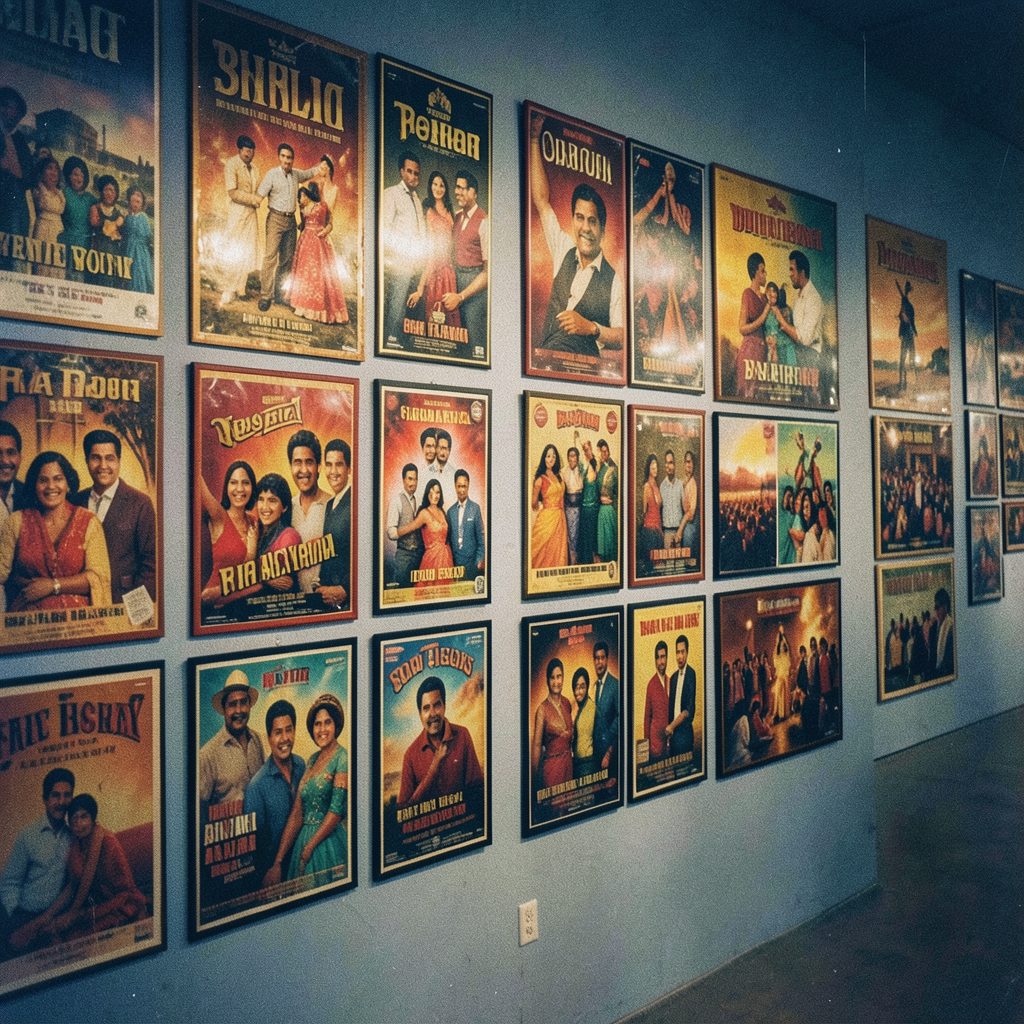

Bollywood's supporting players are finally becoming the main act
For decades, Hindi cinema ran on a familiar rhythm: one marquee star carried the film while everyone else orbited around them. The hero system, with its matinee idols and family-tree connections, decided who got top billing long before a script was written. That template is now being rewritten, slowly and unevenly, by a generation of character actors, sidekicks, villains' henchmen, and quiet scene-stealers who are stepping into protagonist roles and refusing to step back.
The change is visible in the kinds of films greenlit by Mumbai studios, the names appearing on teaser posters, and the box office math that producers are willing to risk. From multiplexes in Sydney's Harris Park, where Bollywood posters share walls with grocers' signs, to suburban Melbourne screenings where diaspora families queue for opening weekend, audiences are signalling with their ticket money that supporting players can anchor a film just as convincingly as a third-generation star kid.
The casting room is finally listening
Casting directors in Mumbai have spent years stockpiling talent that the industry underused. Actors like Pankaj Tripathi, who spent a decade delivering monologues in single-scene roles, became proof that a small part can launch a long career. Producers watched his climb with interest, then started greenlighting vehicles built around similar journeymen. The shift is partly market-driven: the budgets that once bought a Khans-led tentpole now fund mid-budget dramas that can profitably centre a less famous face.
Writers, too, have stopped writing cameos for these performers and started writing for them. Where the script once said "friend of the hero, one scene," it now says "central character with a backstory the audience follows for ninety minutes." That rewriting reflects what filmmakers have observed at test screenings in places like Brisbane's Event Cinemas Indooroopilly, where diaspora crowds respond strongly to grounded, regionally rooted characters rather than larger-than-life imports.
Audiences want something different
There is a quiet rebellion happening in ticket queues. Viewers, particularly younger ones, have grown tired of formula. They want messy protagonists, morally ambiguous leads, and stories that do not wrap up in a song-and-dance number. Supporting actors have always specialised in these textures: the grief-stricken uncle, the crooked cop, the anxious office worker. Moving them into the lead is simply a casting decision finally catching up with what the audience has been asking for.
The diaspora audience has been an early indicator of this trend. In Dandenong's Little India precinct and across Western Sydney, conversations about new Hindi releases increasingly centre on which character actor has been given a real part this time. Social media chatter from these suburbs often dictates whether an indie Hindi release gets a wider theatrical push in Australia. Fans will tell you straight up, "good on him for finally getting a proper part," and that kind of plain-spoken recognition carries weight.
Veteran performers carrying the banner
A handful of names have made the transition look almost inevitable. Pankaj Tripathi's post-Gunjan Saxena career, Nawazuddin Siddiqui's independent streak after Gangs of Wasseypur, and Rajkummar Rao's steady climb through small productions show a path that newer actors are actively trying to follow. Each of them did the supporting-actor grind first, and each of them now has the freedom to choose scripts that suit them rather than chasing whatever their famous co-stars are doing.
That freedom has consequences for the broader industry. Production houses that once locked their slate around three or four major stars now have credible alternative leads to pitch to distributors. Australian programmers at events like the Indian Film Festival in Melbourne and its Sydney counterpart at Parramatta increasingly include films built around character actors that would have been hard to imagine as headliners a decade ago.
Streaming platforms changed the equation
The economics of Hindi cinema have been quietly rewritten by streaming services. OTT platforms do not need a famous face to drive subscriptions the way television did in the 1990s, and they do not have the same pressure to recover theatrical budgets in one weekend. This has given producers room to take bets on actors whose box office pull was unknown, and several of those bets have paid off.
| Element | Traditional hero-centred model | Current emerging model |
|---|---|---|
| Lead source | Family lineage or established superstars | Character actors and proven performers |
| Budget tier | Big-budget multi-starrers | Mid-budget focused productions |
| Marketing focus | Star's name above the title | Story and ensemble credited |
| Distribution path | Wide theatrical release only | Theatrical plus OTT release |
| Audience target | Mass-market Hindi belt focus | Diaspora and urban multiplex focus |
| Risk appetite | Safe, formulaic scripts | Stronger narrative risk-taking |
| Career path | Debut through connections | Long supporting-actor grind |
For Australian viewers, the streaming layer matters even more. Stan, Binge, and the global Netflix catalogue have made it possible to follow the work of character actors across multiple projects without waiting for theatrical windows. Many of the names now getting lead Hindi roles have been known to Australian fans for years through streaming-only releases, and that familiarity softened the risk when they finally moved to the top of a poster.
Box office math has shifted
There was a time when a film without a top-tier star was assumed to struggle at the box office. That assumption is now being tested, and the results are mixed but encouraging. Mid-budget productions fronted by character actors have been turning profits through word of mouth, particularly in the single-screen territories and smaller-town circuits that Bollywood still relies on. The maths are tight but workable, and producers are taking notes.
International markets have become a stabilising factor. Theatrical revenue from Australia, the Gulf, and the United Kingdom can carry a film that underperforms in Mumbai's suburbs. With diasporic audiences already inclined to support films fronted by familiar character actors, distributors are more willing to invest in marketing campaigns that highlight these names rather than burying them beneath a famous co-star's face.
The diaspora's quiet influence
Overseas Indian communities have long been Bollywood's most loyal overseas market, but their influence on casting decisions has grown sharper. Distributors in cities with concentrated diaspora populations now report weekly on which character-driven films are pulling audiences and which are falling flat. That data travels back to Mumbai faster than industry gossip ever did.
In Sydney and Melbourne, the conversation around new Hindi releases often centres on subtle things: which actor carries a scene without histrionics, which face registers across generations, which performance will play well to parents as much as to teenagers. That measured, slightly understated Australian sensibility, where punters would rather a film be quietly good than loudly flashy, has helped character actors find an audience willing to follow them out of the supporting cast.
What this means for the next generation
The most interesting consequence of this shift is what it does to aspiring actors watching from theatre schools and small-town auditions. The path to a lead role no longer runs exclusively through dance classes, modelling contracts, and family connections. It runs through craft, patience, and the willingness to do good work in small parts until the industry notices. That is a healthier ecosystem, even if the financial rewards remain uneven.
For fans, the change is mostly visible in the texture of new releases. Films feel less like product placements for a single star and more like ensemble work where everyone has something to do. Whether the trend deepens or fades will depend on the next few years of box office, but the supporting-to-lead pipeline that was once a quirky exception is becoming a recurring story in Hindi cinema.
The shift is not yet complete, and the marquee star system still dominates the biggest Bollywood productions of any given year. But the supporting actors being promoted to leads today are no longer anomalies to be celebrated in trade magazines. They are evidence that the industry's idea of who can carry a film is finally widening. For Australian fans planning an arvo screening in Parramatta or browsing Bollywood listings at their local multiplex, that change is already reflected in which posters line the walls and which names get top billing.