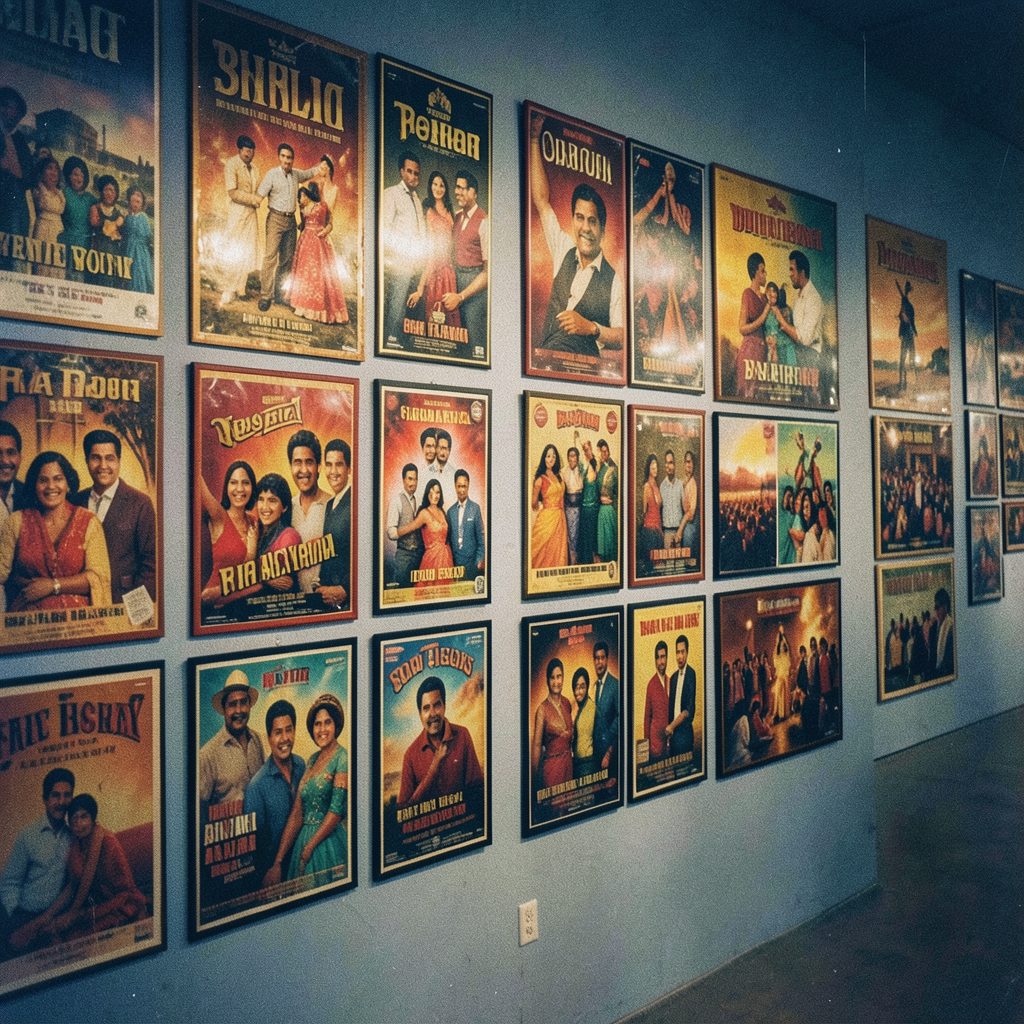

Bollywood's South Indian remakes are ruling the box office
Bollywood's growing appetite for South Indian originals has reshaped the economics of Hindi cinema over the past decade. Producers increasingly chase Telugu, Tamil, and Malayalam hits, betting that a Hindi-language version with a familiar star and a polished soundtrack will find the same audience twice. The gamble is paying off in crores and in footfalls, and the trend shows no sign of cooling.
For viewers in Australia, where Bollywood and regional Indian films have long shared multiplex screens in Sydney's Harris Park strip and Melbourne's CBD cinemas, this crossover has changed what reaches local theatres. Hindi-dubbed or remade versions of regional hits now arrive faster, marketed heavily on diaspora radio, YouTube channels, and streaming platforms. The result is a richer, sometimes confusing, menu for fans who once watched distinctly separate industries.
The proven hit formula and why it cuts risk
Remaking a South Indian blockbuster is, at heart, a risk-management strategy. The story has already passed the toughest audience test: paying ticket-buyers in Chennai, Hyderabad, Kochi, and Bengaluru. Hindi filmmakers inherit proven emotional beats, tested plot twists, and characters the regional audience has already embraced. That removes a major unknown from a business where flops can swallow a production budget within a single Friday.
There is also the music advantage. Originals such as the songs from Jai Ho and Why This Kolaveri Di became viral before remakes were even announced, giving composers a head start on cover versions. Producers lean on this familiarity to soften marketing costs and to seed trailers with songs audiences already recognise. The economics work in reverse too — a Hindi hit can spawn Telugu and Tamil versions, turning one successful story into three revenue streams across India.
Star power and pan-Indian casting
Casting has become the second engine of the remake economy. South Indian stars like Prabhas, Yash, and Allu Arjun already command pan-Indian draws, especially after Baahubali and Pushpa opened up Hindi-belt audiences. When a Hindi remake locks in a Bollywood A-lister alongside a regional star in a cameo or villain role, the film effectively markets itself to both fan bases.
This crossover strategy mirrors how Indian cinema is consumed in multicultural hubs like Sydney and Melbourne, where Punjabi, Tamil, Telugu, and Hindi communities overlap at weddings, community centres, and weekend cricket matches. A Hindi film with a Telugu lead can therefore feel native to more than one diaspora group. Producers have noticed, and casting decisions increasingly reflect that blended identity rather than treating South and North as separate markets.
Budgets, ROI, and production discipline
The numbers tell the clearest story. South Indian productions often run leaner than their Bollywood counterparts, with tighter shoots, fewer international locations, and smaller star fees relative to overall budget. When a Hindi studio adapts one of these films, it inherits a script designed for efficiency, then layers on bigger music launches, wider release patterns, and bigger marketing spends. The ROI potential is what makes financiers comfortable.
The economics matter for Australian distributors too. Event Cinemas and Hoyts, the two chains that dominate local multiplexes, programme Indian films based on advance bookings from diaspora hubs in Parramatta, Blacktown, and Tarneit. A remake with a hot trailer and a guaranteed opening weekend is easier to schedule than an experimental original, which is why remakes disproportionately occupy prime Friday slots.
| Film | Original (Year, Language) | Original Lifetime (₹ Cr, approx.) | Hindi Remake (Year) | Hindi Verdict |
|---|---|---|---|---|
| Drishyam | 2013, Malayalam | 75 | 2015 | Hit, ₹188 cr worldwide |
| Kanchana | 2011, Tamil | 30 | 2014 (Laxmii on OTT) | Average theatrical, strong OTT |
| Jai Bhim | 2021, Tamil | Niche, strong on OTT | Not remade, Hindi-dubbed widely | Dubbed version popular |
| Vikram Vedha | 2017, Tamil | 100 | 2022 | Below expectations, ₹135 cr |
| Soorarai Pottru | 2020, Tamil | Strong on OTT | 2023 (Sarfira) | Flop, ₹60 cr |
The figures above are a reminder that even proven stories do not guarantee Hindi success — yet the spread of outcomes is narrow enough that studios still consider remakes a safer bet than greenlighting an untested script.
The Australian diaspora angle
Australia sits at a unique vantage point for this trend. People of Indian ancestry numbered roughly 900,000 in the most recent census, with Indian-born residents among the largest migrant groups in the country. Melbourne's western suburbs, particularly around Tarneit and Point Cook, host large Telugu and Tamil communities, while Sydney's north-west has long been Punjabi-Hindi heartland. Film choices on local screens reflect that mix.
Regulatory realities also shape what reaches local theatres. The Australian Classification Board rates every film before release, and recent reforms have tightened rules around smoking imagery, which has forced a few Hindi remakes to make minor edits to clear an M or MA15+ rating. Streaming platforms such as Netflix Australia and Amazon Prime Video now licence South Indian originals directly, often bypassing the remake pipeline entirely and giving Australian fans the unfiltered regional cut weeks after theatrical release.
This double access — dubbed original on OTT and remade Hindi version in cinemas — has changed how fans decide what to watch. Many now watch the South Indian version first with subtitles, then catch the Hindi remake purely for the music, the Bollywood star, and the social experience of a packed opening weekend.
Streaming synergy and the music pipeline
Streaming has rewired the remake business in ways that extend beyond cinema. When a Telugu or Tamil film trends on Netflix India, its Hindi remake is announced within months, sometimes before the original has finished its theatrical run. Music labels use this momentum to release Hindi versions of hit songs, and YouTube views from India, the Gulf, and Australia compound the buzz.
For Australian listeners, this means regional film soundtracks now chart on local Spotify and Apple Music playlists. DJs in Melbourne and Sydney frequently drop South Indian tracks at Bollywood nights, and the same audiences queue up for the Hindi cover weeks later. The two industries have effectively become one shared playlist, with remakes serving as the bridge that keeps the older single-screen cinema audience connected to newer regional storytelling.
Common drivers behind recent Bollywood–South crossovers worth noting:
- A proven Telugu or Tamil original with at least 100 crore lifetime collections
- A director or writer willing to adapt rather than copy the source material
- A Hindi lead actor with existing pull in Tier 2 and Tier 3 cities
- A music launch timed to coincide with trailer drops across YouTube and Instagram
- An OTT partner lined up before theatrical release to soften box-office risk
Standout South Indian originals that became Hindi remakes:
- Vikram Vedha (2017) into Vikram Vedha (2022) with Hrithik Roshan and Saif Ali Khan
- Drishyam (2013) into Drishyam (2015) with Ajay Devgn
- Jersey (2019) into Jersey (2022) with Shahid Kapoor
- Hit (2020) into Hit: The First Case (2020) with Rajkummar Rao
- Master (2021) whose Hindi dub outperformed several official remakes
For Australian fans who want to follow the trend without burning through ticket money, a simple rhythm works: catch the South Indian original on Netflix or Amazon Prime within a month of its Indian release, then decide whether the Hindi remake offers enough — usually a new star pairing, a fresh soundtrack, or a Hindi-language social experience — to justify a multiplex trip on the opening Friday. Local cinemas in Parramatta, Footscray, and Glen Waverley reliably programme both, and most offer student and family rates that bring a Saturday matinee down to roughly fifteen Australian dollars. Watching in that order also makes the remake feel like a bonus rather than a replacement, which is the mindset that has kept Australia's love for both industries thriving through every release cycle.