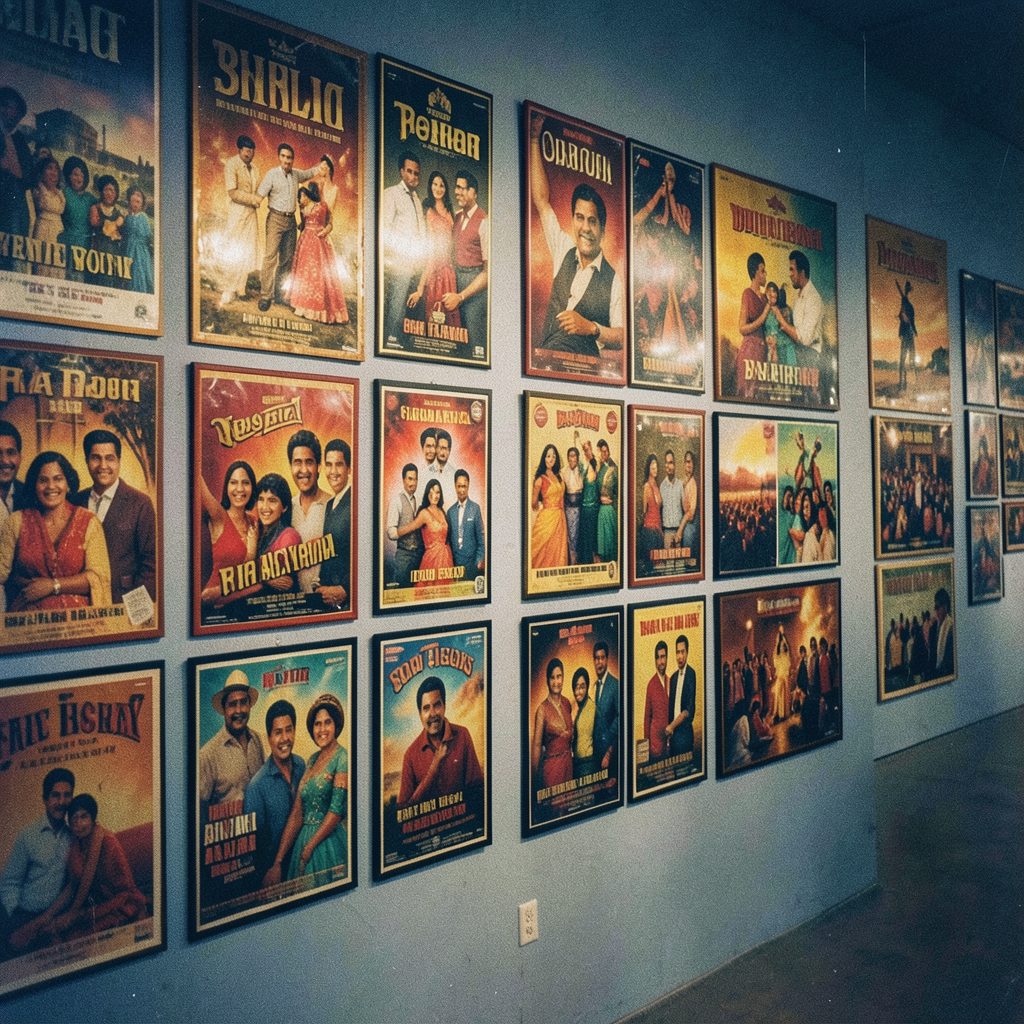

Why classic Bollywood re-releases are filling cinemas again
Across India's box office landscape, a curious pattern has taken shape. Theatres that once relied on Friday mega-releases are now finding that a 25-year-old Shah Rukh Khan romance or a 1995 sports drama can outperform several new Hindi films on the same weekend. The re-release business, once treated as a quaint curiosity, has become a reliable revenue stream, a brand-building exercise, and a way for exhibitors to fill seats during otherwise thin weeks.
In Australia, where the South Asian diaspora is concentrated around suburbs like Harris Park in western Sydney, Parramatta's Little India strip, and pockets of Melbourne's western corridor, this trend has a particular flavour. Bollywood isn't only consumed at home through streaming; locals queue up at HOYTS and Event Cinemas for the communal experience of watching Shah Rukh, Madhuri or Aamir on a big screen, sometimes in IMAX. Independent cinemas in Brisbane and Adelaide have programmed similar retrospective weeks.
This shift raises questions about pricing, marketing, restoration costs, and how distributors decide which titles deserve a second life. The piece unpacks the commercial logic, the audience psychology, and the technical upgrades behind the surge, with a focus on what Australian exhibitors and viewers can learn from India's evolving playbook.
The economics of bringing old films back
Re-releases succeed because the marginal cost is unusually low. The film exists, the negatives have been scanned, and the actors do not need to be paid again. Studios spend primarily on restoration, marketing, and print logistics, while collecting a meaningful share of ticket revenue from titles that have already paid back their original investment.
For exhibitors, the math is appealing. A re-released classic can fill afternoon and arvo shows that would otherwise run empty. Families who have already streamed the film at home still turn up because the darkened hall, the popcorn, and the cheering crowd offer something a 55-inch television cannot. Australian pricing typically sits below the cost of a new Hollywood blockbuster, making it accessible for multigenerational groups.
Distributors also use re-releases strategically to keep a star's brand warm. A well-timed run reminds audiences of an actor's filmography, builds pre-launch buzz, and earns press coverage no paid campaign could buy.
How recent re-releases have performed
The numbers from the past three years tell a clear story. The summary captures the most-discussed theatrical re-releases from Hindi cinema, their original release year, restoration format, and global theatrical gross during the second run.
| Film | Original Release | Restoration Format | Re-Release Gross (Approx.) |
|---|---|---|---|
| Tumbbad | 2018 | 4K | ₹35 crore worldwide |
| Lagaan | 2001 | 4K | ₹22 crore worldwide |
| Dilwale Dulhania Le Jayenge | 1995 | 4K | ₹80 crore worldwide |
| Mughal-e-Azam | 1960 | 4K colourised | ₹15 crore worldwide |
| Gadar: Ek Prem Katha | 2001 | 2K remaster | ₹50 crore worldwide |
| 3 Idiots | 2009 | 4K | ₹65 crore worldwide |
What stands out is the consistency. Even modest restorations can return eight-figure sums when paired with the right release window, usually a public holiday, festival period, or a milestone anniversary. The film's cultural footprint matters far more than its production budget ever did.
Why nostalgia sells tickets in 2026
The strongest predictor of a successful re-release is emotional attachment. Audiences who first watched these films during college or courtship now have disposable income and the freedom to spend an evening reliving those moments. Theatrical nostalgia taps into memory in a way home viewing cannot match, especially when shared with peers who experienced the same cultural moment.
Generational hand-me-downs also play a role. Parents who grew up quoting lines from "DDLJ" or "Lagaan" now introduce the same films to their children, who experience the original in theatres decades later. Festival programming around Diwali and Eid amplifies this effect by aligning re-releases with family gatherings.
There is also a counter-streaming factor. With so much new Hindi content dropping weekly on OTT platforms, audiences have grown wary of underwhelming original releases. A known classic carries no such risk, which is itself a selling point in a market saturated with mid-budget flops.
How Australian cinemas are riding the wave
Australian exhibitors have adapted the model to local realities. HOYTS has programmed Bollywood classics as part of its "Reel Classics" slate, while Village Cinemas in Melbourne has hosted weekend matinees that draw diaspora crowds from Footscray, Tarneit, and the broader western suburbs. Event Cinemas at Parramatta has leaned into festival programming around Diwali, screening older films alongside new releases.
Pricing strategies vary. Some chains offer discounted tickets in the $12 to $16 range, below standard new-release pricing, while others bundle a re-released film with a meal deal or a future premiere ticket. The "brekkie and a Bollywood classic" Sunday morning slot has quietly become a hit in Brisbane and Adelaide, where retirees and young families share the same cinema.
Independent programmers have been bolder. Cinemas like the Hayden Orpheum in Cremorne, Sydney, have hosted single-night screenings of restored classics with introductory talks from cultural commentators. These events sell out within hours, suggesting that audiences will pay a premium when the screening feels curated rather than routine.
The technical side: restorations, 4K and IMAX
Behind the nostalgia lies serious technical work. Re-releases increasingly involve 4K scans from original negatives, frame-by-frame colour correction, and remastered Dolby Atmos soundtracks. The visual upgrade alone can transform a 1990s romance into something that feels contemporary.
IMAX conversions are the most dramatic upgrade. Films originally shot in standard formats are being re-rendered for IMAX screens, with adjusted aspect ratios and enhanced audio. The spectacle of Shah Rukh Khan's larger-than-life persona, or the cricket climax of "Lagaan", lands very differently on a Melbourne or Sydney cinema wall.
For studios, the calculus is straightforward. Invest a few crore in restoration, recover several times that in theatrical revenue, and preserve the film's legacy for future streaming cycles. The restored master becomes a permanent asset for future anniversary runs and international festival play.
What this means for the current Bollywood slate
Re-releases do not directly compete with new Hindi films, but they reshape audience expectations. When a 25-year-old romance outperforms a 2026 thriller, producers and studios face uncomfortable questions about storytelling, originality, and star power. The result has been a slow recalibration, with several mid-budget projects opting for safer premises, stronger music, and clearer emotional hooks.
Star-driven re-releases serve as useful benchmarks. They remind distributors that name value, paired with the right window and format, still moves tickets. Several actors have used successful re-runs as informal audience testing, gauging which older titles to spotlight before announcing sequels or reboots. Audiences curious about this legacy programming can revisit SRK's most iconic dialogues for the scenes that travel most strongly across generations.
There is also a downside. Too many re-releases in quick succession can dilute novelty, reduce per-title grosses, and frustrate audiences who prefer fresh content. Distributors are now treating re-releases as spaced events rather than opportunistic stunts.
Practical lessons from successful re-releases
For distributors and exhibitors weighing a re-release, a few patterns have emerged from the most successful campaigns. A handful of specific levers tend to separate profitable runs from forgettable ones, worth treating as a checklist.
The strongest campaigns combine a clear cultural anchor with strong technical presentation and a price point that encourages group bookings. Marketing leans into communal viewing, and follow-up events extend the run beyond opening weekend.
- Anchor the run to a clear cultural moment, whether Diwali, a star's birthday, or a milestone anniversary.
- Invest in restoration quality. A strong film feels dated when projected in poor condition.
- Price below current new-release tickets to encourage family groups and multi-ticket purchases.
- Lean into communal viewing through social media quote cards, sing-along promos, and costume contests.
- Add follow-up events such as cast reunions, director Q&As, or trivia nights to extend the run.
- Coordinate with diaspora communities and Indian associations in Sydney, Melbourne, Brisbane, and Perth.
- Track streaming behaviour before the theatrical window to identify classics regaining traction online.
Treat the re-release like a premiere, not a discount bin. The films that succeed do so because someone believed they still belonged on a big screen and convinced audiences to agree. When that conviction is paired with the right technical upgrades, price, and cultural moment, the box office does the rest. In an industry searching for reliable hits, the classics have quietly become one of them.