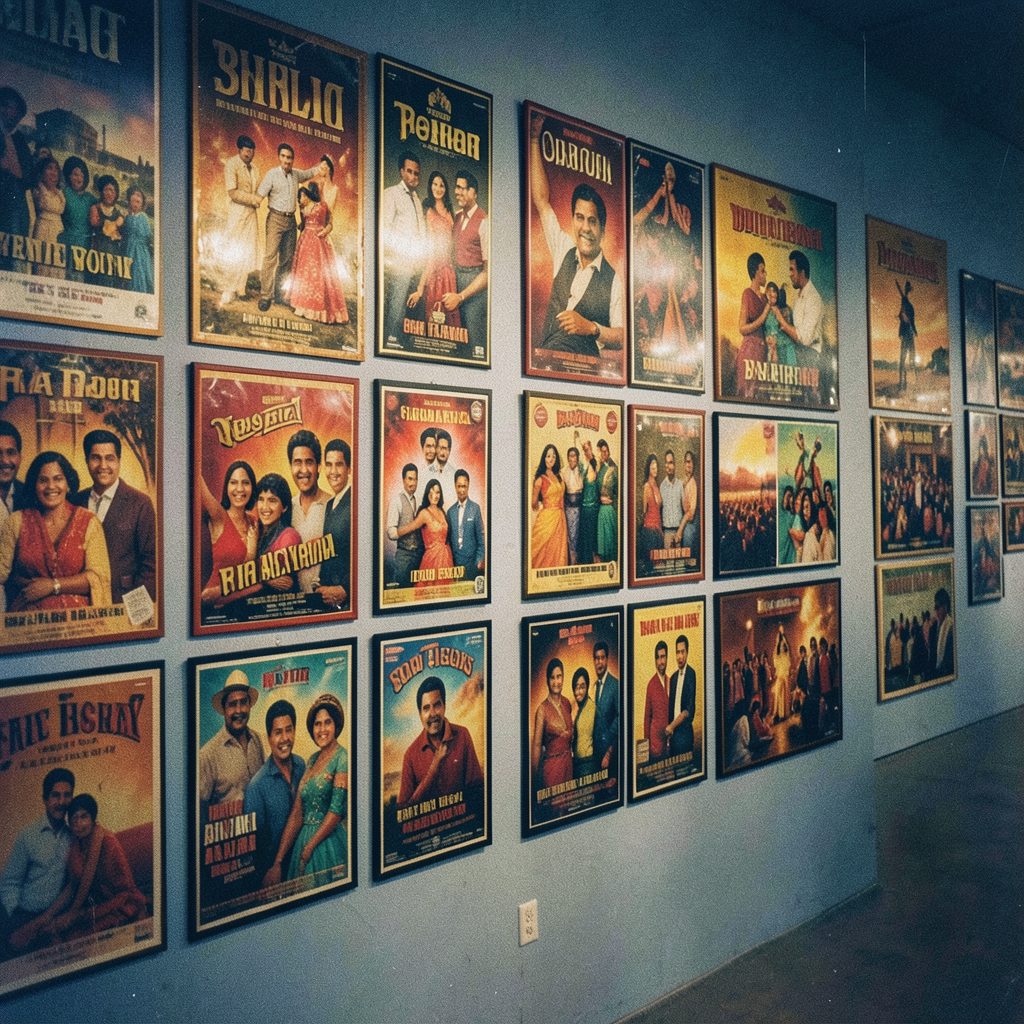
The return of the Bollywood interval block in Australian cinemas
For decades, a Bollywood screening meant a guaranteed pause roughly halfway through the film. The house lights would lift, the screen would dim, and audiences would shuffle out for samosas, popcorn refills, and a quick stretch. That ritual faded across the 2010s as Hindi cinema tightened its runtimes and chased younger, streaming-friendly viewers. In 2025 and into the next release cycle, however, the intermission is creeping back onto cinema schedules from Sydney to Perth, and Australian exhibitors are noticing.
Australia hosts one of the most cinephilic South Asian diasporas outside the United Kingdom, and the country's Hindi film audiences stretch well beyond the obvious hubs. Drive twenty minutes from the Sydney CBD and you land in Parramatta, where the local Westfield complex runs weekend matinees that frequently fill with extended family groups booking out entire rows. Cross the border to Melbourne and the same scene plays out at Glen Waverley's Hoyts, where a Friday night Shah Rukh Khan premiere can outdraw the latest Marvel opener. Brisbane's Sunnybank and Adelaide's multicultural northern suburbs tell the same story.
The interval is more than a break. It is a cultural ritual built into the way many diaspora households consume Hindi cinema. Parents who grew up queueing at single-screen theatres in Mumbai, Delhi, or Kolkata want their children to feel that same anticipation, that same communal pause before the second half delivers its emotional payoff. When a modern multiplex trims the runtime to ninety-eight minutes and skips the intermission, something about that handover between generations breaks.
This season's slate of re-releases, anniversary restorations, and a small but growing list of new productions designed with built-in halts is restoring that missing beat. Australian cinema chains have begun marketing interval blocks as a feature rather than a relic, and the format is shaping how stories get told again.
The cultural weight of the Bollywood intermission
An interval scene is not just a darkening of the house lights. In classical Hindi cinema, the break typically lands between the song-and-dance spectacle and the rising action, often right after a dramatic confrontation or before the final reveal. The pre-interval half builds anticipation, while the post-interval half delivers confrontation, climax, and resolution. Directors from Manmohan Desai to Yash Chopra used this structural cut to give audiences a moment to absorb the emotional stakes.
For diaspora audiences in Australia, that structure mirrors something deeper. It echoes the family gatherings where elders narrate stories in stages, and it mirrors the way Indian television serials still air in distinct daily chunks. When families book out a row at Event Cinemas in the Brisbane suburb of Indooroopilly, they are not just watching a film. They are participating in a ritual that connects Sydney-born teenagers to their grandparents' Saturday matinees at Liberty Cinema or Metro.
The intermission also functions as a social mixer. Friends debate plot twists over butter popcorn. Parents translate jokes for kids still learning Hindi. First dates find a natural pause point to check whether the evening is going well. None of this survives when a film is streamed straight through on a laptop at home.
How modern distribution eroded the format
The disappearance of the interval coincided with the rise of multiplex economics and global streaming platforms. When Netflix and Amazon Prime Video started commissioning mid-budget Hindi originals around 2018, runtimes shrank to compete with international formats. A typical Yash Raj or Dharma production that once ran three hours with a clear intermission began arriving at ninety-eight minutes, single arc, no pause. The structure that defined masala storytelling for half a century simply vanished.
Multiplex chains followed the same logic. The shorter the runtime, the more screenings a theatre could schedule in a day. Seven shows instead of five meant more ticket revenue per screen. The interval scene, which can stretch fifteen to twenty minutes including house lights and restroom queues, ate into that turnover math.
International co-productions reinforced the trend. When a Hindi film is co-financed with studios in Los Angeles or London, runtime decisions get filtered through Western editorial expectations. Executives unaccustomed to the intermission format often push for a tighter cut. The result is a generation of Hindi films that feel structurally foreign to long-time fans in Harris Park or Tarneit, who notice when the second half arrives without warning.
Multiplex economics are driving a quiet revival
Several Australian exhibitors are now rethinking the math. Hoyts, Event, and Village all operate larger concession stands in their suburban sites than in CBD locations, and interval breaks drive measurable spikes in popcorn, soft drink, and samosa sales. A fifteen-minute pause moves more bodies through the foyer than any mid-film advertisement.
The economics also work in reverse during re-releases. When Yash Raj Films brought Dilwale Dulhania Le Jayenge back to selected screens in 2024, the marketing positioned the intermission as a heritage feature. Sold-out screenings at Dendy Opera Quays and Hoyts Melbourne Central confirmed that audiences would happily sit through a three-hour classic for the full ritual.
New Australian distributors working with South Asian content have started booking interval-friendly slots at off-peak hours, where a longer runtime plus a single daily screening can match the revenue of two shorter showings. The break becomes an asset, not a cost.
Re-releases, restorations, and a renewed nostalgia wave
The clearest evidence of the interval's return sits in the re-release calendar. Mughal-e-Azam's restored 4K version toured major Australian cities in late 2024, complete with its original intermission cue and a specially designed house lights cue. Sholay's fiftieth-anniversary programming in 2025 followed the same playbook. Fans travelled from as far as Wollongong and Geelong for screenings at heritage venues such as the Astor Theatre in Melbourne and the Ritz in Randwick.
These events sell because they sell the complete experience. The grain of restored film, the orchestral score, the costumes, and yes, the intermission, all combine into something a home theatre cannot replicate. Industry observers call this the experiential premium, where the ticket price covers access to a feeling rather than a viewing.
Local promoters have leaned into the format. Indian film festivals in Parramatta, Brisbane, and Perth have built entire programs around interval screenings, complete with themed snacks, costume contests, and guest speakers who frame the second-half reveal. The format returns revenue not only to exhibitors but to the small businesses catering to South Asian audiences.
Streaming fatigue and the theatrical counter-movement
Australians spent heavily on streaming subscriptions through the early 2020s, and fatigue has set in. Cinema attendance across the country stabilised and then grew modestly in 2024 and 2025, driven largely by event-style releases and communal experiences. Bollywood is benefiting from this shift.
Hindi film audiences in particular have shown a willingness to pay premium prices for screenings that feel like occasions. Group buys from Sydney's south-west suburbs, the Hills District, and Melbourne's outer east now regularly fill Friday night shows. The intermission is part of what makes that outing feel like an occasion rather than a routine.
For younger viewers raised on streaming, the interval is novel. A first-time cinema visit with a grandparent becomes memorable precisely because of the pause, the lights coming up, and the brief freedom to move around. Families report that kids talk about the interval more than the plot afterwards.
How the interval scene shapes storytelling now
Directors are responding. New productions aimed at theatrical release are once again being structured around a natural break. Editors plant cliffhangers, partial confrontations, and emotional high points roughly forty-five minutes before the midpoint. The post-interval half opens with a recap, a musical interlude, or a tonal shift that primes the audience for the climax.
This is a quiet but real creative shift. Screenwriters describe writing two acts with a hinge rather than three acts in a straight line. Cinematographers shoot sequences that can either end the first half or continue into the second, depending on how the edit lands. The interval has become a structural choice again, not an afterthought.
For Australian viewers, this means films arriving with built-in rituals worth turning up for. The comeback is not just about nostalgia. It is about a format learning to serve new audiences without losing what made it special in the first place.
| Element | Traditional interval format | Modern single-block format | Hybrid revival format |
|---|---|---|---|
| Runtime | 2h 45m to 3h 30m | 1h 35m to 2h | 2h 30m to 3h |
| Structure | Two distinct halves with a clear emotional hinge | Three continuous acts | Two halves with optional short pause |
| Audience experience | Communal, ritualised, multigenerational | Solo or small group, transactional | Communal, with concessions break |
| Concession sales | High, predictable spike during pause | Steady across runtime | Moderate to high, depending on pause length |
| Best suited to | Re-releases, family matinees, festival screenings | Streaming-friendly originals, weekday shows | Weekend premieres, diaspora events |
Ways audiences and venues can build on the format
- Book interval-friendly screenings as group events, with everyone committing to stay for both halves
- Support local South Asian film festivals that programme restored classics with full intermissions
- Visit suburban multiplexes in diaspora hubs such as Parramatta, Glen Waverley, or Sunnybank for the most authentic crowd atmosphere
- Treat the break as part of the experience by queuing early for popcorn or chai rather than skipping it
- Encourage cinema managers to schedule heritage re-releases with their original intermission cues intact
- Talk to kids and newer fans about why the pause matters, so the format travels across generations
The next time you book a Bollywood film at your local multiplex, stay through the lights coming up. The interval is not a leftover from a slower era. It is the small piece of theatrical magic that turns a screening into a memory, and Australian cinemas are quietly betting that you will want more of it.