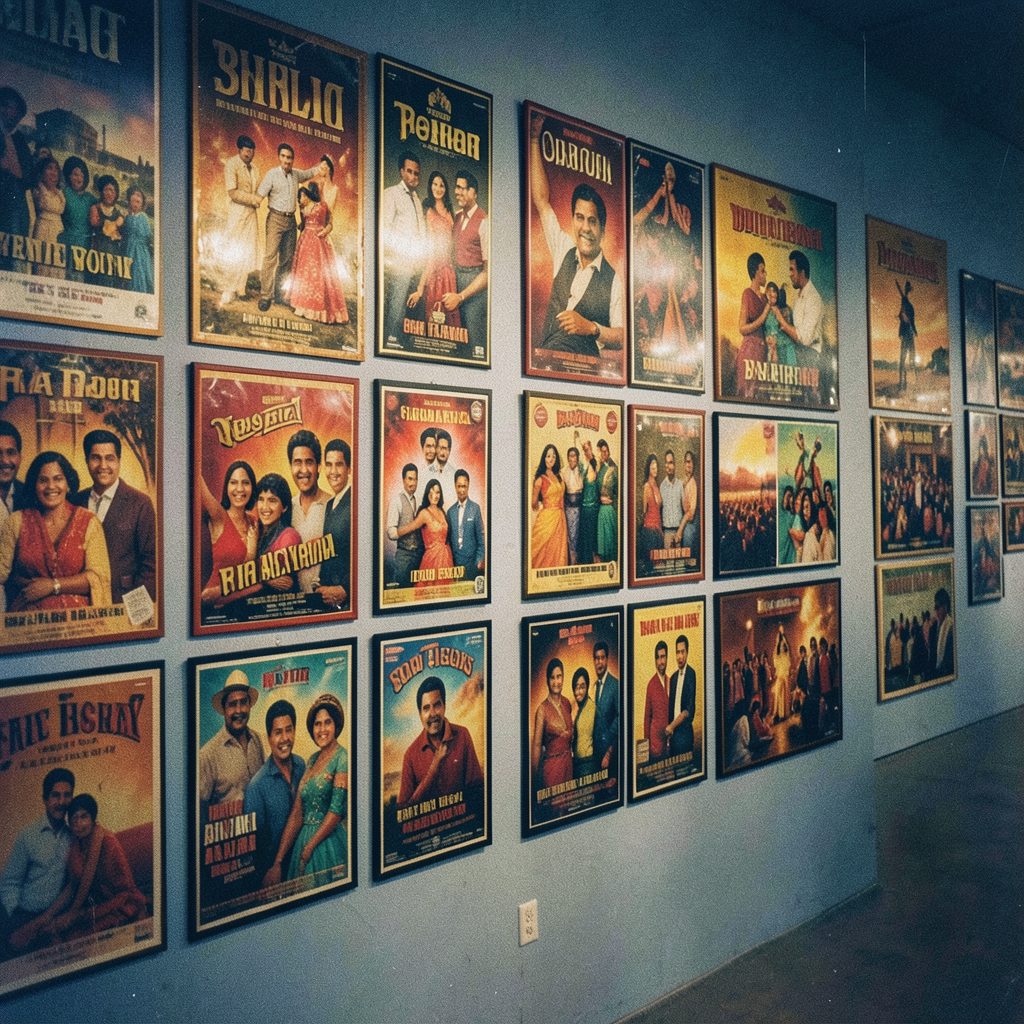

Why Bollywood Is Moving Away From Its Big Ensemble Films
Bollywood once treated a crowded cast as part of the spectacle. A single film could bring together several major stars, established character actors, comic performers, romantic leads and an entire supporting family. These productions created shared cultural moments, especially when audiences gathered during Diwali or travelled to the cinema with extended family.
That model has not disappeared, but it is becoming harder to finance and organise. Rising star fees, shorter theatrical windows, streaming competition and increasingly segmented audiences have changed how Hindi films are developed. Producers now often prefer a clear central hero, a recognisable franchise or a smaller group of bankable names.
For viewers in Australia, the shift is especially visible. Hindi films still attract audiences in Sydney and Melbourne, while Brisbane, Perth and Adelaide have growing Indian communities and regular Bollywood screenings. Yet the local market is selective, and a film needs strong reviews, cultural buzz or a major star to persuade audiences to leave home for a theatrical release.
The economics behind smaller casts
An ensemble cast multiplies the cost of a production. Every major actor brings a fee, scheduling demands, entourage expenses and marketing expectations. When several popular performers appear together, audiences may assume the film will be a large-scale event, placing pressure on the producer to deliver expensive locations, elaborate songs and impressive action.
That financial equation has become less forgiving. A film with one central star can be marketed around a single identity, while an ensemble must give every important performer enough screen time to justify the casting. If the story becomes crowded, the result can feel like a collection of cameos rather than a satisfying drama.
The risk is clear in a market where theatrical revenue is unpredictable. Even a strong opening weekend in Mumbai or Delhi may not cover the cost of an oversized production if word of mouth weakens. Australian distributors face a similar calculation when deciding how many screens to book in Sydney, Melbourne or the Gold Coast.
Stars, streaming and the new attention economy
Streaming platforms have changed the value of a film’s cast. A major actor can attract subscribers to a series, while a smaller film can achieve long-term visibility through recommendations and social media. This has encouraged producers to build projects around one powerful lead instead of assembling five or six expensive names.
The change also reflects how people watch cinema. Viewers may discover a Hindi film through a trailer clip, a song, an interview or a viral scene before deciding whether to watch the full feature. A focused star vehicle is easier to promote in short-form content. Its poster, teaser and publicity campaign can communicate a simple promise within seconds.
Music remains important to that process, even when a film has fewer characters. New releases, playback vocals and promotional singles can create attention before opening day, while specialised coverage of Bollywood music helps keep songs visible after a theatrical run. A compact cast allows the marketing to connect the soundtrack more directly to the central storyline.
What has changed for the main cast
- Several stars sharing the screen can divide publicity rather than multiply it.
- Streaming contracts may favour one headline performer with a clear audience identity.
- Shorter promotional campaigns leave less time to explain a complex ensemble narrative.
- Supporting roles are increasingly filled by strong character actors instead of additional superstars.
A crowded story is harder to balance
Classic Hindi ensemble films often moved between romance, family conflict, comedy, action and melodrama. That variety gave viewers something for everyone, but modern audiences are more likely to judge a film by its tonal consistency. A serious social drama can lose impact if comic subplots and celebrity appearances interrupt its emotional rhythm.
Screenwriting has also become more character-focused. Contemporary filmmakers frequently build stories around a protagonist’s personal transformation, trauma, ambition or moral dilemma. A large cast can weaken that arc by giving too many characters competing motivations. The film may still look busy, yet feel emotionally thin.
This does not mean audiences have lost interest in groups. Sports dramas, family stories, heist films and workplace comedies can still thrive with several substantial roles. The difference is that current ensembles usually need a strong organising idea, rather than simply collecting famous faces for promotional appeal.
Comparing the old ensemble model with today’s approach
The contrast is less about talent than about the conditions surrounding a release. Older films could depend on long theatrical runs, repeat viewings and word of mouth spreading through families and local communities. Modern productions often face a rapid verdict from opening-weekend figures, online reactions and streaming availability.
| Feature | Traditional Bollywood ensemble | Contemporary mainstream approach |
|---|---|---|
| Central appeal | A group of stars and interconnected subplots | One lead, one premise or one franchise |
| Production cost | High fees across several prominent performers | Concentrated spending on the main star and spectacle |
| Story structure | Multiple genres and parallel character arcs | A tighter emotional or commercial hook |
| Marketing | Posters, songs, television appearances and long promotion | Trailers, social clips, digital campaigns and influencer reach |
| Theatrical life | Longer runs and repeat family viewings | Fast opening performance followed by streaming |
| Overseas strategy | Broad appeal across diaspora audiences | Targeted promotion in selected cities and platforms |
| Main risk | Uneven screen time and narrative overload | Overdependence on a single actor or concept |
For Australian viewers, the difference can be felt in programming decisions. A multiplex in Melbourne may give priority to a large Hindi release during a festival period, while a smaller ensemble drama receives fewer sessions and relies on strong reviews. Indian Film Festival of Melbourne and community screenings can provide alternative space for films that do not fit the biggest commercial model.
Audience habits are becoming more selective
The Hindi film audience is now divided across theatrical, streaming and social platforms. Some viewers want an action spectacle with a major hero, while others prefer intimate dramas, investigative stories or regional cinema. The broad family audience that once made a multi-star film an obvious choice is still present, but it competes with many more entertainment options.
In Australia, this fragmentation is visible during Diwali and school holiday periods. Families may choose a large Hindi release for a shared outing, yet younger viewers can wait for a streaming premiere or watch a dubbed South Indian film. Ticket prices, travel time and subtitle availability also matter, particularly outside Sydney and Melbourne.
International audiences further influence casting. A film designed for the Indian market may use a supporting actor who is familiar to viewers in Maharashtra or Uttar Pradesh but less recognisable in Australia, the United Kingdom or North America. Producers increasingly favour a single star whose name can carry the film across multiple territories.
Why ensembles still matter to Bollywood
A well-made group film offers pleasures that a solo-star vehicle cannot easily reproduce. It can show different generations, social classes and conflicting points of view within the same world. Family relationships gain depth when every character has a distinct history, while comedy often becomes more natural when performers can create an ensemble rhythm.
Some of Bollywood’s most memorable performances have come from actors who were not the official lead. A grandmother, sibling, friend, rival or colleague may provide the scene that audiences remember years later. This is particularly valuable in stories about families and communities, where no single character should dominate every emotional beat.
Roles that give an ensemble film real purpose
- A family member whose choices challenge the protagonist.
- A rival with a believable goal rather than a disposable villain role.
- A comic character who advances the plot instead of pausing it.
- A mentor or elder who adds cultural and emotional context.
- A secondary couple whose story mirrors or complicates the main romance.
The strongest examples treat casting as architecture. Each performer supports the theme, changes the protagonist’s decisions or reveals something essential about the setting. When famous actors are included only for publicity, the audience notices the imbalance quickly.
The path back to richer casts
Bollywood does not need to recreate the old formula exactly. Modern ensemble films can be made at a controlled scale, with fewer songs, carefully designed locations and contracts that reflect the size of the production. Anthology formats, linked stories and limited-series adaptations may also provide more space for several leading performers without forcing every plotline into a two-hour theatrical film.
Franchises could support this return as well. A successful fictional world can introduce new characters while retaining familiar faces, spreading the cost and creative responsibility across multiple instalments. The challenge is to make each role meaningful rather than turning the cast list into a promotional headline.
The decline of large ensemble casts reflects changing economics, viewing habits and storytelling preferences, not a loss of interest in collective narratives. When producers balance star power with purposeful character design, a crowded cast can once again feel expansive rather than excessive. For audiences choosing a Hindi film in Australia or anywhere else, the practical takeaway is simple: look beyond the number of famous names and judge whether every character has a reason to be there.