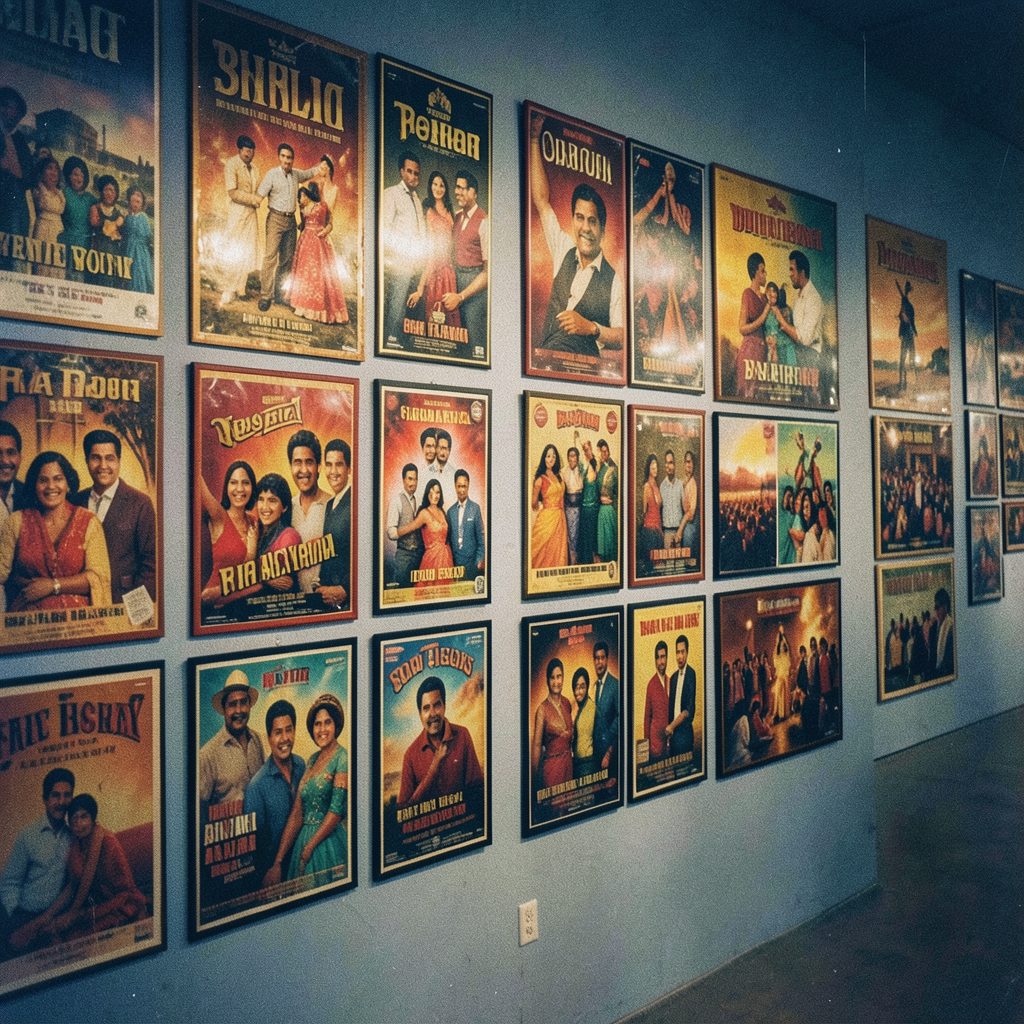

Why Bollywood child actors are landing heavier dramatic roles
Bollywood has spent decades casting children as the lighter relief, a small singing sidekick, or a wide-eyed bystander meant to soften a grown-up plot. That arrangement is being quietly dismantled. Recent Hindi dramas have begun handing young performers scenes of grief, betrayal and moral conflict, and producers are noticing how effectively a child's unfiltered delivery can carry a serious narrative.
For viewers in Sydney and Melbourne, where Bollywood screenings have long drawn crowds in suburbs such as Parramatta and Harris Park, the shift shows up at local multiplexes and on the same streaming apps that already carry Australian originals like Bluey and Heartbreak High. Stan, Foxtel and Netflix have become parallel showcases, and Indian productions are now being programmed for an Australian viewer happy to watch a Hindi-language drama one evening and a Melbourne-shot series the next.
From set decoration to story engine
A generation ago, a child role in a Hindi film usually meant a flashback to the hero's innocent childhood, a cute entrance designed to win an award, or a brief appearance near the interval to soften a tense moment. The new wave of filmmakers leans on something harder to fake: genuine interior life. Scenes once written for a veteran are now going to a ten or twelve-year-old directed to play ambiguity rather than innocence.
The change reflects a wider appetite in Hindi cinema for slow-burn family dramas and morally grey characters. Audiences raised on Bollywood romance now watch Korean, Scandinavian and Australian thrillers on the same tablets they use for the latest Bhansali release. They expect layered writing, and child characters deliver that depth without stretching a 150-minute runtime.
Streaming platforms rewrote the casting brief
The arrival of major streaming platforms in India, and their aggressive expansion into markets like Australia, has been the single biggest driver of the trend. Series formats let writers develop a young character across eight or ten episodes, giving child actors room to breathe that a feature film rarely offers. Producers are reading scripts where a child's arc is the spine of the season, and casting directors are scouting theatre schools.
| Production format | Typical child role | Runtime pressure | Audience mode |
|---|---|---|---|
| Pre-2015 theatrical Bollywood | Decorative cameo | Short, scripted for cuteness | Single sitting |
| Post-2018 theatrical drama | Supporting beat | Limited, must peak quickly | Weekend crowds |
| OTT series (2021 onward) | Lead or co-lead arc | Sustained over 8–10 episodes | Binge viewing |
| Hindi-Australian co-production | Cross-cultural young narrator | Flexible, location-led | Festival circuit |
The table captures how the role has expanded from a single scene to a fully fleshed character journey. Earlier briefs asked for "a sweet child who can cry on cue"; current briefs ask for a young performer who can sustain melancholy across an episode, hold a long take, and react truthfully to adult co-stars. That brief did not exist ten years ago.
Training grounds have changed too
A new kind of training has grown up around the demand. Theatre workshops in Mumbai, Pune and small-town India now run weekend modules on screen acting for under-sixteens, covering camera awareness and emotional memory. Parents who once enrolled children in dance classes now sign them up for screen-test boot camps. Several young performers credit mentors trained in Method or Stanislavski-influenced traditions, while others learned from dubbed international dramas.
Australian parallels are easy to draw. Young local performers who have come through the Australian Children's Television Foundation or through youth theatre in Melbourne's inner suburbs have long prepared for similar demands. The Hindi industry is catching up to a model Australian producers have relied on for decades, and the two ecosystems are starting to share casting directors at festivals.
Audience appetite from Mumbai to Melbourne
In Australia, Bollywood has never been a niche interest. Suburban Melbourne and western Sydney host regular screenings and live tours, and the Melbourne Indian Film Festival has carved out a respected corner of the city's cultural calendar. That audience tends to be multi-generational and bilingual, comfortable switching between Hindi and English entertainment in the same weekend. When Indian filmmakers release a child-led drama, they are judged against Bluey as much as against Dangal.
Local classification matters too. The Australian Classification Board's decisions on a film's rating can affect whether families book a Saturday matinee, and producers are aware that a heavy-handed child performance can read as inappropriate to local reviewers. The result is a quiet pressure to keep young roles emotionally truthful but narratively suitable, a balance the best recent Hindi productions have managed.
What studios now demand from a young lead
Casting breakdowns have changed vocabulary. Phrases such as "comfortable with silence" and "able to hold eye contact" appear more often than "beautiful smile". Directors want young performers who can take a redirection and rebuild a take around it, who can listen to adult dialogue and reply in character rather than recite a line. The age range has stretched, with productions now casting children as young as seven for roles once written for teenagers.
There is a commercial calculation behind the choice. A strong child performance sells merchandise, secures festival attention and travels well on streaming platforms where Bollywood's middle-class romance once struggled. Producers have noticed that an affecting turn from a young lead can do the heavy lifting that a star vehicle used to manage, at a fraction of the cost.
Roles, risks and real protections
The trend is not without tension. Child labour laws in India, mirrored by Australian frameworks that govern local shoots, cap working hours and mandate tutoring on set. Studios have responded with dedicated child welfare officers and on-set tutors, while union bodies publish guidelines for emotionally demanding scenes. Critics argue that some recent roles ask too much of young performers.
The Indian Film and Television Producers' Council now requires clearer scripts for child actors and more substantial rehearsal time. Several directors have spoken about pulling back from scenes they felt crossed a line, and a small chorus of child psychologists has begun advising productions directly. The industry is learning that a complex role and a complicated shoot are two different things.
Notable young performers shaping the moment
The recent wave of complex child performances spans streaming series and theatrical films, with several names defining the moment. Australian fans tracking the Bollywood scene will recognise some from festival screenings and from titles appearing on Stan and Netflix.
Performances that have shifted the casting conversation:
- A 2022 courtroom drama in which an eleven-year-old carries the moral weight of an entire family subplot, prompting comparisons to young leads in international festival cinema.
- A 2023 series set in a Mumbai chawl where a nine-year-old's quiet observations anchor the political themes of an eight-episode arc.
- A 2024 sports drama built around a teenage sprinter whose inner conflicts are given more screen time than the training montages.
- A streaming anthology episode that follows a single child through a school day, shot almost entirely in long takes with minimal adult dialogue.
Roles that producers point to when defending the trend:
- The lead in a 2021 family drama whose grief over a parent's illness runs through the entire second half of the film.
- A 2022 historical piece that places a young character at the centre of a politically charged village dispute.
- A 2023 psychological drama that asks a twelve-year-old to play the same scene at three different emotional ages.
- A 2024 road movie in which the child protagonist is the only character who speaks for the first forty minutes.
- A bilingual Hindi-Marathi film that cast a non-professional child in a role that anchors an otherwise star-driven ensemble.
Underneath all of this is a simple shift: the industry has decided a young performer can carry the emotional weight of a serious story, and audiences both at home and in this country's long-standing Bollywood-watching suburbs have agreed. The next wave of Hindi drama will be shaped by how well the industry honours that trust, on screen and in the protections built around the children doing the work.