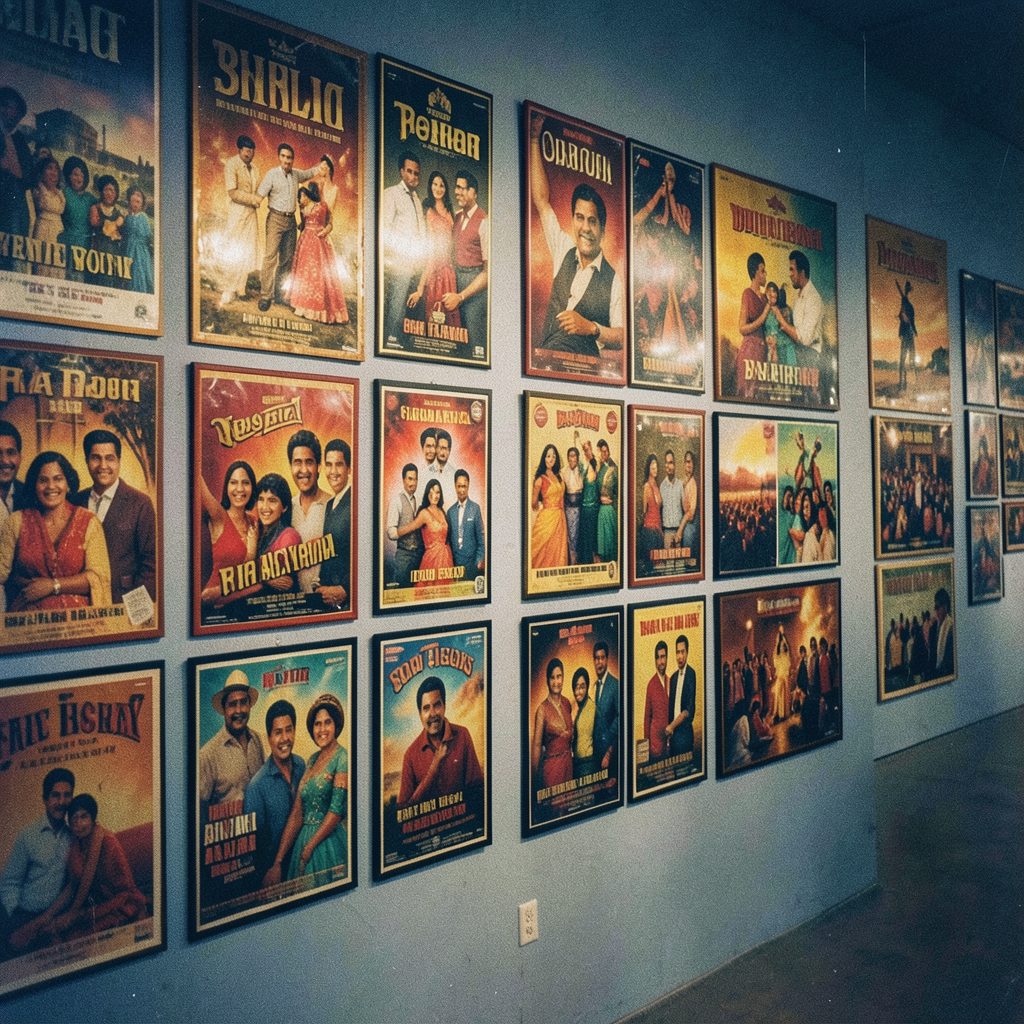

Why Bollywood sports biopics keep dominating the awards circuit
Walk past any suburban multiplex on a Friday night and chances are the longest queue is not for a sci-fi spectacle or a glossy romance, but for a film about a real athlete who refused to stay down. Indian cinema has been obsessed with sport for decades, but something shifted around the mid-2010s. Producers stopped treating sports dramas as side projects and started funding them as flagship releases, often with A-list stars, sweeping soundtracks and prestigious release windows. The strategy has paid off in ways few genres can match. From Bhaag Milkha Bhaag to Dangal, from MS Dhoni: The Untold Story to the more recent Saala Khadoos adaptations, Bollywood sports biopics have turned into the industry's most reliable awards currency.
The pattern has not gone unnoticed by international distributors. Streaming platforms based in Sydney and Melbourne now actively acquire Hindi-language sports films for diaspora audiences who grew up watching India play cricket at the MCG. They know that a story about resilience, drawn from a real Indian life, will travel further than almost any other genre in the catalogue. The films keep winning trophies because they keep being made, and they keep being made because the awards loop keeps rewarding them.
The emotional blueprint of a true story
Every successful Bollywood sports biopic is anchored in a moment of public grief or longing. Milkha Singh's near-miss at the 1960 Rome Olympics, Mahendra Singh Dhoni's World Cup six in 2011, Mary Kom's fight to train while her daughter slept in the next room. These are stories audiences already half-know, and that half-knowledge becomes the film's greatest asset. Writers do not have to invent the stakes. They simply have to sculpt them. The underdog has a name, a face, a small town, a parent's voice, and a recorded finish line.
This is where the genre diverges from the Hollywood sports template. American films like Remember the Titans or Rudy dramatise teamwork and institutional courage. The Bollywood version is more intimate, often built around a single body pushed to its limit, then layered with family, caste, regional identity, or national expectation. When such a film wins Best Film at a major Indian awards ceremony, the jury is rarely rewarding novelty. They are rewarding recognition. They are saying that this person existed, and now an entire country has watched them do it.
How star performances rewrite public memory
The casting of these films reads like a checklist of superstars who wanted to prove something. Shah Rukh Khan in Chak De! India, Farhan Akhtar in Bhaag Milkha Bhaag, Priyanka Chopra Jonas in Mary Kom, Sushant Singh Rajput in MS Dhoni, Fatima Sana Shaikh in Dangal, Diljit Dosanjh in Soorma. These are not cameos. They are months of physical transformation, dialect coaching, and athletic training that the actors treat like a second profession.
The awards committees respond accordingly. A star who genuinely learns to bowl a doosra or replicate a wrestler's double-leg takedown offers a performance the cameras can verify. Australian viewers who have watched the Boxing Day Test at the MCG will recognise the difference between a film actor pretending to hold a bat and one whose grip survives slow-motion scrutiny. The audience knows, the jury knows, and the trophy shelf reflects it. This is not stunt casting. It is stunt auditing, and Bollywood has learned to pass it.
The technical craft behind the sprint
Sports films live or die on the edit suite floor. A slow-motion sequence of a wrong foot placement can undo an entire film, and Bollywood has invested heavily in getting this right. Cinematographers trained in action units now routinely shoot with anamorphic primes, gyro-stabilised rigs, and high-frame-rate cameras that were once reserved for European festival dramas. Sound designers record actual stadium roar, real punch impact, the squeak of badminton shoes on wooden courts.
This technical seriousness is one reason the films earn Best Cinematography and Best Editing trophies at competitive ceremonies where they otherwise might lose to art-house favourites. When Rakeysh Omprakash Mehra released Bhaag Milkha Bhaag, he reportedly screened the Rome sprint sequence for actual sprint coaches. The same instinct drives newer entries that consult Olympic and Commonwealth Games athletes before they film a single frame. Audiences in Melbourne who watched Indian wrestlers win medals at the 2018 Gold Coast Commonwealth Games recognise the physical grammar. They can tell when a film has bothered to learn it.
Cricket, the commonwealth and cross-cultural appeal
Cricket biopics carry a particular weight because cricket itself is a shared language across the Indian subcontinent, the UK, South Africa, and Australia. The Border-Gavaskar Trophy, played across venues like the SCG, the Gabba and the Adelaide Oval, has given Australian fans their own emotional stake in Indian cricket legends. When a film dramatises Dhoni's journey from a small-town ticket collector to captain, it does not have to explain cricket to Australian viewers. They already speak the dialect.
This shared literacy is a quiet but decisive advantage. A Bollywood biopic about an Australian-rules footballer would struggle to find its audience in Mumbai. A Bollywood biopic about an Indian cricketer finds a ready-made audience in Parramatta and Footscray, where the local Australian cricket club has an Indian subcontinent team playing in its lower grades. The awards circuit knows this. International juries, festival programmers in Berlin and Toronto, and the voting members of major Indian guilds all weight cross-cultural legibility when they hand out prizes. Cricket biopics clear that bar before the credits roll.
When music becomes the lungs of the film
Few Hindi genres trust a song the way sports biopics do. The training montage, the slow-jam before the final match, the patriotic anthem as the national anthem plays somewhere in the background, these moments are written into the screenplay long before a composer is hired. Shankar-Ehsaan-Loy, A.R. Rahman, Amit Trivedi and Pritam have all produced some of their most memorable work for sports dramas precisely because the emotional stakes are so high and so cleanly defined.
Zinda, the Bhaag Milkha Bhaag anthem, became a generational touchstone. So did Dangal's title track and the patriotic choruses of Chak De. Music in these films is not decoration. It is the second narrator, the one that tells the audience how to feel when the picture itself can only show a clenched fist. Best Playback Singer and Best Music Director trophies tend to follow, and they reinforce a pattern. The films that win acting awards also win musical awards, which in turn helps them win Best Film. The recognition compounds.
Festival circuits and global validation
A growing number of these biopics now premiere at international festivals before their Indian theatrical release. Mary Kom played at the Toronto International Film Festival. Soorma screened in London. Producers have realised that a festival badge does three jobs at once. It signals seriousness to Indian voters, it secures foreign press coverage, and it justifies a higher streaming valuation once the film leaves cinemas.
This strategy mirrors the playbook of Australian indie producers who chase Sundance and Berlinale slots to raise the profile of their local dramas. The Bollywood industry has simply scaled it up. By the time a sports biopic lands in front of the Filmfare, IIFA or National Awards jury, it has already been pre-vetted by an international audience. Voters feel comfortable rewarding it because the rest of the world has already endorsed it. The trophy, in many cases, is the final signature on a contract the film has already signed.
Why the formula keeps working
None of this would matter if audiences stopped showing up. They have not. The same stories keep being told because the same hunger keeps being felt. A country with a billion-plus people and a deep obsession with global sporting respect will never run out of athletes whose lives deserve a two-and-a-half-hour treatment. Every Commonwealth Games, every Asian Games, every Olympic cycle produces new names, new struggles, new finishes worth dramatising.
The reason these biopics keep winning awards is not a conspiracy or a marketing trick. It is a stable agreement between filmmakers, performers, technicians, voters, and viewers that this kind of story matters, that it deserves the best craft available, and that a trophy is an appropriate way to mark that agreement. As long as another Indian athlete wins a medal, another small-town player lifts a trophy, another boxer refuses to stop swinging, the genre will keep finding its next subject, its next star, and its next shelf of awards.