Bollywood's independent wave reshapes the global festival map
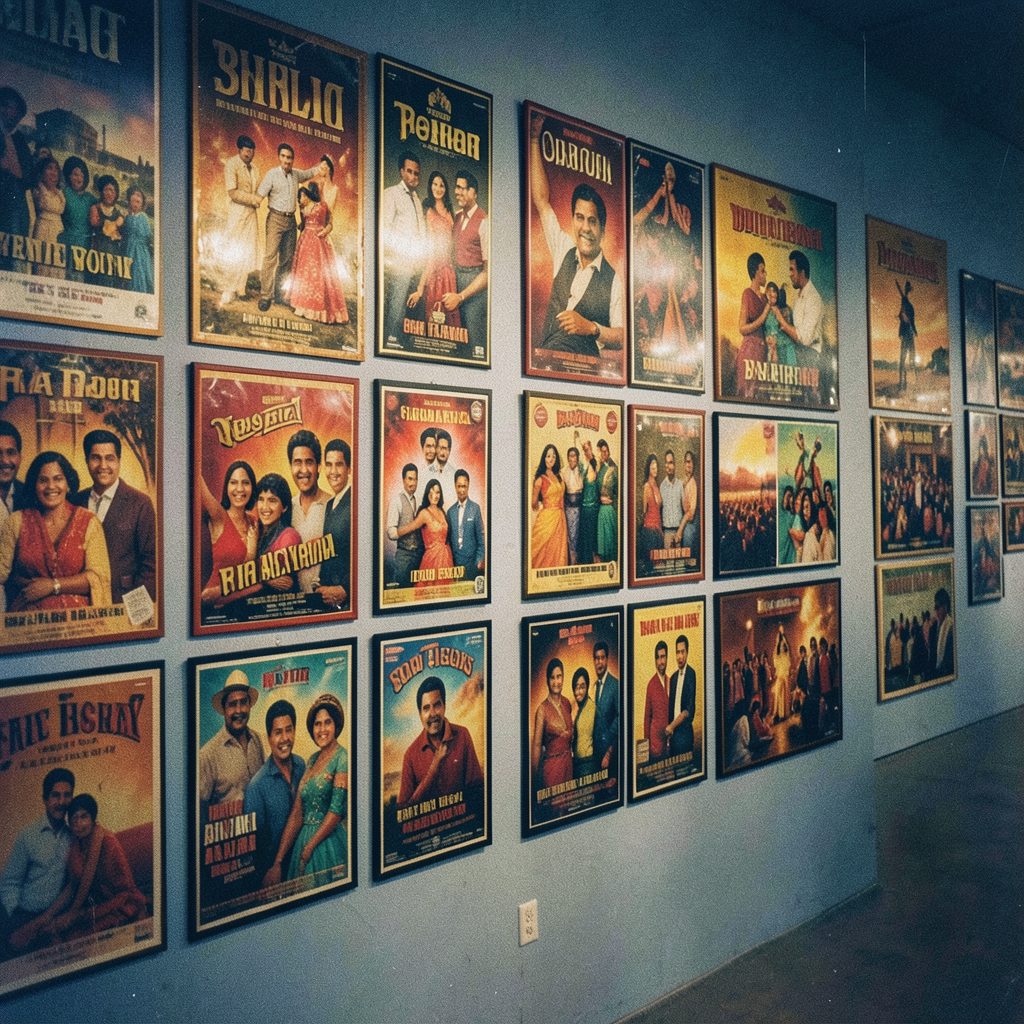
For decades, Bollywood meant song-and-dance spectacles, family melodramas and star-driven blockbusters that travelled well across diaspora markets. That definition is quietly being rewritten. Across Cannes, Toronto, Berlin and Venice, a growing roster of low-budget, formally daring Hindi films from a new generation of filmmakers is being treated like world cinema rather than a cultural curiosity. The shift is visible in programmer notes, sidebar deals and Q&A queues after midnight screenings.
Australia has become an unexpected barometer of this change. The Melbourne International Film Festival has, in recent editions, slotted Indian indie titles alongside European art-house features, and programmers at the Sydney Film Festival talk openly about chasing South Asian submissions. In Parramatta, Footscray and Brisbane's Sunnybank Hills, where Indian-Australian families have built cinemas and temples over four decades, festival screenings now sell out the way Bollywood matinees once did at the local multiplex.
The roots stretch back to the parallel cinema tradition of the 1970s and 1980s, when state funding let filmmakers like Shyam Benegal and Mrinal Sen push against the mainstream. Today's independent wave borrows that spirit but operates under different conditions: smaller budgets, digital cameras and filmmakers who grew up watching world cinema alongside mainstream Hindi films. Programmers are reading Hindi submissions as films first, Indian films second.
What follows is a look at how this shift happened, the festivals doing the heavy lifting, the filmmakers rewriting the rules, and what it means for viewers in Australia who want to follow Hindi indie cinema beyond the headlines.
The festival pipeline from Cannes to Toronto
Indian independent features have always made cameo appearances at major European festivals, but the past decade has brought a steadier presence. Payal Kapadia's "A Night of Knowing Nothing" took the L'Œil d'or in Cannes in 2021, and her follow-up "All We Imagine as Light" became the first Indian film in decades to compete for the Palme d'Or in 2024. Chaitanya Tamhane's "The Disciple" premiered at Venice in 2020 and went on to a Netflix release that bypassed theatrical windows entirely.
Breakthroughs like these reset what global programmers expect from a Hindi film. A selector in Paris or Toronto is now more willing to read a Hindi or Marathi submission as a film first, an Indian film second. That reordering has opened the door for first-time directors working with grants from the Hubert Bals Fund or the Sundance Institute rather than waiting for studio green lights. For an Australian distributor, a title can be acquired at Cannes, premiered at MIFF, then released through streaming within six months.
The homegrown circuit and where Indian indie debuts really begin
Global attention tends to overshadow the festival infrastructure inside India, where the real training ground for independent filmmakers has long existed. The Mumbai Academy of Moving Image's MAMI Mumbai Film Festival remains the most-watched barometer of indie Hindi work, while the International Film Festival of India in Goa continues to mix competition titles with regional showcases. Newer events such as the Dharamshala International Film Festival and the Kerala International Film Festival have built reputations for documentary and experimental work.
These festivals do more than screen films. They run labs, mentorship programs and pitching sessions that connect first-time directors with producers and sales agents. The result is a pipeline: a Marathi-Hindi hybrid feature premieres at MAMI, picks up buzz, travels to a sidebar in Busan or Locarno, and returns home with foreign sales attached. A film that surfaces in Mumbai often turns up in the Sydney Film Festival's South Asian strand twelve months later, with Australian distribution already lined up.
| Festival | Location | Notable Indian indie selection | Year | What it signalled |
|---|---|---|---|---|
| Cannes | France | "All We Imagine as Light" (Payal Kapadia) | 2024 | First Indian Palme d'Or competitor in decades |
| Venice | Italy | "The Disciple" (Chaitanya Tamhane) | 2020 | Netflix acquisition straight from a competition slot |
| TIFF | Canada | South Asian sidebar selections | 2023 | Expanded sidebar programming for regional work |
| MAMI Mumbai | India | Annual debuts and competition titles | Annual | Key domestic launchpad for indie voices |
| Melbourne International Film Festival | Australia | Indian indie retrospectives and competition entries | Annual | Australian arthouse embrace of Hindi cinema |
These festivals have also reshaped the kinds of stories that get told. Where parallel cinema of the 1970s leaned on rural realism and political allegory, today's indie circuit absorbs urban alienation, queer experience and migrant anxiety. Programmers looking for material that reflects the world they live in are finding it in Hindi indie submissions as often as in European ones.
New auteurs rewriting the Hindi feature
A handful of directors have done more than anyone to shift the perception of Bollywood's indie scene. Alongside Payal Kapadia, names like Chaitanya Tamhane, Leena Yadav ("Parched"), Rima Das ("Village Rockstars") and Amit V Masurkar ("Newton," "Sherni") have built careers that move between arthouse festivals and streaming platforms. Their films share a willingness to slow down, to dwell on faces and silences in ways the mainstream rarely permits.
What is striking is the cross-pollination. Masurkar's "Newton" premiered at Cannes, played at MAMI, was selected as India's official Oscar entry, then streamed on Amazon Prime Video. That same film would not have been made in the 1990s, when the economics of distribution locked out anything without a major star. The collapse of theatrical-only economics and the rise of digital production have rewritten the rules in ways that favour patient, low-budget storytelling.
Australian film culture, which has long championed regional and auteur cinema through institutions like the Australian Centre for the Moving Image in Federation Square, sits comfortably alongside this movement. The vocabulary of slow cinema and non-professional casting that indie Hindi directors have absorbed is the same vocabulary Australian festival programmers have championed through homegrown features.
Australian audiences and the South Asian indie wave
The appetite in Australia is real and measurable. SBS, Australia's multicultural public broadcaster, has carried indie Hindi features in late-night slots for years, and viewership data shows South Asian titles performing strongly in western Sydney and parts of Melbourne where the Indian diaspora is concentrated. Festival programmers at MIFF and SFF talk about Indian indie submissions the way they used to talk about Scandinavian noir: as a small, consistent pool of high-quality work worth chasing.
Distribution has caught up. Boutique labels, streaming platforms and community-led cinema groups now bring indie Hindi titles to arthouse cinemas in Melbourne's inner north, Sydney's inner west and Brisbane's West End. Some screenings double as fundraisers for local Indian cultural associations, blurring the line between cinema-going and community gathering.
Subtitling has quietly improved, partly because streaming platforms demand high-quality English subtitles and partly because a new generation of indie filmmakers grew up watching world cinema with subtitles. That change makes a feature like "All We Imagine as Light" or "The Disciple" accessible to viewers in Melbourne or Perth who have never watched a Hindi film without context. Indian film criticism has moved from niche blogs to dedicated sections at major outlets, and the ABC arts desk now treats South Asian indie releases as part of the regular calendar.
Practical ways to follow the indie Hindi wave from Australia
For viewers keen to keep pace with this movement, there are several practical entry points.
- Subscribe to MAMI Mumbai Film Festival and Dharamshala International Film Festival newsletters for early news on Indian indie titles
- Watch SBS World Movies and SBS On Demand for regular Hindi indie features with high-quality subtitles
- Bookmark the Sydney Film Festival and Melbourne International Film Festival programs each year for their South Asian sidebars
- Follow Australian distributors specialising in world cinema, including Palace Films, Madman Films and Potential Films
- Track streaming acquisitions from Cannes and Toronto that signal which indie Hindi titles will reach Australia within months
- Join community screenings at Indian cultural associations in Parramatta, Footscray, Harris Park and Sunnybank Hills, which often program festival favourites
Australian cinephiles in Fitzroy or Footscray have a clear path from here. The next decade of Hindi indie cinema will pass through local screens, festival programs and streaming catalogues well before it reaches wider public consciousness. A shortlist of festivals, distributors and broadcasters is the most reliable way to stay ahead of the curve, and the Australian arthouse circuit is well-placed to keep delivering.