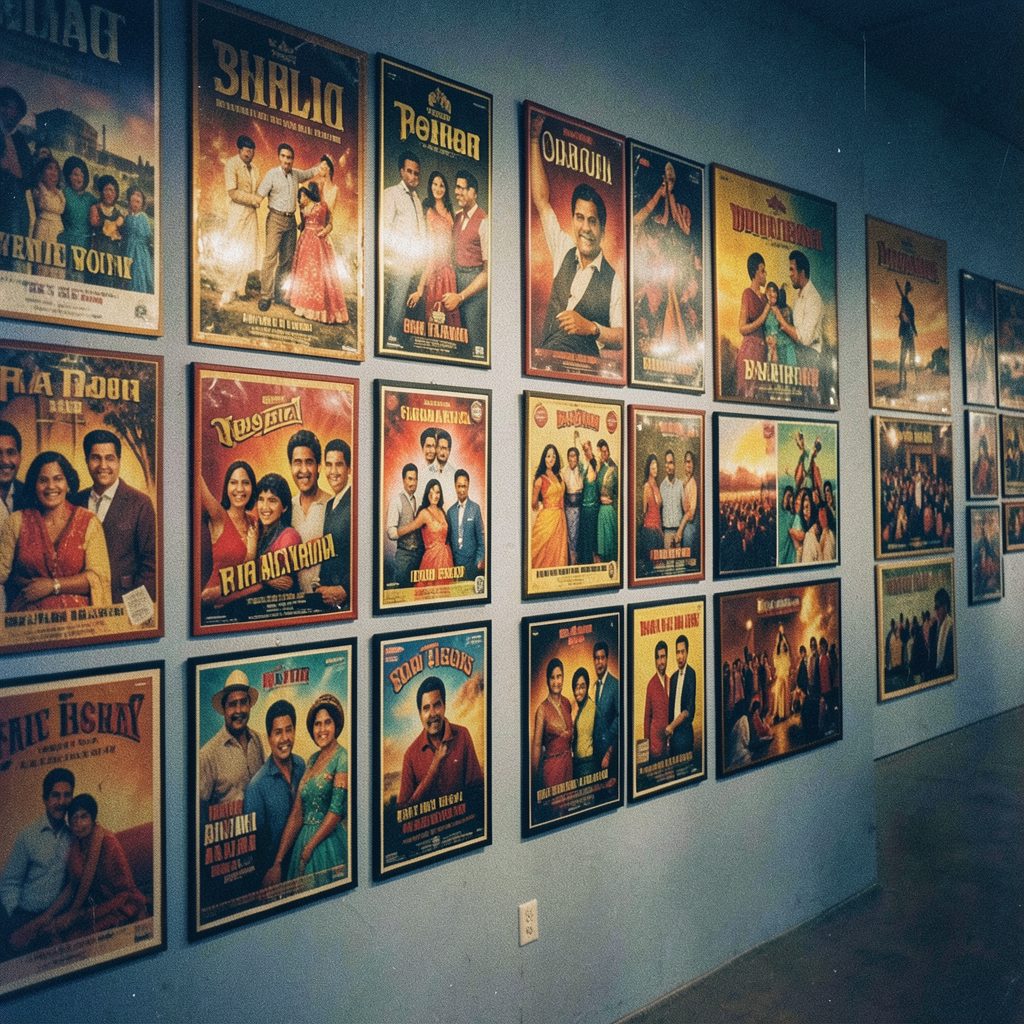
Bollywood studios and the stories they left behind
The history of Bollywood's most famous film studios and their legacy begins with a basic truth: a studio is more than a building with a name on the gate. It is a network of writers, actors, technicians, composers, editors, musicians and financiers turning scripts into shared experiences. The durable institutions adapted from silent black-and-white films to sound, colour, television, streaming and global audiences.
Many studios changed hands, closed or vanished into corporate groups, yet their names endure in the films people quote, sing and rewatch. Their histories reveal a shift from imported sound technology and tightly controlled sets to integrated entertainment companies whose catalogues can now reach a viewer in Melbourne or Sydney long after a Mumbai release.
Before the studio system took shape
R.K. Studios was founded in Bombay in 1928 by Chandulal Shah. Its early production, Snow White, is often credited as the first full-length silent feature made in India. The company survived the collapse of the silent era, moved through the sound transition and built a long-running production base in Malad. Its importance lies in continuity: generations of filmmakers worked within an institution that outlasted individual stars and changing tastes.
Bombay Talkies, established in 1934 by Himanshu Rai and Devika Rani, represented another foundation. It helped turn the new talkie format into a professional system, giving sound, lyrics and musical staging a permanent place in feature production. Its 1946 drama Neecha Nagar later won the Grand Prix at Cannes. Together, R.K. Studios and Bombay Talkies demonstrate how early houses survived by combining technical discipline with stories suited to a newly urban, multilingual audience.
Prabhat and Filmistan reshape popular cinema
Prabhat Film Company, formed in 1929 by Shantaram Jogdeo and V. Shantaram, became famous for morally charged social drama. Its Kismet and Dr. Kotnis Ki Amar Kahani showed that Indian studio films could travel through action, sentiment and political history. Prabhat also worked with some of Hindi cinema’s finest actors and technicians, creating a model for the large creative ensembles that later studios inherited.
Filmistan emerged from that world in 1943, when Sashadhar Mukherjee, Ashok Kumar and Gyan Mukherjee left Prabhat. Its emotional melodramas, including Aadhi Raat, Jwar Bhata and Shant, placed songs and heightened visual performance at the centre of mass entertainment. The studio’s legacy lies in this mixture of direct storytelling and spectacle: a formula refined across Partition years, romance films and family drama, and still recognisable in contemporary Hindi cinema.
Rajshri and B.R. Films embody their eras
Rajshri Productions, established by Tarachand Barjatya in 1947, built a reputation for humane family entertainment. Mother India, Madhumati, Dosti and Anand joined popular song, moral clarity and social feeling, while Hum Aapke Hain Koun carried the studio’s ideal into the multiplex era. Its importance is also institutional: Rajshri remained family-led, combining continuity with careful casting and a strong instinct for stories that audiences could share across generations.
B.R. Films was established in 1949 by B. R. Chopra, with Gunsmoke as its first production in 1950. Across Afsana, Dost, Waqt, Chunariya and Disco Dancer, the banner moved between romance, social observation and exuberant musical entertainment. The Chopra name became shorthand for polished storytelling and memorable songs. Later members of the family expanded that vocabulary, showing how a studio can outgrow its founder while preserving a distinct emotional register.
T-Series remakes the soundtrack economy
T-Series began in Delhi in 1983 as a cassette label created by Gulshan Kumar, then entered films with Tera Naam in 1986. Its early momentum, including Laxmikant–Pyarelal’s score for Mr. India, demonstrated that music was not merely attached to a picture but a central engine for promotion and revenue. The company’s catalogue, talent network and energetic branding changed how Hindi films found mass audiences.
That model expanded from physical recordings into television, film production, YouTube and streaming services. T-Series made the soundtrack an independent celebrity in the modern market, where a song could earn attention before viewers knew the film’s plot. Its legacy links the old studio system to today’s digital entertainment while also exposing the risks of treating every hit as a formula.
Yash Raj, Dharma and a changing studio sector
Yash Raj Studios, founded by Yash Chopra in 1970, became emblematic of large-scale family melodrama. Deewaar, Darr, Dilwale Dulhania Le Jayenge and Veer-Zaara joined popular sentiment with polished production and enduring songs. The studio’s longevity came from balancing Yash Chopra’s romantic instincts with a family structure able to produce for changing generations.
Other houses added contrasting paths. Dharma Productions, founded by Yash Johar in 1975 and led for decades by Karan Johar, moved from Agneepath to Kuch Kuch Hota Hai and Kal Ho Naa Ho, pairing broad spectacle with contemporary relationships. Vishesh Films, started by Vishal Bhardwaj in 1987, brought literary realism and bold genre choices through Maachis and Haider. Their work reflects a studio sector becoming more diverse in subject, scale and international reach.
Songs remain studios’ most portable legacy
The most portable part of a studio’s legacy is often its music. A tune can detach itself from its original set and enter homes, films and performances far beyond the film that created it. The detailed song’s journey to screen follows a composition through refinement, orchestration, recording, synchronisation and release, revealing how many specialists share authorship of a Hindi song.
That chain of collaboration explains why some studio-era songs remain culturally active decades later. Kishore Kumar’s delivery in Mera Joota Hai Japani, the warmth of Dosti and the melodic confidence of T-Series releases each carry traces of a particular production culture. The recording was part of the film’s identity, then became capable of sustaining a studio’s name after the cameras stopped rolling.
Why the studio legacy still matters
Australia offers a revealing way to see this legacy travel. In Sydney and Melbourne, selected Hindi films receive theatrical runs with English subtitles, often promoted through Indian communities, festivals and mainstream entertainment media. Many viewers also discover releases through streaming services, watching at home rather than waiting for a cinema programme. Booking tickets through a phone app, sharing snacks before a show and discussing the soundtrack afterwards have become familiar parts of the Australian cinema-going routine.
Local demand is sustained by community cinemas, Indian film festivals, radio playlists, dance classes and live music events. These audiences are not a passive export market: they discuss films, create covers and keep songs active across generations. That exchange shapes how releases are marketed, since distributors know that a lively cultural scene can help a Hindi title find a broader Australian audience.
Australian classification law adds another layer. Under the Classification Act 1993 and the National Classification Code, the Australian Classification Board can attach age ratings and content advice, influencing how films and trailers are presented to families and younger viewers. Studios and distributors therefore operate within a distinct public framework, even when the films themselves are made for India. These studios should be remembered as creative systems rather than a parade of logos: technicians, composers, performers, craftspeople and audiences kept the culture moving, and their shared work is what still gives these names their charge.