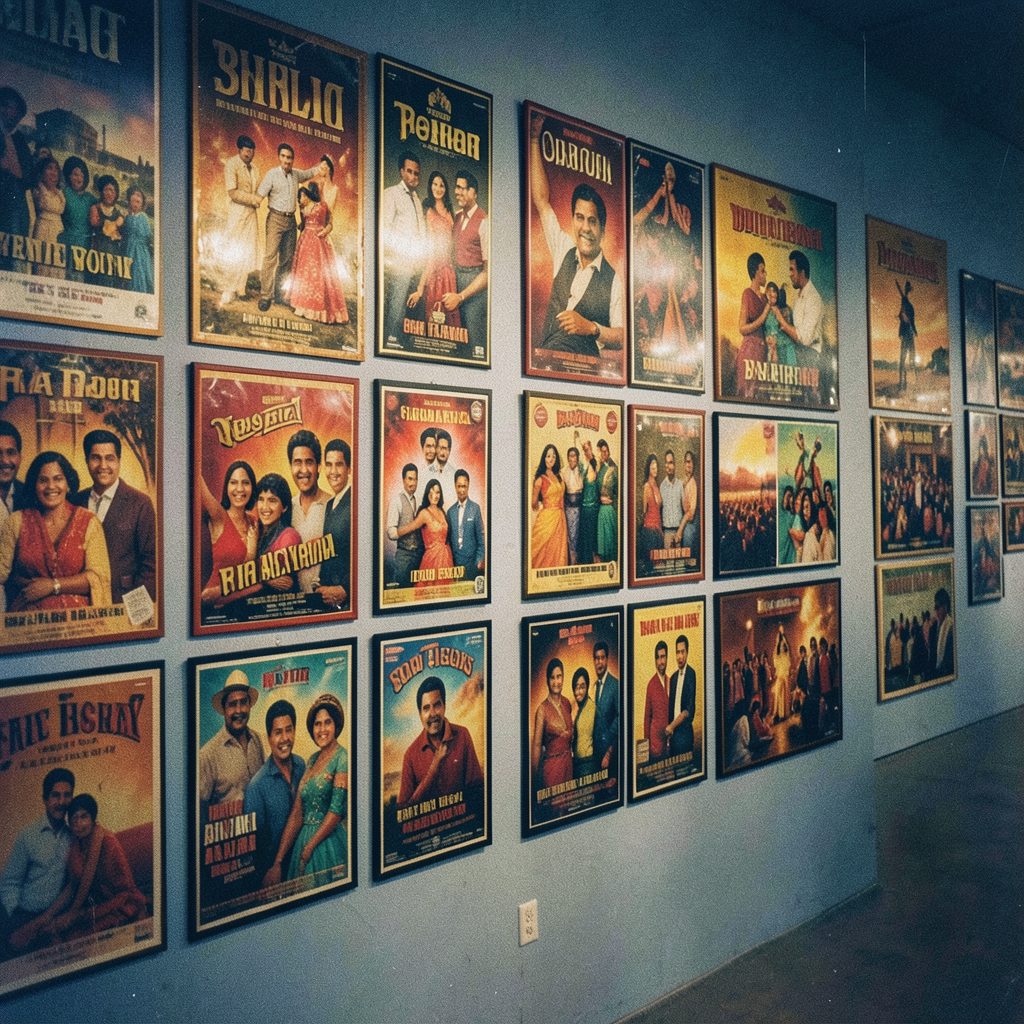
Behind the green screens of Bollywood visual effects
Bollywood's visual effects have moved from the obvious to the photoreal in a fraction of the time most industries take. Composites that once revealed their joins with a squint now hold up on a phone screen pinned inside a Melbourne tram. The shift happened because supervisors and studio owners decided the Indian screen could carry the same weight a Marvel finale carries in a Hoyts auditorium.
Australia's Hindi-cinema audience punches above its weight. Melbourne's Indian Film Festival pulls tens of thousands each year to Federation Square and ACMI. Sydney's western arcades light up every Diwali release, Brisbane's Sunnybank and Perth's Canning Vale keep first-day traditions alive, and smaller circuits in Adelaide's Hindmarsh or Hobart's North Hobart still run blockbusters past their international windows.
The contemporary examples are quick to name. Brahmastra sat between fairy-tale and full-CG creature, Jawan's mass-action stretched across in-camera and digital layers, and Pathaan's mountain brawl blended real snow bases from Gulmarg with painted matte environments. Adipurush drew fire over its Ramayana landscapes, and Kalki 2898 AD raised the bar for digital aging. Each was lit and polished by teams invisible to most cinema audiences.
What follows traces those teams from script breakdown, through Mumbai's green-screen studios, to the final grade on screens in Sydney and beyond. It compares Indian pipelines with global standards, flags a few Australian crossover projects, and ends with practical ways to track the craft as it evolves.
The evolution of visual effects in Hindi cinema
For most of the 1990s and 2000s, Bollywood's effects work meant small shops bolting glows and muzzle flashes onto footage already in the camera. Koi... Mil Gaya's alien was earnest but rubbery. Drona leaned on early CG that dated inside one rewatch. Enthiran, released in 2010, was the first proper attempt at a fully CG co-lead, and the seams showed in almost every frame.
Ra.One and Krrish 3 poured Red Chillies VFX into superhero suits and energy blasts. The films drew global criticism but forced Indian artists to build their own pipelines and gave supervisors their first taste of full-CG leadership. The Baahubali duology normalised pan-Indian scale and dragged Hindi-dubbed prints into premium screens. By the time Brahmastra arrived, programmers at the Indian Film Festival Melbourne had room to host a VFX retrospective alongside the premiere.
Modern Hindi cinema is comfortable with creature work, de-aged actors and full-CG environments. Jawan's hospital raid and Pathaan's frozen climax play with budgets that would have been unthinkable a decade earlier, and Indian supervisors now lead shots that would once have been outsourced to Singapore or London.
Anatomy of a modern Bollywood effects pipeline
Every major project starts with a breakdown. Supervisors scan the script, flag sequences that cannot be shot practically, and assign effort levels that translate into schedule and quote. Bollywood's pre-production leans on 2D storyboards and short animatics; only the very biggest projects commission full CG previz.
On set, the green screen is giving way to LED volume work for top-tier productions. Brahmastra shot portions against curved LED panels emitting 4K plates matched to post-rendered backgrounds. Most other productions still rely on chroma key in Nuke or Fusion, occasionally tracked against silver reflector boards brought in from Australia or South Korea.
Post-production is well understood. Layout artists block scenes from camera data, lighting artists match exposure, FX leads simulate dust and fire, and a compositing team pulls everything together. Nuke dominates compositing across Indian and international teams, with Houdini handling destruction and particles. Red Chillies VFX in Mumbai anchors the largest private facility, and footage cut there often passes through quality control in Sydney at studios including Rising Sun Pictures.
Standout artists and studios shaping the look
A handful of names circulate in every production meeting. Srinivas Mohan, who spent decades collaborating with S. Shankar from Jeans to Indian 2, has become the unofficial dean of Indian VFX supervision. His studio work ranges from jet-fighter shells to de-aging passes, and his fingerprints sit on Robot and recent Tamil-Hindi crossover projects alike.
Red Chillies VFX, the in-house studio co-founded by Shah Rukh Khan, remains the headline name. Its credits include Ra.One, Zero, Jawan and the upcoming King, and it has grown into a credible mid-tier global facility rather than a vanity project.
Australian crossover credits are real. Rising Sun Pictures in Adelaide delivered particle FX for Indian blockbusters under multi-territory co-productions. Iloura, the Melbourne studio behind Mad Max: Fury Road and Alien: Covenant, has lent creature-rigging artists to Bollywood projects needing muscle simulation beyond local reach. Armed with Blender and Substance licences, Indian freelancers now build shot work from a corner of a Mumbai apartment and ship it to supervisors in Sydney, Hyderabad or Singapore, with scene assembly logged into Brisbane timezones and render farms crunching overnight in Western Sydney.
Tools and techniques compared with global standards
Indian effects work has caught up with the global standard in some areas and trails in others.
| Workflow Stage | Bollywood Pipeline | Global Standard |
|---|---|---|
| Pre-visualisation | Mostly 2D boards, occasional animatics | Full CG previz with virtual scouting |
| On-set capture | HDRI domes, growing LED volumes | Wide LED-ICVFX, markerless mo-cap |
| Creature work | Hybrid practical + CG, suits blended digitally | Full-CG photoreal creatures |
| Destruction and sim | Houdini-based, smaller render farms | Massive farm lifts, GPU simulation |
| Final grading | DI theatres in Mumbai, Hyderabad, Chennai | Dolby Vision grading, ACES workflows |
The comparison is directional rather than absolute. Bollywood routinely delivers first-rate creature work for its budget, and Tanhaji showed what hybrid practical costumes can do when paired with cinematic lighting. The lag shows up most in volumetric simulation at scale and in grade consistency across multi-vendor teams, though distributed pipelines have closed part of this gap. A Mumbai supervisor can preview 4K plates on a Brisbane colourist's screen in real time.
Where Australian audiences catch these films
Australian release windows for VFX-heavy Hindi titles usually open a week or two behind India, though major Eid and Diwali releases now land in lockstep with worldwide drops. Hoyts and Event Cinemas set up dedicated Hindi screens at Sydney Olympic Park, Melbourne Chadstone and Brisbane Chermside for the biggest releases, and suburban locations like Parramatta, Fountain Gate and Carindale often sell out on day one.
Streaming has widened the back-catalogue. Stan curates a small but growing Bollywood shelf, and Netflix Australia's regional slate picks up Hindi originals, particularly action films. Disney+ Hotstar remains the most consistent source for premium Hindi content in Australia, though licensing terms shift season to season.
Festival audiences get the rarest view. The Indian Film Festival Melbourne screens at Federation Square venues including The Edge and Deakin Edge, and ACMI partners with the festival for retrospectives on technical achievement. Sydney events cluster around Parramatta's Riverside Theatres, while Brisbane's QUT hosts panels on VFX careers during Diwali weeks.
From pixels to wardrobe — how VFX shapes modern Bollywood fashion
Visual effects expand what a costume designer can put on screen without breaking the actor's body. Energy lines across a lehenga, fabric that catches fire on cue, jewellery that dissolves into ash — these are no longer props departments' problems. Effects artists run cloth solvers in Houdini and Marvelous Designer to predict how an outfit behaves before the costume is stitched, and the colour team re-grades it frame by frame.
The fashion side of this revolution shows up in promotional material and magazine shoots. Costume teams plan looks alongside the VFX breakdown so the embroidery reads correctly under the cyan and magenta spill of an LED volume. Bollywood's stylists have always pushed design envelopes, and the fashion coverage on Wassupbollywood tracks how visual layering has changed the textiles that look good on camera.
Anaita Shroff Adajania's recent action-blockbuster looks are a case in point: heavily embellished jackets that hold up under chroma-key lighting because the beadwork catches a calibrated spectrum. Costume buyers now bring sample swatches to VFX shoots so a digital pass can be added later if beadwork falls short, and the practice is travelling outward. Australian stylists working for global brands have begun borrowing the technique for music videos and print campaigns shot locally.
Ways Australian fans can explore the craft
- Watch one VFX-heavy Hindi release a quarter and pair it with the studio's breakdown reel on YouTube.
- Subscribe to the Indian Film Festival Melbourne for early access to retrospectives at Federation Square.
- Book tickets for major Eid and Diwali releases at Hoyts Chadstone or Hoyts Sydney rather than waiting for streaming.
- Track South Asian cinema programming in Brisbane and Adelaide for panels that bring Indian supervisors to Australian stages.
- Use Stan's Bollywood shelf as a back-catalogue resource, including older Shankar projects and Red Chillies titles.
- Watch for Rising Sun Pictures' Adelaide open days — the studio occasionally invites ticket holders during a Bollywood crossover shoot.
Bollywood's effects artists are not chasing Hollywood any longer. They are building a regional craft that travels across Australia, Canada and the Gulf as confidently as the songs that once dominated every release. The next film worth seeing in a darkened Hoyts auditorium will not just reward the VFX on screen — it will remind viewers that the same pipelines now reach from a Mumbai kitchen table to a colourist's desk in Brisbane, stitching one craft across two hemispheres. Book a Federation Square festival screening before the next VFX-heavy release lands, and the bridge between the two sides of the work will be obvious.