Inside Bollywood's Foley Studios: Crafting the Sound of Fight Scenes
When the hero of a Bollywood action film lands a thunderous right hook, audiences feel the impact in their chest. Few realise that the crunch of that fist against a jaw, the scrape of boots across marble, and the metallic ring of a thrown sword are largely the work of unseen artisans: foley artists who record, layer, and sculpt the audio of every brawl. These sound makers, often working on tight schedules in small studios in Mumbai and Chennai, blend physics with imagination to give combat its cinematic weight.
Foley work in Indian cinema has matured from rough tape recordings of the 1970s into a sophisticated craft that blends classic performance techniques with digital processing. For fans in Australia, where Hindi cinema enjoys a dedicated following through the Indian Film Festival of Melbourne and packed screenings at Hoyts in Parramatta and Chatswood, the sound design of these films is part of why the action feels larger than life.
The Roots of Foley in Indian Cinema
The practice of creating everyday sounds in post-production was popularised abroad by Jack Foley in the late 1920s, but Indian cinema developed its own flavour. Early Bollywood fight scenes relied on live sound captured on set, leaving thin, inconsistent effects. As the 1980s ushered in the era of the angry young man, dubbing studios in Andheri and Goregaon began experimenting, layering coconut shells on wet leather for body falls and snapping celery stalks for bone cracks, borrowing Hollywood workflows while adding regional character.
By the 1990s, multitrack recording made it possible to build dense soundscapes for the dance-fight sequences that defined the era. Studios in Mumbai's Film City area recruited musicians who could time hits to the visual rhythm of choreographed steps. The trade gradually professionalised, with families of foley artists passing prop boxes and microphone placement tips to the next generation. Today the craft is taught informally through apprenticeships rather than dedicated degrees, and a few specialists are credited by name in the closing credits of major productions.
The Anatomy of a Fight Scene Sound Mix
A polished Bollywood fight scene is rarely the product of a single recording. Sound supervisors break the action into layers: impact, body reaction, environment, weapon, and residual ambience, with each layer receiving its own treatment before the final mix.
| Layer | Purpose | Typical Sources |
|---|---|---|
| Impact | Sell the force of a hit | Coconut halves on leather, sand-filled leather bags, padded mallets |
| Body Reaction | Convey pain, wind, exhaustion | Thuds on cushions, flesh on fruit, whoosh of breath |
| Weapon | Add metallic edge to combat | Strikes on sheet metal, tuned anvils, sword swishes |
| Environment | Place the fight in a space | Footsteps on gravel, splashing water, echo chambers |
| Sweetener | Heighten drama | Slowed whooshes, sub-bass rumbles, breathy exclamations |
The mix is routed through a dubbing theatre where the sound designer balances each element against the musical score. The aim is to make the audience flinch without burying the dialogue or the background music that often drives the choreography.
Tricks of the Trade from the Foley Floor
Indian foley artists are celebrated for their improvisational skill, since budgets rarely stretch to pre-made sound libraries. A typical prop kit includes hollow bamboo for joint cracks, old leather boots for stomps, a wooden dhol for body slams, and metal trays for sword clashes. To record the sound of someone thrown against a wall, the artist may drop a watermelon onto a folded blanket. For a quiet, intimate scuffle, wet tea towels slapped against a wooden door deliver a softer, more muffled thud.
Microphone placement is as important as the props. Boom microphones are usually positioned low and angled upward to catch the full body of each sound, while contact pickups on the floor register the bass frequencies that give weight to a fall. Stereo pairs are used for sweeping sword moves to capture motion. Many artists prefer to record in small, acoustically treated rooms with heavy curtains, treating the room itself as an instrument.
Where Choreography Meets Sound
Fight choreography in Bollywood films rarely aims for the gritty realism of action cinema elsewhere. Movement tends to be theatrical, with slow-motion flourishes, suspended kicks, and the occasional flip. The foley artist's job is to make these exaggerated movements feel believable, which often means amplifying sounds that the body itself barely makes. A single jab becomes a triple-layered event of slap, thud, and echo. A thrown kick against a railing might be sweetened with a metallic twang recorded separately in the studio.
This synergy is why fight scenes are scored so heavily. The background score swells at impact, and the foley is mixed slightly under the music so the audience feels the hit in the body and ears simultaneously. During the slow-motion climax of a revenge fight, sound designers add reverb and pitch bends to stretch a single strike across several frames, giving it mythic weight. The technique sits in conversation with the punch-and-kick audio style of Hong Kong action cinema, and writers of French cinema essays increasingly study how different cultures score violence.
Aussie Audiences and the Bollywood Sound Tradition
In Australia, Bollywood has long punched above its weight, particularly in suburbs like Parramatta, Blacktown, and Werribee, where screens often sell out for Friday night premieres. Audiences at chains such as Event Cinemas and Hoyts typically pay around twenty-five to thirty Australian dollars for a premium evening show, and expect a sonic experience that matches the visual scale. Theatres equipped with Dolby Atmos have changed how fans perceive foley work, since overhead speakers now sell the swoosh of a flying kick and the crack of a broken chair with spatial precision.
Melbourne has cultivated a particularly curious audience of cinephiles. The Indian Film Festival of Melbourne, held each winter at venues near Federation Square, routinely draws locals and South Asian diaspora members who analyse fight scenes with the same rigour that film students at the Australian Centre for the Moving Image apply to international classics. After a recent screening, a Brisbane fan asked the panel, fair dinkum, whether the thuds were real; the answer was always that the sounds are constructed. Hearing them on a big screen on the other side of the world only deepens the appreciation.
Modern Tools and Films Worth Studying
Digital audio workstations have not replaced the artistry of foley so much as expanded it. Software such as Pro Tools and Reaper allows designers to sample, pitch-shift, and re-trigger sounds with frame-accurate precision, and libraries of pre-recorded impacts can be blended with freshly recorded props. Some studios in Mumbai now layer artificial intelligence tools to suggest alternatives, though the final choice rests with the human artist. Visualisation has also changed; real-time rendering engines let directors preview a fight scene with rough audio before choreography is locked, shortening feedback loops and encouraging experimentation with unusual materials like wet cabbage for unsettling body sounds.
A few films stand out as essential listening material, each demonstrating a different era of technique.
- "Sholay" (1975): the ambush sequence remains a masterclass in layered body falls and distant fire crackles.
- "Don" (1978): the warehouse fight uses tight reverb to make close-quarters hits feel claustrophobic.
- "Ghajini" (2008): the relentless beatdowns of the revenge arc use sweetened sub-bass for visceral impact.
- "War" (2019): the mid-film highway brawl showcases modern multitrack mixing and Atmos-friendly whooshes.
- "RRR" (2022): the bridge combat scene combines traditional props with orchestral sweeteners for a larger-than-life feel.
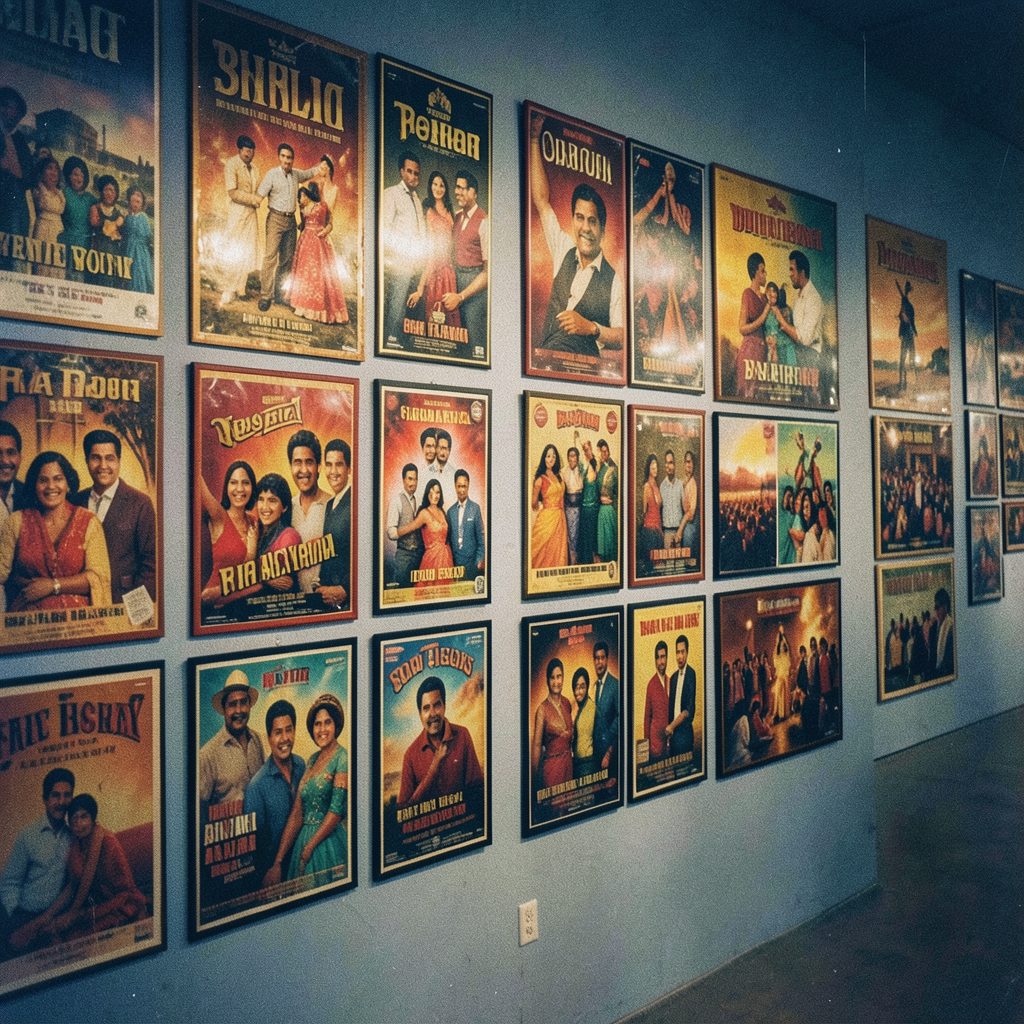
For anyone wanting to admire the heroes on screen with fresh eyes, take an afternoon to study the soundtrack alongside the action. Close your eyes and count the layers, and you will hear coconut shells on leather, leather bags of sand, sheet metal strikes, and breathy vocal exclamations stacked into a single punch. The next time an Aussie film buff settles into a velvet seat at a Hoyts in Parramatta or grabs popcorn from a Brisbane multiplex, the hit they hear landing is the result of a foley artist's morning spent whacking a coconut shell on wet leather. That invisible performance is the hidden spine of Bollywood's biggest fights. Fans wanting to celebrate the visual side of the industry can pair the listening session with the best Bollywood movie posters for your wallpaper collection, which captures the same larger-than-life spirit through poster art.