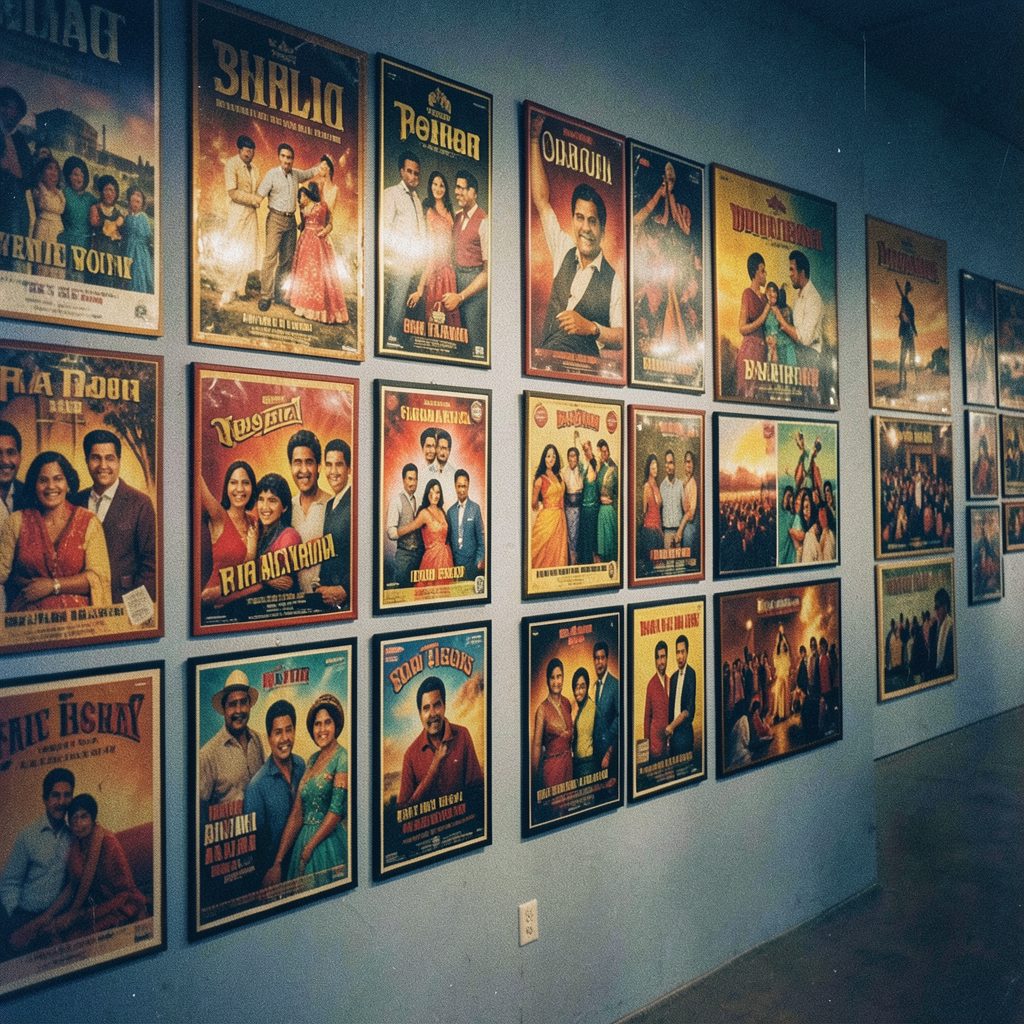

How Bollywood Built Its International Co-Production Story
Bollywood’s relationship with the world has never been limited to overseas premieres or glamorous location shoots. Hindi cinema has shared money, technology, performers, stories and production expertise with filmmakers from Europe, North America, Asia and the former Soviet Union for decades. These partnerships have changed as the industry moved from state-backed cultural exchange to private finance, global studios and streaming platforms.
The phrase “international co-production” covers several different arrangements. A film may receive investment from producers in two countries, use crews and facilities across borders, or be developed through an official government treaty. A Hindi film shot in Spain is not automatically a Spanish co-production, just as a Hollywood release of an Indian film does not make it an international partnership. This distinction is essential when tracing Bollywood’s global history.
For Australian audiences, the story is visible in everyday cinema culture. Hindi films play in Sydney and Melbourne multiplexes, receive Australian classification before theatrical release, and reach viewers through subtitled screenings and streaming services. The country’s large Indian diaspora has helped create a reliable market, while local production rules and co-production agreements have gradually made Australia more relevant to Indian film financing.
Early experiments across political borders
The earliest international connections grew from technical exchange. Indian producers looked to Europe for colour processing, sound expertise and new production methods, while foreign filmmakers saw India as a source of stories, performers and locations. These relationships were often informal rather than structured as modern co-productions, but they established the habit of treating cinema as a shared industrial space.
The strongest early example came through India’s relationship with the Soviet Union. Pardesi (1957), directed by Khwaja Ahmad Abbas and Vasili Pronin, was an Indo-Soviet production that connected Hindi filmmaking with Soviet studios and distribution networks. Its international identity was built into the production itself, rather than added after completion. Soviet audiences also embraced Indian stars, songs and melodrama, creating an unusually strong export market during the Cold War.
That relationship continued with ambitious projects such as Alibaba Aur 40 Chor (1980), made with Soviet participation and filmed in Central Asia. These films benefited from state support, access to large sets and locations, and a political environment that encouraged cultural exchange. They also showed that Indian popular cinema could travel through spectacle, music and folklore even when audiences did not understand Hindi.
Diaspora finance changes the commercial map
From the 1980s onwards, the Indian diaspora became a more important financial and cultural bridge. Britain, Canada and the United States developed sizeable South Asian communities, and producers began to design films for viewers who wanted Indian language, music and family themes alongside an international setting. London, New York, Toronto and Dubai became recurring locations in Hindi cinema.
Some productions were genuine cross-border ventures, while others were Indian films financed or distributed abroad. Dilwale Dulhania Le Jayenge helped establish the overseas Indian market as a major commercial force, even though it was fundamentally an Indian production. Films such as Kabhi Khushi Kabhie Gham and Kal Ho Naa Ho made diaspora life, migration and cultural negotiation central to their stories, giving overseas audiences a stronger emotional stake.
This period also encouraged British and American filmmakers to make Hindi-influenced cinema. Gurinder Chadha’s Bride and Prejudice blended Jane Austen with Bollywood musical conventions, while Mira Nair’s The Namesake connected Indian and American production cultures through a story of migration. These works were not standard Mumbai studio films, yet they helped create the international film language that later co-productions could use.
The treaty era and professional partnerships
The 2000s brought a more organised approach to global production. Indian studios expanded, private equity entered the sector, and foreign companies became interested in Bollywood’s audience scale. Producers pursued partnerships with companies in the United Kingdom, United States, France, Germany, Canada and Australia, while international sales agents helped package Hindi films for multiple territories.
Australia became part of this conversation through the India–Australia audiovisual co-production agreement, signed in 2012 and entering into force in the following years. Such agreements can allow approved projects to qualify for benefits in both countries, subject to rules concerning finance, creative participation and production activity. For an Australian producer, that may mean access to Indian talent and stories; for an Indian producer, it can provide locations, crews, facilities and a pathway into Australian support structures.
The practical value of these arrangements is visible in cities such as Sydney, Melbourne and Brisbane. Indian productions can draw on Australia’s experienced camera crews, post-production companies and varied landscapes, from urban skylines to coastal roads. At the same time, the project must navigate Australian workplace requirements, location permissions, insurance and classification procedures. A treaty creates opportunity, but it does not remove the administrative work involved in making a film across two legal systems.
When global locations became part of the story
International filmmaking also became a creative strategy. Switzerland, Spain, the United States, South Africa, Morocco and the United Kingdom offered locations that signalled wealth, freedom, romance or modernity. In films such as Zindagi Na Milegi Dobara, overseas travel was more than a visual attraction; it shaped the characters’ emotional journeys and reflected the aspirations of India’s expanding middle class.
The distinction between a co-production and an international shoot remains important. Zindagi Na Milegi Dobara was produced by Indian companies, even though Spain was central to its narrative and filming. Likewise, a foreign distributor, visual-effects house or location partner does not necessarily hold co-producer status. Industry reporting often uses “global production” broadly, but legal credits and financing agreements provide the more reliable record.
This international visual style also changed Hindi film marketing. Trailers highlighted foreign scenery, songs were released across time zones, and posters were adapted for regional audiences. A contemporary trailer analysis, such as this Happy Ending breakdown, shows how tone, character branding and overseas appeal can be communicated before a film reaches cinemas.
Studios, technology and the rise of hybrid films
International co-productions became more ambitious as visual effects, digital intermediate work and international distribution matured. Indian studios could hire specialists from several countries, while foreign partners gained access to Bollywood’s production volume and loyal fan communities. Films such as Ra.One demonstrated the scale of this ambition through effects-heavy action, advanced post-production and a marketing campaign aimed at viewers beyond India.
The crossover was also visible in films that sat between Bollywood, independent cinema and global English-language production. Slumdog Millionaire was made through British and Indian creative and production connections, although it was not a conventional Hindi studio co-production. Its success proved that stories rooted in Mumbai could become worldwide commercial events when supported by international financing, English-language marketing and festival recognition.
Music remains one of Bollywood’s most portable assets. Songs can travel even when dialogue requires subtitles, and international collaborators increasingly work on sound design, recording, choreography and music videos. Streaming has accelerated this exchange, allowing a Hindi release to appear in Australia, the United States and the Gulf almost simultaneously rather than waiting for separate theatrical distribution windows.
Streaming, regulation and the next phase
Streaming has changed the economics of cross-border cinema. A platform may fund an original series or film, commission production in India and sell the rights globally, creating a partnership that looks different from the old studio model. The producer may be Indian, the platform American or European, the post-production team international and the audience spread across dozens of territories.
For Australian viewers, access is shaped by local realities. A theatrical Hindi release must pass through the Australian Classification Board, and age ratings can affect its showtimes, advertising and audience reach. Streaming availability also varies by territory because licensing contracts differ, meaning a film visible in India may be absent from an Australian catalogue. Subtitles, language settings and delayed release dates remain part of the viewing experience.
Australian cinema attendance has its own rhythm as well. Family groups often plan Hindi film outings around weekend shopping trips, while special screenings around Diwali or Eid can draw concentrated crowds in Melbourne and Sydney. Event Cinemas, Hoyts and independent venues may treat major Hindi releases differently from smaller regional titles, reflecting both diaspora demand and the limited number of screens available.
The future is likely to involve blended finance, virtual production and more formal creative partnerships. India offers scale, star power and a sophisticated song-and-story tradition; Australia offers locations, technical expertise, a multicultural audience and established screen regulation. The most successful projects will understand that international collaboration is not simply about placing Indian actors in foreign scenery. It depends on shared ownership, clear rights, credible cultural exchange and a story that can remain recognisably Indian while speaking across borders.
Bollywood’s international history is therefore a history of adaptation. It began with technical and political exchange, expanded through diaspora audiences, developed through treaties and private investment, and now operates through global platforms. The detail worth remembering is simple: a film becomes genuinely international through the way it is financed, made, credited and received—not merely through the country shown behind its stars.