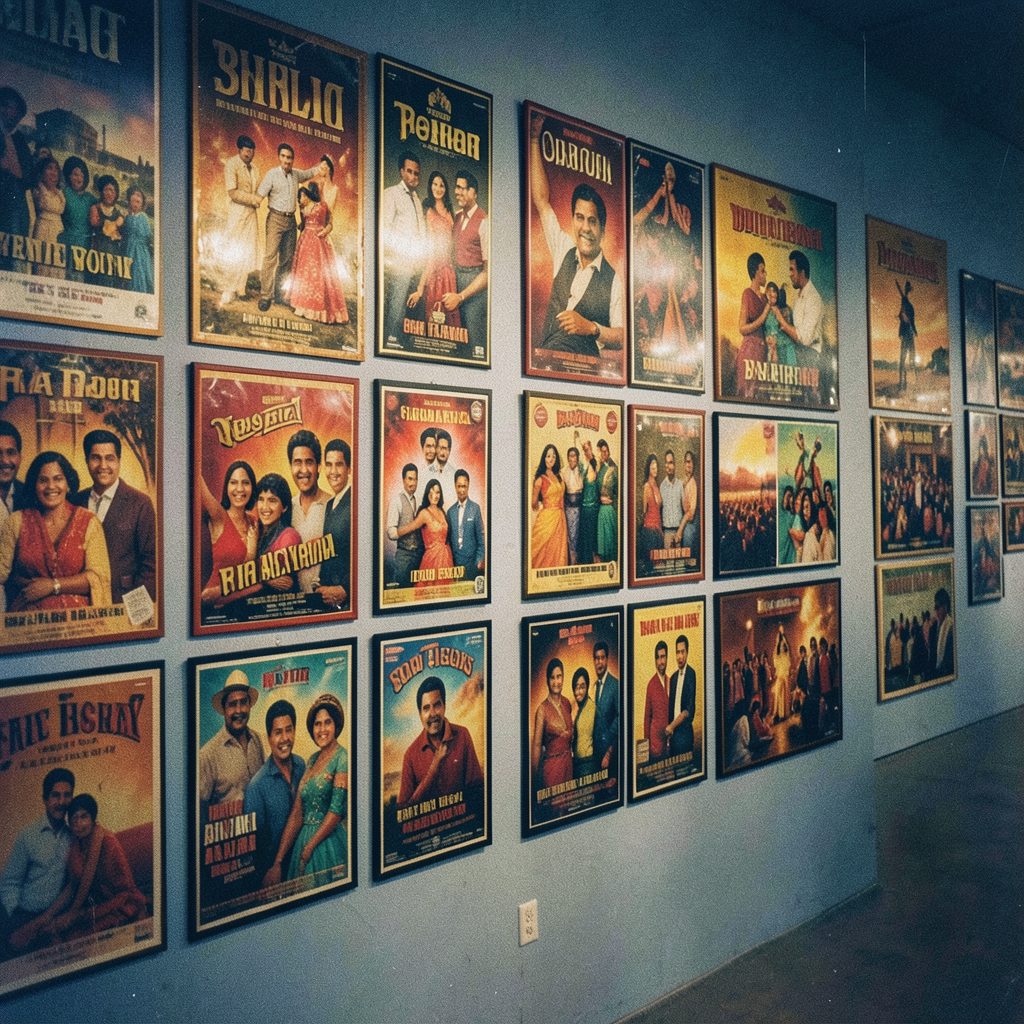

How Regional Cinema Is Redefining Bollywood Storytelling
Bollywood has long borrowed from novels, international films, folklore, and its own earlier successes. Yet the growing influence of regional language remakes is changing the industry’s creative instincts in a more meaningful way. Stories first told in Tamil, Telugu, Malayalam, Kannada, Marathi, Bengali, and other Indian languages are giving Hindi filmmakers new ideas about character, setting, tone, and audience expectations.
The appeal of these adaptations goes beyond a familiar plot. A successful regional film often carries a distinct social texture, a strong local rhythm, and a storytelling structure that has already connected with audiences. When Bollywood brings such a film into the Hindi market, it must decide what to preserve, what to translate, and what to rebuild for a different cultural landscape.
This process is influencing casting, screenwriting, music, marketing, and even the definition of a mainstream Hindi film. It also reflects a wider change in audience behavior: viewers are increasingly comfortable watching dubbed originals, subtitles, and films from across India before a remake reaches cinemas.
Why Remakes Have Become Creative Laboratories
A remake gives Bollywood an existing narrative framework, but it does not guarantee an automatic hit. The original may have succeeded because of its regional setting, a particular star’s persona, or cultural references that cannot be carried across word for word. Hindi filmmakers therefore have to treat adaptation as interpretation rather than simple duplication.
This has encouraged more attention to screenplay structure. Instead of depending entirely on spectacle or celebrity presence, writers are studying how regional films build tension, reveal character, and sustain emotional stakes. The strongest adaptations identify the central conflict and then redesign the surrounding world for Hindi-speaking audiences.
The trend has also made producers more open to unusual genres. Courtroom dramas, grounded thrillers, rural social stories, family tragedies, and intimate romances can attract investment when a regional original has already demonstrated commercial potential. In that sense, remakes reduce some financial uncertainty while creating space for fresh storytelling choices.
Regional Cinema Brings New Emotional Maps
Many South Indian and Marathi films have expanded Bollywood’s understanding of where mainstream stories can be set. Small towns, coastal communities, farming districts, working-class neighborhoods, and politically complex villages are no longer treated merely as decorative backgrounds. They can become active forces that shape a character’s decisions.
Language adaptation is central to this shift. A Hindi remake must decide whether characters should speak standard Hindi, retain regional expressions, or use a blend that reflects migration and local identity. Dialogue that sounds natural can preserve the emotional truth of the original, while overly polished lines may remove the social character that made the story memorable.
This sensitivity is visible in the treatment of women-led narratives as well. Producers are increasingly seeking stories in which female characters have professional ambitions, moral agency, and complicated personal lives. Coverage of female-led filmmaking reflects how production houses are helping widen the range of voices behind and in front of the camera.
Stars, Genres, And Commercial Recalibration
Casting can completely change the meaning of a remake. A performer known for romance may bring vulnerability to a role that originally depended on aggression, while a major action star can turn a restrained drama into a larger commercial event. These choices affect promotional campaigns, musical treatment, and audience expectations long before release day.
The challenge is balancing star image with character credibility. If the actor’s established persona overwhelms the role, the adaptation may feel like a vehicle rather than a story. When casting works, however, the star can introduce the material to a wider audience without erasing its original personality.
Genre conventions are shifting as well. Hindi cinema is borrowing the emotional directness of family dramas, the raw tension of crime stories, the visual confidence of action films, and the controlled pacing of Malayalam thrillers. This cross-pollination is producing films that may combine commercial songs and stars with quieter, more realistic narrative passages.
What Changes During The Adaptation Process
The journey from a regional original to a Hindi release involves several layers of creative and commercial adjustment. Writers may move the location, alter occupations, revise relationships, or add comic material to match perceived audience preferences. Some changes deepen the story, while others make it feel diluted.
| Story Element | Common Adaptation Choice | Potential Benefit | Frequent Risk |
|---|---|---|---|
| Setting | Shift to a Hindi-speaking state or city | Improves cultural familiarity | Loses the original’s identity |
| Dialogue | Add accessible Hindi and local expressions | Builds immediacy and humor | Sounds artificial or over-explained |
| Main Character | Recast around a major star | Expands box-office reach | Star image dominates the role |
| Music | Add new songs or remix popular tracks | Strengthens promotion | Interrupts narrative momentum |
| Social Context | Reframe caste, class, gender, or politics | Makes themes locally relevant | Simplifies complex issues |
| Climax | Increase action or sentiment | Creates a theatrical payoff | Undercuts a subtle original ending |
The most effective remakes preserve the emotional engine of the source material while allowing the Hindi version to stand independently. Audiences are quick to compare scenes through trailers, clips, and social media discussions, so superficial copying is easier to identify than ever.
This pressure can be productive. It encourages filmmakers to develop a clear point of view instead of assuming that a proven plot will carry the entire project. A remake has to offer a reason to exist, whether through a new perspective, stronger performances, a different setting, or a more contemporary interpretation.
The Business Case Behind Language Crossovers
Producers are drawn to regional stories because they offer a tested narrative foundation and access to audiences beyond the original language market. Digital platforms have made this exchange faster, allowing executives and writers to discover successful films soon after their theatrical runs. Streaming data, social media clips, and box office reports now influence remake decisions.
However, commercial security can be deceptive. A regional hit may have benefited from a specific cultural moment, local star loyalty, or word-of-mouth momentum that cannot be reproduced in another industry. Hindi audiences may already know the original through subtitles or dubbed versions, making the remake vulnerable to comparisons on acting, pacing, and emotional impact.
The financial model is changing because theatrical and streaming strategies are increasingly connected. A remake can be marketed as a major Hindi release while the original remains available online, creating a direct comparison for viewers. This makes quality control especially important in screenplay development, editing, sound design, and visual presentation.
What Audiences Now Expect From Hindi Versions
Viewers are becoming more demanding about authenticity. They can recognize when a film has borrowed a plot without understanding its social setting, and they often reward adaptations that respect the source while offering a distinct identity. This has raised the value of regional consultants, original writers, language coaches, and collaborators familiar with the community being portrayed.
Audience expectations are also changing around representation. A story set outside metropolitan India does not need to be simplified for urban viewers, and a Hindi film can trust its audience with unfamiliar customs, occupations, and political realities. The success of regional cinema has shown that specificity can create broader emotional connection.
For Bollywood, the key lesson is that accessibility does not require uniformity. A film can travel across languages while retaining unusual details, local humor, and cultural contradictions. The Hindi remake of the future may be less interested in making every story look conventionally glamorous and more willing to let its world determine its style.
Principles For More Distinctive Adaptations
Producers and creative teams can strengthen language-crossing projects by focusing on the elements that make each story culturally alive:
- Study the original’s social context before changing its location or characters.
- Retain the central emotional conflict instead of copying every scene mechanically.
- Cast performers who serve the role, even when a familiar star is attached.
- Use music, comedy, and action to support the narrative rather than interrupt it.
- Involve regional writers and consultants throughout development, filming, and editing.
These principles can help Bollywood move beyond the idea that a remake is simply a safer version of an existing hit. The best adaptations become conversations between film industries, audiences, and storytelling traditions. They acknowledge the source while allowing new creative voices to reshape its meaning.
The future of Hindi cinema will likely include more multilingual collaborations, simultaneous releases, direct adaptations, and stories developed for several markets from the beginning. Follow Wassupbollywood for film reviews, box office analysis, release updates, trailers, and the industry conversations shaping Bollywood’s next creative phase.