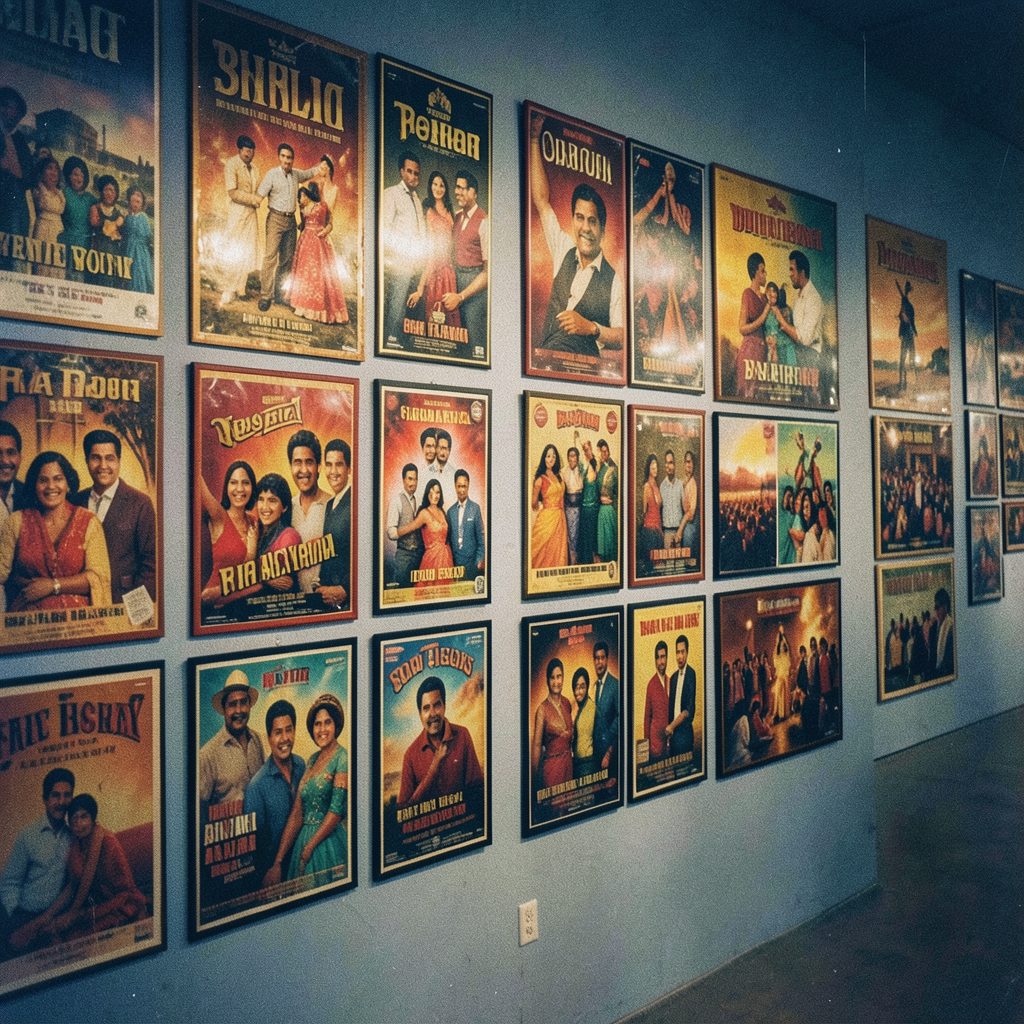

How Kareena Kapoor Khan Balances Blockbusters and Independent Films
Kareena Kapoor Khan has built one of Hindi cinema’s most adaptable careers. She can lead a large-scale commercial entertainer, anchor a family comedy, and then move into a restrained, character-driven drama without making the shift feel like a publicity experiment. That range has helped her remain visible across changing eras of Bollywood.
Her filmography reflects a careful balance between audience expectations and creative curiosity. Movies such as Kabhi Khushi Kabhie Gham, 3 Idiots, Good Newwz, and Singham Again belong to the mainstream space, while Chameli, Omkara, Talaash, Udta Punjab, and The Buckingham Murders show her interest in complicated characters and less predictable storytelling.
This balance is central to Kareena’s longevity. Rather than choosing between commercial cinema and independent films, she has treated both as connected parts of a sustainable acting career. Big releases provide scale and reach, while smaller projects allow her to test new performance styles and work with filmmakers who prioritize atmosphere, realism, and psychological detail.
A career shaped by contrasting choices
Kareena entered Bollywood with the advantages and pressures attached to a prominent film family, but her early work quickly showed that she did not want to remain inside a single star persona. Her debut in Refugee presented a conventional launch vehicle, yet films such as Chameli and Dev soon revealed a willingness to accept emotionally demanding roles.
Her breakthrough as Geet in Jab We Met demonstrated another important quality: the ability to turn a highly commercial character into a memorable, fully formed personality. Geet was energetic and instantly quotable, but the performance also depended on vulnerability and emotional change. Kareena could dominate a mainstream film without reducing the role to glamour or comic support.
That flexibility became a defining career strategy. She moved between romantic dramas, action films, social stories, comedies, and ensemble projects. The contrast allowed her to protect herself from being identified with only one kind of Bollywood heroine.
Commercial cinema gives her a wide canvas
Blockbusters demand a particular kind of discipline. A leading actor must work within a large production, serve the film’s pace, and connect with viewers who may be watching for spectacle, music, action, or a familiar franchise. Kareena has often used these projects to combine star presence with character details that keep her performances from becoming generic.
In 3 Idiots, her role as Pia supported the central narrative while giving the film emotional warmth. In Good Newwz, she handled comedy through timing and reaction rather than exaggerated gestures. Her work in the Singham universe places her within a louder action framework, where confidence, rhythm, and screen authority are essential.
Large Hindi films also extend an actor’s cultural reach. They generate box office discussion, music visibility, promotional momentum, and a stronger connection with mass audiences. For Kareena, commercial cinema has remained a way to stay connected to the broad Hindi film market while creating room for more selective projects.
Smaller stories reveal a different performer
Kareena’s independent and mid-budget work tends to rely less on glamour and star machinery. These films often ask her to create tension through silence, physical restraint, or moral ambiguity. In Chameli, she portrayed a sex worker with a directness that challenged the polished image associated with leading actresses at the time. In Omkara, she brought emotional fragility to a Shakespearean adaptation rooted in rural Uttar Pradesh.
Talaash placed her inside a dark investigative drama, while Udta Punjab used her performance to represent a determined doctor working amid a devastating drug crisis. These roles were valuable because they gave her fewer conventional tools. The character could not be carried by costumes, songs, or a romantic track alone.
Her later work continued that exploration. Jaane Jaan used a controlled, atmospheric format for streaming, and The Buckingham Murders positioned her as a grieving British-Indian detective investigating a child’s death. The film’s measured pace and layered emotional setting demanded a different energy from the performer associated with Bollywood spectacle.
| Project | Format and scale | Performance emphasis | Why it matters |
|---|---|---|---|
| Jab We Met | Mainstream romantic comedy | Timing, energy, emotional transformation | Established a modern commercial star persona |
| 3 Idiots | Major studio blockbuster | Warmth, ensemble chemistry, grounded reactions | Connected her with a large national audience |
| Omkara | Literary crime drama | Restraint, vulnerability, regional realism | Confirmed her dramatic range |
| Udta Punjab | Socially focused ensemble film | Resolve, empathy, naturalism | Linked star power with serious subject matter |
| Jaane Jaan | Streaming mystery thriller | Internal conflict and quiet tension | Reflected the changing audience for Hindi cinema |
| The Buckingham Murders | Character-led crime drama | Grief, investigation, emotional control | Gave her a role built around atmosphere rather than spectacle |
The balance depends on timing and scale
Choosing varied projects is only part of the equation. Kareena has also managed the scale of her appearances. Some films position her as the central attraction, while others use her as an important member of an ensemble. This distinction can help an established actor experiment without placing every creative decision on a single release.
Her participation in Veere Di Wedding was significant in this respect. The film combined a recognizable commercial format with conversations about female friendship, marriage, sexuality, and personal choice. Its success showed that a women-led Hindi film could carry mainstream visibility while retaining a sharper, contemporary point of view.
C rew—properly styled Crew—followed a similar path through a stylish comedy led by three women. Kareena shared the screen with Tabu and Kriti Sanon, allowing the film to distribute star power across an ensemble. The result offered entertainment value while presenting women as ambitious, flawed, and actively involved in the plot rather than simply supporting male characters.
Experience helps her move between worlds
A major reason Kareena can shift between Bollywood blockbusters and independent cinema is her command of performance language. She understands when a scene needs heightened expression and when it benefits from understatement. That awareness is especially important when moving from a high-energy commercial set to a naturalistic film built around pauses and observation.
She also brings the confidence of an actor who has worked across several production environments. Big studio films require scale, speed, and extensive promotion. Smaller films may involve tighter schedules, unfamiliar locations, multilingual dialogue, and a director’s more intimate process. Adaptability becomes as important as technical talent.
Her public image adds another layer to this balance. Kareena remains a fashion and lifestyle figure, but her stronger performances are often the ones that complicate that image. By appearing without relying exclusively on glamour, she reminds audiences that celebrity visibility and acting ambition can exist together.
Selecting roles in a changing industry
The Hindi film industry now offers actors more routes to audiences. Theatrical releases, streaming films, franchise cinema, festival projects, and women-centered ensembles all occupy different parts of the entertainment ecosystem. Kareena’s career reflects this broader landscape, especially as the divide between “commercial” and “serious” cinema becomes less rigid.
Streaming has helped character-driven stories reach viewers who may not have encountered them through traditional theatrical distribution. At the same time, theatrical blockbusters remain essential for creating shared cultural moments. Kareena’s choices acknowledge both realities rather than treating one format as automatically superior.
Her strongest decisions usually involve a recognizable emotional or dramatic challenge. The role may be surrounded by songs and spectacle, or it may unfold through suspicion, grief, and silence. What links these projects is the chance to make the character specific. That focus prevents her filmography from becoming a simple list of star vehicles.
What her career offers emerging performers
Kareena’s path provides a practical model for actors who want commercial success without abandoning artistic ambition. The balance does not require every film to occupy the middle ground. Instead, it depends on making each choice serve a different professional purpose.
- Use mainstream films to build audience trust and expand visibility.
- Choose independent or mid-budget projects that offer a clear acting challenge.
- Treat ensemble roles as opportunities to learn, rather than measuring every film by screen time.
- Match performance style to the story’s tone instead of repeating a familiar star image.
- Protect long-term variety by avoiding a career built around only one genre or franchise.
Her example also shows why range is most convincing when it develops over time. A single experimental role can attract attention, but a sustained pattern of contrasting performances demonstrates genuine artistic curiosity. Kareena has repeatedly returned to that pattern, moving from romantic comedy and action entertainment to social drama, mystery, and intimate character studies.
For Bollywood audiences, that variety keeps her releases worth tracking beyond opening-day predictions or celebrity headlines. Follow Wassupbollywood for Kareena Kapoor Khan’s upcoming projects, reviews, box office updates, trailer coverage, and the changing stories behind Hindi cinema’s most versatile stars.