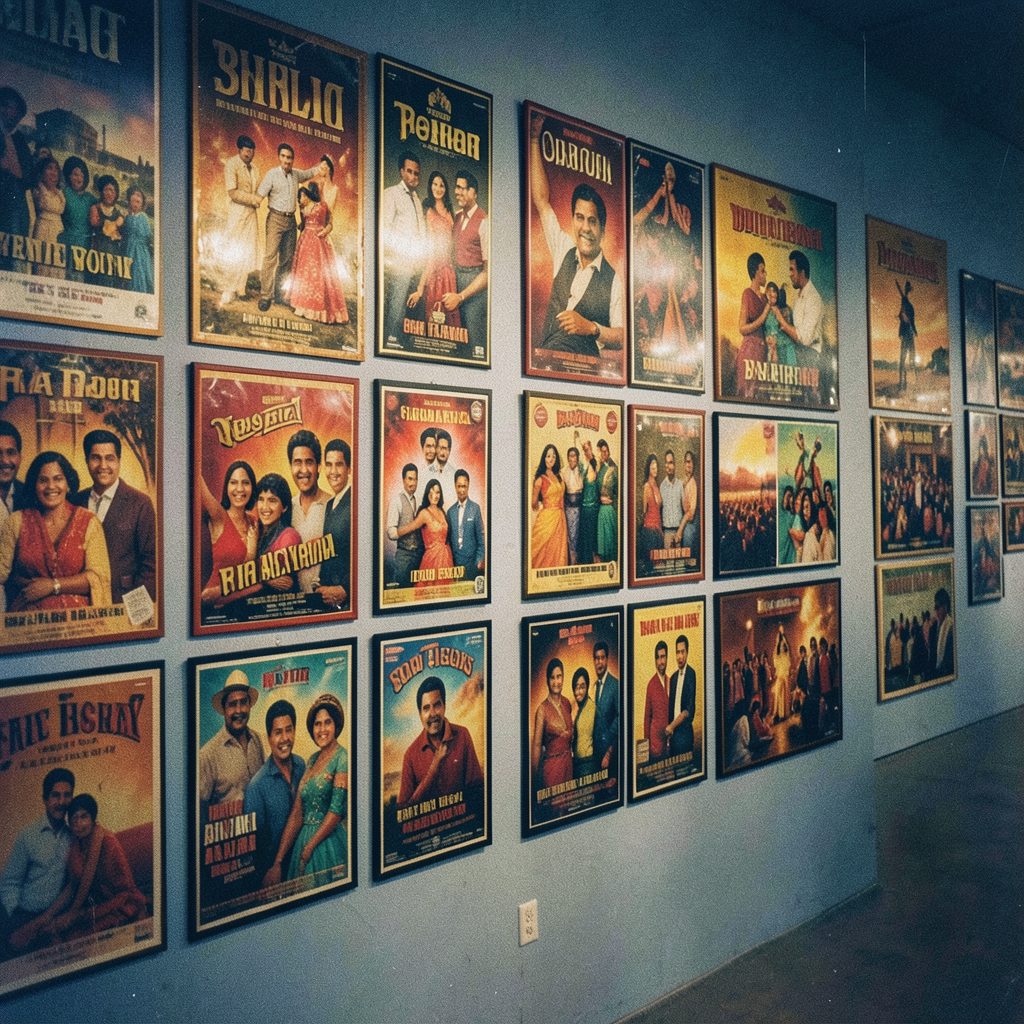

Bollywood's Most Successful Regional Language Adaptations
Hindi cinema has long borrowed from its southern counterparts, but the past decade has turned regional storytelling into a national phenomenon. Telugu, Tamil, Malayalam, Kannada, and Marathi narratives now travel north with polished remakes that retain local flavour while courting mainstream viewers hungry for something beyond the standard masala template.
For Australian audiences, this trend carries more weight than it once did. Dedicated Indian film festivals in Melbourne and Sydney, packed suburban cinemas in Harris Park and Footscray, and a robust streaming library accessible through Netflix Australia mean viewers from Brisbane to Perth can sample both the originals and their Hindi versions within weeks of each other, often on the same screen.
The Rise of Pan-Indian Cinema
The term pan-Indian cinema has shifted from marketing jargon into a genuine industry model. Producers now greenlight projects with simultaneous Telugu, Tamil, Hindi, Malayalam, Kannada, and Bengali releases, recognising that regional stories often carry stronger emotional cores than formulaic Hindi scripts. Directors such as S.S. Rajamouli and Prashanth Neel have proven that a tightly written village saga or a period epic can outperform star-driven Hindi vehicles when properly reshot for northern sensibilities.
What makes this wave distinct is its reverence for source material. Adaptations rarely rewrite the original; they reframe it. Music is recomposed, cultural references are localised, and lead actors are recast to suit the new audience, yet the structural integrity of the story remains untouched. The financial incentive is clear: a film that works in five markets outearns a Hindi-only release even after paying for reshoots and dubbing.
Production houses have also built specialised wings to manage these conversions. Dedicated adaptation teams scout southern releases within weeks of their premiere, fast-tracking option deals before competing studios lock the rights. This early-mover advantage has reshaped acquisition timelines across the industry.
Telugu-to-Hindi Crossovers
Telugu cinema currently leads the adaptation race. The success of films like RRR in Japanese theatres and the Hindi-dubbed earnings of Ala Vaikunthapurramuloo demonstrated that Telugu narratives travel well when they keep their mass-appeal beats intact. Producers quickly noticed the upside, leading to a string of official Hindi remakes of Telugu blockbusters over the past five years.
These projects typically retain the original's action choreography and family-drama spine while inserting new song picturisations suited to Hindi radio playlists. The result is a hybrid that satisfies purists in Hyderabad and newcomers in Lucknow alike. Caste dynamics, regional dialects, and political references are softened or replaced, but the central conflict survives the translation.
The economics also favour Telugu sources. Several Telugu studios now co-produce the Hindi version alongside the original, splitting marketing costs and sharing talent across both shoots. This integrated model reduces duplication and has become a template for studios exploring the format.
Tamil and Malayalam Adaptations
Tamil cinema's star-driven spectacles have produced fewer straight remakes, but their influence appears in story structure and treatment. Films such as Vikram Vedha and Kaithi have inspired Hindi projects that borrow their gritty textures without attempting direct conversion. Malayalam cinema, by contrast, has been a goldmine for Hindi filmmakers seeking grounded, character-led dramas. Originals such as Drishyam became textbook examples of how a tightly written thriller could be recreated shot-for-shot and still feel fresh.
The Hindi versions tend to amplify emotional beats and add more songs, but they rarely dilute the suspense mechanics that made the originals stand out. Critics in Australian outlets have noted that subtitles of these Malayalam originals often outpace their Hindi counterparts in festival circuits, particularly at events hosted by the Indian Film Festival of Melbourne.
Recent years have also seen Tamil originals remade with surprising fidelity. Hindi filmmakers increasingly travel to Chennai and Kochi to shadow original directors during pre-production, treating the adaptation as a respectful dialogue rather than a one-way transplant.
Kannada and Marathi Stories
Kannada cinema's KGF franchise showed that rooted, dialect-heavy storytelling could scale across languages without losing grit. Its Hindi-dubbed cut performed strongly in single screens and multiplexes alike. Marathi cinema, meanwhile, contributes socially conscious dramas that Hindi filmmakers adapt for broader reach. Films like Sairat were remade as Dhadak, proving that rural romances could travel north when reframed through familiar musical motifs.
| Original Film | Original Language | Hindi Adaptation | Release Year | Verdict |
|---|---|---|---|---|
| KGF: Chapter 1 | Kannada | KGF: Chapter 1 (Hindi) | 2018 | Blockbuster |
| Drishyam | Malayalam | Drishyam | 2015 | Blockbuster |
| Vedalam | Tamil | Rocky Handsome | 2016 | Average |
| Sairat | Marathi | Dhadak | 2018 | Hit |
| Jersey | Telugu | Jersey | 2022 | Below average |
| Vikram Vedha | Tamil | Vikram Vedha | 2022 | Average |
The table above captures how differently these projects fared. Action-forward originals like KGF translate more reliably than intimate dramas such as Jersey, where cultural texture is harder to replicate in a Hindi setting.
Box Office Patterns and Streaming Reach
Australian distributors have responded to this trend with curated theatrical windows. In Melbourne and Sydney, Indian films now receive wider cinema chains and longer runs than they did a decade ago. The diaspora audience, combined with curious mainstream viewers, has made Hindi regional adaptations reliable earners in suburban multiplexes.
Streaming has accelerated the cycle further. Netflix Australia's catalogue frequently lists both original Telugu or Malayalam cuts alongside their Hindi remakes, allowing subscribers to compare adaptations side by side. This accessibility has changed viewing habits, with Australian critics reviewing both versions rather than treating the remake as the default entry point. The same pattern has emerged on Amazon Prime Video and Stan, where algorithm-driven recommendations often surface regional originals next to their Hindi counterparts.
The financial model has also matured. Production houses now factor dubbing and reshoot costs into the original budget, treating the Hindi version as a parallel release rather than an afterthought. Some studios even shoot Hindi sequences during the original production schedule, halving the time between language premieres.
Future Adaptations on the Horizon
The pipeline of upcoming projects suggests no slowdown. Several announced Hindi versions of recent Tamil and Telugu hits are already in pre-production, with directors attached and music composers finalised. Industry watchers expect at least four major remakes to release in the coming eighteen months.
What separates the next wave from earlier experiments is creator involvement. Original writers and directors are increasingly consulted during the Hindi adaptation, ensuring fidelity to the source. Australian audiences who follow trade coverage on the about page of Wassupbollywood will recognise how this collaborative model is reshaping release strategies across continents.
Cricket fans in Adelaide and Brisbane may soon find stadium advertising for these films during IPL broadcast windows, mirroring the cross-promotional push already seen in Indian media. Meanwhile, Indian restaurants in suburbs like Parramatta and Clayton have begun screening new releases alongside weekend buffets, creating community viewing hubs that double as promotional spaces.
For those planning a viewing weekend around regional Indian cinema, the concrete next step is to check the Wassupbollywood release calendar this Friday for a freshly updated slate of confirmed Hindi remakes arriving in Australian theatres and on streaming platforms through the summer season.