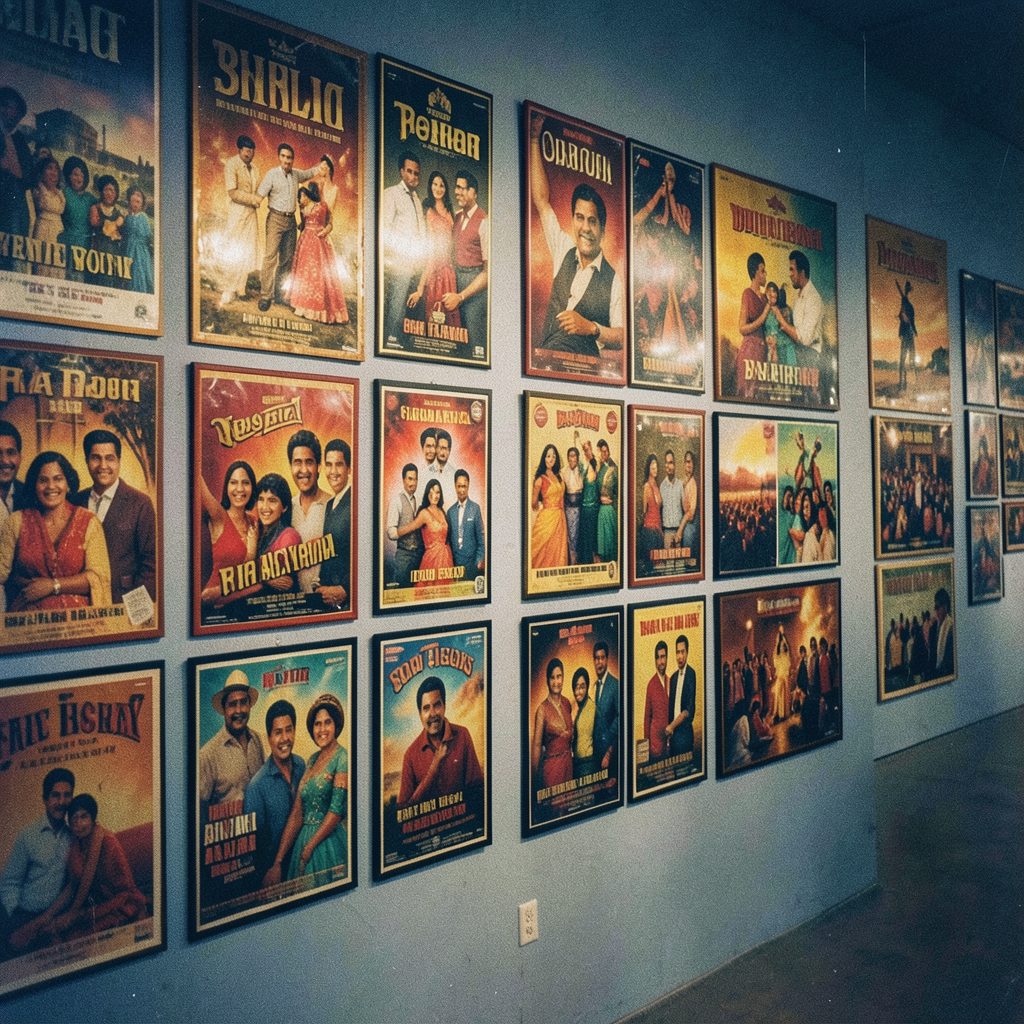

A breakdown of Bollywood's most profitable franchise films
Bollywood's box office has steadily shifted toward series-based storytelling, with studios pouring resources into connected universes that promise repeat viewings and built-in marketing momentum. The economics make sense: a successful first film lowers marketing spend for the sequel, while loyal audiences in India and abroad guarantee a strong opening weekend. For an industry that once relied on standalone hits, franchises now represent the safest path to a multi-crore return.
Australian fans have felt this shift in their own queues. In Sydney's Harris Park and across Melbourne's Carnegie and Glen Waverley, Bollywood screenings regularly sell out well before release day, and the franchises discussed here routinely top local Indian-diaspora box office tallies. The Australian Classification Board shapes how each title reaches viewers here, and streaming platforms including Netflix Australia, Foxtel, Stan, and Fetch TV carry most of the catalogue once theatrical runs end.
What follows is a breakdown of the franchises that have turned Hindi cinema into a reliably serialized business, along with a comparison of their financial performance and practical guidance for following the next big release from home in Australia.
The YRF spy universe and its global rollout
Yash Raj Films built the most successful Hindi spy franchise by leaning into globe-trotting locations, high-octane action, and a rotating cast of charismatic leads. Starting with Ek Tha Tiger in 2012, followed by Tiger Zinda Hai, War, and Pathaan, the studio created continuity audiences could follow across films without watching every entry. Pathaan in early 2023 became the first Hindi film to cross several overseas benchmarks, pulling in substantial numbers from the Gulf, North America, and Australian cities with large South Asian communities.
The financial model is unusually shrewd. Each film operates as a standalone thriller but rewards loyal viewers with cameos and shared mythology, much like the Marvel approach adapted for Indian budgets. War, starring Hrithik Roshan and Tiger Shroff, demonstrated how two superstars could be pitted against each other to double the audience draw. A closer look at how the two actors approach fight choreography can be found in Hrithik Roshan vs Tiger Shroff who has the better action style, which explores the visual grammar of their respective action sequences.
Rohit Shetty's cop universe and the mass entertainer formula
Rohit Shetty turned a single character, Bajirao Singham, into a multi-film phenomenon that eventually merged with Simmba and the extended Police universe. Singham Returns in 2014 doubled the original's domestic take, and the later crossover films reinforced the brand. What makes this franchise commercially durable is its reliance on dialogue-driven mass entertainment, stunts filmed economically within Indian settings, and characters that audiences actively want to revisit.
The economics differ noticeably from the spy universe. Cop films lean on a fixed core crew, recycled sets, and a tested template that minimises creative risk. Producers know roughly what an audience will pay for a new Singham chapter, making green-lighting decisions straightforward. Overseas, these films have performed reliably in the United Kingdom, the Gulf states, Canada, and suburban Australia, where weekend matinees draw entire families and screenings occasionally face classification decisions from ACMA.
Comedy franchises and the dependable return
Hindi comedy franchises have quietly outlasted many bigger-budget experiments. The Golmaal series, Housefull franchise, and Dhamaal films have all delivered consistent box office returns by leaning on ensemble casts and broad humour that travels well. Golmaal's fifth installment remained profitable well past the point when most franchises lose momentum, while Housefull 4 in 2019 managed to recover its budget despite mixed reviews.
The reason these series endure is economic rather than critical. Comedy budgets typically sit comfortably below action-thriller budgets, meaning the threshold for profitability is lower and the margin for error is wider. A film that underperforms its predecessor can still break even through satellite, music, and digital rights, which now form the second pillar of franchise income. For Australian viewers, these films perform best in family viewing contexts, particularly during school holidays when multiplexes in Parramatta and Box Hill run Hindi matinees.
Horror-comedy crossovers and surprise ROI
The Stree and Bhediya connected universe, produced by Maddock Films, has emerged as one of the most profitable recent experiments. Built on regional folklore, sharp writing, and modest production budgets, these films have punched far above their weight class. Stree 2 in 2024 became one of the highest-grossing Hindi films of its year, and the franchise now competes with the biggest action properties despite its lower costs.
The financial lesson is straightforward: low budget plus strong word-of-mouth plus repeat viewing equals outsized profit. Horror-comedy also benefits from being culturally specific in a way that travels internationally, with the universal humour of the genre bridging linguistic gaps for non-Hindi-speaking audiences. Limited Hindi horror-comedy runs occasionally pop up in Brisbane and Perth, sometimes timed around Diwali to capitalise on holiday-season demand.
Standalone action thrillers and sequel economics
Some of Bollywood's most lucrative films have resisted the franchise model entirely while still generating sequels. The Don series, Dhoom films, and the War franchise all sit in this category, where each entry stands alone but shares branding, characters, and tone. Don 2 in 2011 became one of the first Hindi films to cross significant overseas benchmarks and proved that stylish thrillers could anchor a series without requiring an interconnected universe.
This hybrid approach lets studios test each script on its own merits while keeping the marketing and brand recognition advantages of a franchise. The risk is creative stagnation, particularly when sequels arrive too quickly and lose the freshness of the original. War 2 is widely expected to test whether the model can sustain itself through another generation of stars, with Australian trade publications likely to follow the film's overseas box office in AUD as it rolls out across Sydney and Melbourne screens.
Franchise profitability compared
| Franchise | Key films | Era | Approximate budget tier | Profitability profile |
|---|---|---|---|---|
| YRF Spy Universe | Ek Tha Tiger, Tiger Zinda Hai, War, Pathaan | 2012–present | High | Blockbuster returns, strong overseas |
| Rohit Shetty Cop Universe | Singham, Singham Returns, Simmba | 2011–present | Medium-high | Reliable mass entertainer |
| Comedy franchises | Golmaal series, Housefull, Dhamaal | 2006–present | Medium | Consistent low-risk returns |
| Maddock horror-com | Stree, Bhediya, Stree 2 | 2018–present | Low-medium | Outsized profits on modest budgets |
| Stylish action thrillers | Don, Dhoom, War | 2004–present | Medium-high | Brand-driven, hit-dependent |
Tracking Bollywood franchises from Australia
- Subscribe to local streaming services that license Hindi films, including Stan, Netflix Australia, and Foxtel Bollywood packages, to catch recent releases shortly after theatrical runs.
- Follow Indian box office trackers and Australian trade publications that report weekend grosses in AUD to compare each franchise against its predecessor.
- Plan viewing around Indian Film Festival of Melbourne and similar events in Sydney and Brisbane for early access to retrospectives and director Q&As.
- Join local diaspora film clubs in suburbs like Harris Park, Glen Waverley, and Seven Hills to access curated screenings that don't always reach mainstream cinemas.
- Check the Australian Classification Board database before watching with family, since ratings occasionally differ from the original Indian certification.
- Track the next franchise release by bookmarking a couple of trusted box office trackers and checking them every Friday during release weeks, since most major Hindi films open on Thursdays in India and reach Australian screens within days.
Franchise fatigue is a real risk, but the economics still favour studios willing to invest in long-form storytelling. For Australian viewers, the smartest move is to wait for early reviews before committing to a cinema trip, since not every sequel justifies the ticket price, and most will arrive on local streaming platforms within a few months anyway.