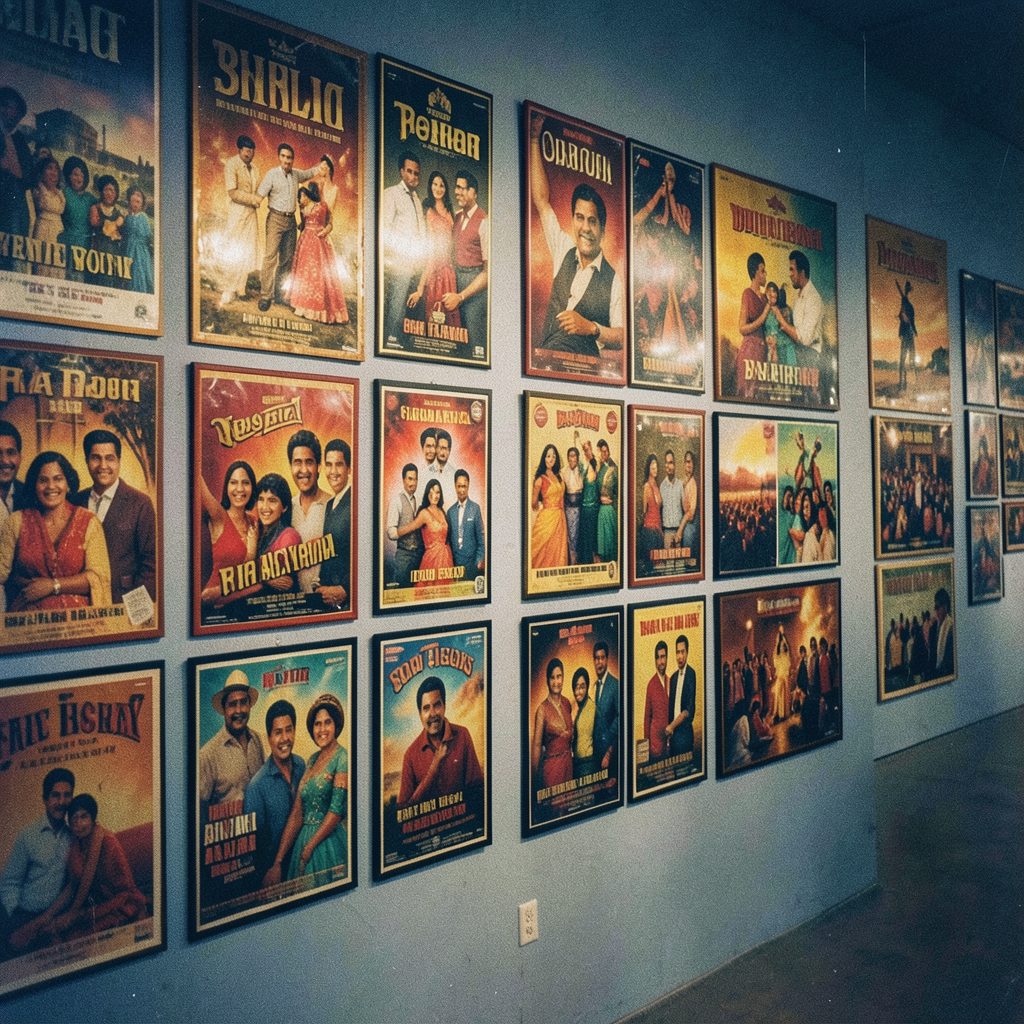

The rise of regional cinema and Bollywood’s South Indian collaboration wave
Indian cinema is entering a more connected era. Hindi films still command national attention, yet Telugu, Tamil, Kannada, and Malayalam movies are shaping audience expectations across the country. Their influence can be seen in action staging, visual scale, storytelling rhythms, music, and the growing popularity of dubbed releases.
The rise of regional cinema is also changing who gets to lead major productions. Bollywood stars are increasingly working with South Indian directors because these filmmakers bring distinctive creative voices, strong technical teams, and a proven understanding of spectacle. The result is a wider cinematic exchange rather than a simple transfer of talent from one industry to another.
This shift reflects changing viewer habits. Streaming platforms have made language less restrictive, while theatrical successes such as Baahubali, KGF, Pushpa, RRR, and Kantara have demonstrated that local stories can become nationwide and international events.
Why regional storytelling commands attention
For years, mainstream Hindi cinema often treated regional industries as separate markets. That division has weakened because audiences now discover films through streaming services, social media clips, fan edits, and dubbed television premieres. A film made in Hyderabad, Chennai, Kochi, or Bengaluru can become part of the national conversation within hours.
South Indian cinema has also developed a reputation for committing strongly to its own cultural settings. Whether the subject is a village power struggle, a historical rebellion, a gangster saga, or a family drama, the setting usually feels central to the story. Viewers respond to that specificity because it gives large-scale entertainment a recognizable emotional foundation.
The success of regional blockbusters has challenged the idea that a pan-Indian film must be built around Hindi dialogue or familiar Mumbai formulas. Instead, audiences are accepting multiple languages, regional customs, and local heroes when the storytelling is clear and the emotional stakes are powerful.
The directors reshaping mainstream Hindi films
Directors from the South have become attractive collaborators because they often combine commercial ambition with a strong visual identity. S. S. Rajamouli’s filmmaking demonstrates how mythology, history, friendship, and action can be arranged into a global spectacle. His success has encouraged producers to think beyond conventional language markets.
Lokesh Kanagaraj, Prashanth Neel, Atlee, Sukumar, and Hanu-Man director Prasanth Varma represent different approaches to scale and genre. Some emphasize interconnected crime worlds, while others focus on hero elevation, folklore, stylized action, or heightened drama. Their methods are not interchangeable, yet each has helped expand the vocabulary of Indian mass entertainment.
Atlee’s move into Hindi cinema with Jawan showed how a regional filmmaker could work with a major Bollywood superstar while retaining a distinctly energetic style. The film used social themes, ensemble characters, emotional reversals, and crowd-pleasing action to reach viewers across language communities.
Why Bollywood stars are making the move
For established Hindi actors, collaboration with South Indian directors offers access to new genres and larger national audiences. A star known for romantic dramas may gain a fresh image through an action thriller, while an actor associated with urban roles can explore historical, rural, or mythological material.
The appeal also lies in the clarity of the creative pitch. Many South Indian productions are built around a strong central premise, a memorable protagonist, and carefully designed set pieces. That structure can provide Bollywood performers with roles that are physically demanding, emotionally direct, and easier for audiences to identify with.
Actors such as Shah Rukh Khan, Alia Bhatt, Deepika Padukone, Janhvi Kapoor, and Sanjay Dutt have all participated in projects connected to southern film industries in different ways. Some appear in multilingual productions, others join Hindi remakes or cross-industry franchises. These choices show that language boundaries are becoming less important than the scale and potential of a project.
The business case for cross-industry films
Collaboration is driven by creativity, but it is also a practical response to a changing box office. A film with talent from several industries can attract different fan bases, improve its dubbed and streaming value, and generate stronger pre-release attention. Producers can also build promotional campaigns around the meeting of major stars and directors.
| Creative or business factor | Value of the collaboration |
|---|---|
| Multilingual casting | Connects the film with several regional audiences |
| South Indian action design | Adds physical intensity and visual freshness |
| Bollywood star power | Expands national media coverage and opening interest |
| Shared production resources | Supports larger sets, crews, and technical ambition |
| Streaming distribution | Extends the film’s reach after its theatrical run |
| Cross-cultural marketing | Creates conversation across language communities |
The model is particularly valuable in an era when theatrical audiences are selective. Viewers may skip an ordinary release but turn out for an event film with a recognizable director, a major star, and a promise of something visually different. This helps explain the rise of pan-Indian releases and multilingual promotional campaigns.
Still, commercial logic alone cannot guarantee success. A weak script, confused tone, or artificial casting choice can expose the limits of a collaboration. The strongest projects treat regional influences as part of the film’s identity rather than decorative additions.
How the partnership changes performance and craft
A South Indian director working with a Bollywood star may ask for a different kind of performance. The actor may need to embrace more physical movement, heightened reactions, dialect coaching, or a hero image built around action rather than subtle urban charm. That process can reveal new dimensions in a familiar performer.
The exchange works in the other direction as well. Bollywood actors bring experience in Hindi-language publicity, national brand building, and a performance tradition shaped by musicals, romance, and metropolitan drama. Their presence can help a regional production reach viewers who might not otherwise follow it.
Technical departments are benefiting from the same movement. Cinematographers, stunt coordinators, production designers, editors, and music composers are crossing industries more frequently. The result is a hybrid production culture in which methods from different film centers influence one another.
This does not mean every film needs to become louder or larger. Regional cinema has also contributed intimate writing, grounded humor, textured character work, and unconventional themes. The most valuable lesson for Bollywood may be the confidence to build a story around its own world instead of smoothing away its local character.
How audiences can follow the crossover
For viewers, the expanding film ecosystem offers more choice than ever. A release calendar now includes original Hindi films, dubbed regional titles, bilingual productions, remakes, spin-offs, and streaming premieres. Checking latest Bollywood news can help fans track casting announcements, trailers, release changes, and early box office trends.
A useful viewing habit is to follow directors and creative teams rather than relying only on star names. This makes it easier to notice recurring collaborators, compare storytelling styles, and understand how a filmmaker’s ideas evolve between languages and industries.
- Watch successful regional films in their original language with subtitles when possible.
- Compare a director’s earlier work with a newer Hindi or multilingual project.
- Follow cinematographers, composers, stunt teams, and writers alongside actors.
- Treat dubbed releases as part of mainstream Indian cinema rather than a secondary format.
- Track audience and critic responses across different regions before judging a film’s reach.
This broader approach also creates space for smaller films. Large pan-Indian productions receive the most publicity, but regional industries continue to produce inventive dramas, thrillers, comedies, and independent films that influence the mainstream in quieter ways.
What the next phase could look like
The future of Indian cinema will likely involve more flexible partnerships rather than strict industry divisions. A Telugu director may make a Hindi action film, a Mumbai star may headline a Tamil production, and a Malayalam writer may contribute to a national streaming series. These combinations can create new opportunities when the creative relationship is genuine.
The biggest challenge will be maintaining cultural credibility. Audiences are increasingly alert to shallow representation, forced accents, and stories that use regional identity only as a marketing device. Successful collaborations will need local writers, authentic settings, thoughtful language choices, and characters who feel rooted in the world they inhabit.
Bollywood’s relationship with South Indian cinema is therefore becoming a long-term creative exchange. It is changing casting strategies, expanding the definition of a mainstream Indian film, and giving audiences more reasons to explore stories beyond their usual language. Follow upcoming announcements, trailers, reviews, and box office developments on Wassupbollywood as this shared cinematic landscape continues to grow.