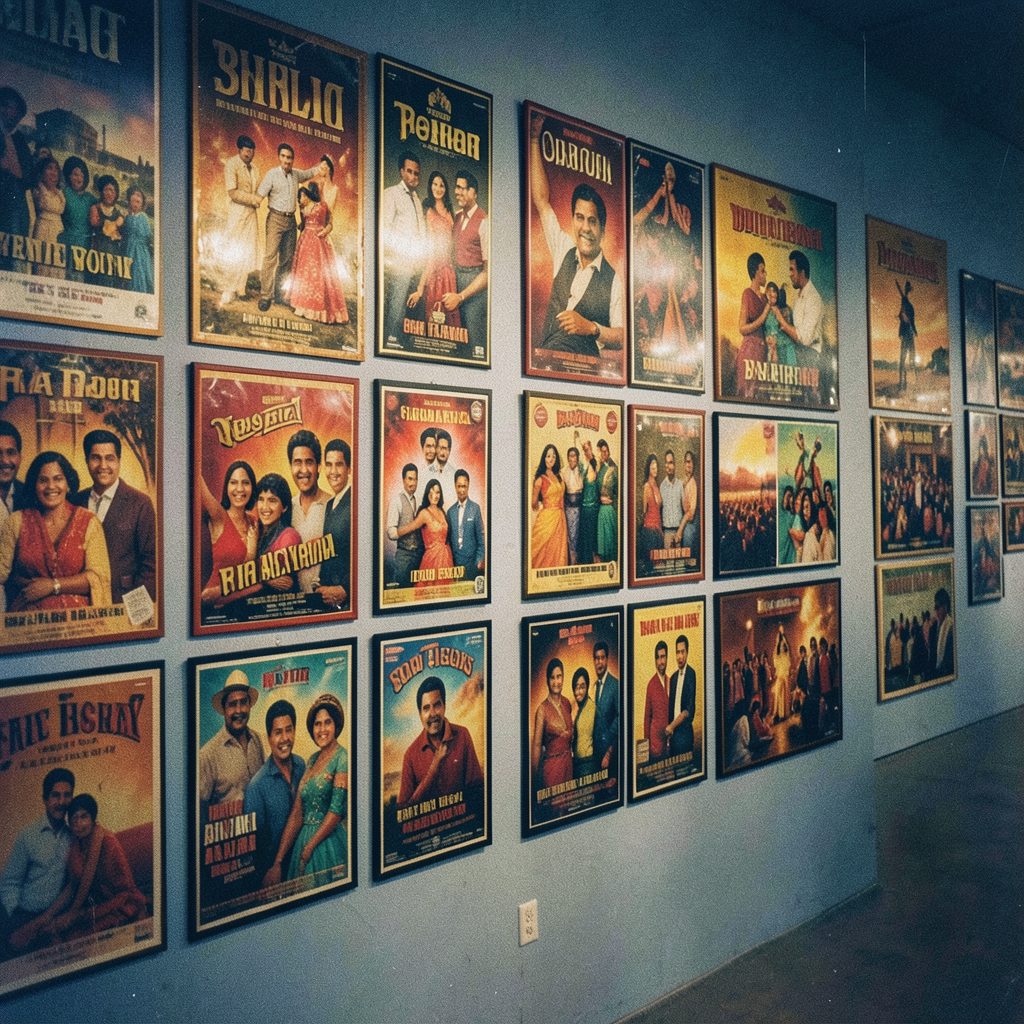

The Most Critically Acclaimed Bollywood Films of 2024
Hindi cinema in 2024 moved confidently between intimate storytelling, large-scale spectacle and sharply observed social drama. The year produced films that earned festival recognition, strong reviews and passionate audience responses, while streaming releases expanded the reach of filmmakers who might once have struggled to find a nationwide theatrical audience.
Several acclaimed releases also challenged familiar Bollywood formulas. They placed ordinary people at the center, explored regional music cultures, reimagined action cinema and treated historical subjects with greater emotional detail. Commercial success remained important, but critical conversation increasingly rewarded originality, craft and performances that felt lived-in.
The selection below includes major Hindi-language films as well as Indian productions closely connected to the contemporary Hindi film landscape. Together, they represent the range of acting, writing, direction, cinematography and music that made the year especially memorable.
A year of variety and ambition
One of the defining features of 2024 was the coexistence of radically different cinematic experiences. Laapataa Ladies offered a gentle rural satire about identity and patriarchy, while Kalki 2898 AD built an expansive science-fiction mythology around ancient Indian ideas and futuristic technology. Both films attracted attention for very different reasons.
Streaming also became a major platform for serious Hindi storytelling. Netflix releases such as Amar Singh Chamkila reached international viewers quickly, allowing music biography, political history and regional culture to travel beyond their original markets. Theatrical films, meanwhile, continued to prove that distinctive concepts could generate strong word of mouth.
Laapataa Ladies and the power of simplicity
Directed by Kiran Rao, Laapataa Ladies became one of the year’s most warmly received Hindi films. Its premise is simple: two newly married women become separated from their husbands after a train journey, and one of them is mistakenly taken home by the wrong family. From that comic setup, the film develops a thoughtful examination of gender, education and self-worth.
Nitanshi Goel, Pratibha Ranta and Sparsh Shrivastav bring freshness to characters who could easily have become broad comic types. Ravi Kishan is equally memorable as a police officer whose investigation gradually becomes more humane and perceptive. The film’s humor never loses sight of the social structures shaping its characters’ lives.
The production’s modest scale became an advantage. Instead of depending on spectacle, Rao uses village landscapes, pauses and conversational scenes to create warmth. Its Oscar submission generated additional attention, but the film’s lasting appeal comes from its carefully balanced tone and belief in personal transformation.
All We Imagine as Light finds beauty in the everyday
Payal Kapadia’s All We Imagine as Light was one of the most internationally celebrated Indian films of 2024. Although it sits outside conventional Bollywood entertainment, its Hindi and Malayalam dialogue, Mumbai setting and Indian production context make it an important part of the year’s national cinema conversation. The film won the Grand Prix at Cannes, a historic achievement for Indian cinema.
The story follows two nurses, Prabha and Anu, whose professional lives in Mumbai contrast with their private loneliness. A third woman, Parvaty, connects their experiences to the city’s housing pressures and the displacement faced by working people. Kapadia’s direction is patient and atmospheric, allowing emotional details to accumulate rather than forcing dramatic revelations.
Kani Kusruti, Divya Prabha and Chhaya Kadam give performances of remarkable restraint. Their characters communicate through glances, routine and unfinished conversations. The film’s visual language turns trains, hospital corridors, crowded streets and coastal spaces into reflections of emotional isolation and unexpected freedom.
Music, history and performance in Amar Singh Chamkila
Imtiaz Ali’s Amar Singh Chamkila brought the story of Punjab’s controversial folk singer to a wide streaming audience. Played by Diljit Dosanjh, Chamkila rises from poverty to become a hugely popular performer whose songs attract both admiration and condemnation. The film examines fame as a complicated exchange between an artist and the society consuming his work.
Parineeti Chopra delivers a committed performance as Amarjot, Chamkila’s singing partner and wife. The chemistry between the two performers gives the musical sequences emotional weight, while the soundtrack, composed by A. R. Rahman, preserves the raw energy of Punjabi folk traditions. The songs are central to the narrative rather than decorative interruptions.
Ali avoids presenting Chamkila as either a flawless rebel or a simple victim. The film considers questions of class, morality, censorship and audience appetite. Dosanjh’s physical transformation and understated acting anchor the story, making the singer’s ambition and vulnerability equally convincing.
Historical drama and the fight for recognition
Maidaan, directed by Amit Sharma, received praise for its sports filmmaking and for Ajay Devgn’s controlled portrayal of football coach Syed Abdul Rahim. Set largely during India’s celebrated football era of the 1950s and 1960s, the film follows Rahim as he builds a team capable of competing at the highest level despite institutional resistance.
The film’s match sequences are its strongest achievement. They create spatial clarity, physical intensity and a sense of tactical intelligence, qualities that are often missing from sports dramas. Devgn avoids exaggerated heroics, playing Rahim as a disciplined strategist whose determination is expressed through preparation and patience.
While the screenplay occasionally follows familiar biographical patterns, the film benefits from its respect for the sport and its period detail. It also helped revive interest in a lesser-known chapter of Indian sporting history, giving audiences a story beyond the usual cricket-centered narratives.
| Film | Director | Critical strengths | Viewing appeal |
|---|---|---|---|
| Laapataa Ladies | Kiran Rao | Social comedy, writing and fresh performances | Warm, accessible and thoughtful |
| All We Imagine as Light | Payal Kapadia | Direction, atmosphere and ensemble acting | Reflective urban drama |
| Amar Singh Chamkila | Imtiaz Ali | Music, biography and lead performances | Energetic historical portrait |
| Maidaan | Amit Sharma | Sports staging and Ajay Devgn’s performance | Inspirational period drama |
| Kill | Nikhil Nagesh Bhat | Action choreography and relentless pacing | Intense theatrical thrill ride |
| Kalki 2898 AD | Nag Ashwin | World-building, visual effects and scale | Ambitious science-fiction spectacle |
Kill raises the standard for Hindi action
Nikhil Nagesh Bhat’s Kill became a major talking point among action-film critics because of its uncompromising approach to violence and choreography. Set mostly on a moving train, the film follows army commando Amrit as he battles armed criminals in a confined series of carriages. Lakshya gives the central role physical commitment and emotional urgency.
The film’s action is close, fast and exhausting. Every carriage becomes a distinct battleground, and the restricted setting creates inventive use of doors, seats, luggage and narrow passageways. Rather than relying entirely on slow-motion hero shots, the movie emphasizes impact, fatigue and the brutal consequences of hand-to-hand combat.
Its intensity may be too severe for some viewers, but that severity is also what distinguishes it from more conventional masala action. For a wider look at how Hindi cinema may approach returning action brands, read about Dhoom's next chapter.
Spectacle with a distinctly Indian identity
Nag Ashwin’s Kalki 2898 AD divided opinion on its storytelling but earned substantial praise for its scale, visual ambition and attempt to build an Indian science-fiction universe. Set in a dystopian future connected to the mythology of the Mahabharata, the film combines futuristic cities, ancient prophecy and superhero-style action.
Prabhas, Amitabh Bachchan, Deepika Padukone and Kamal Haasan give the project star power, while Bachchan’s Ashwatthama becomes one of its most discussed elements. The production design and visual effects create a world that feels larger than a standard commercial release, even when the screenplay occasionally struggles to balance exposition with momentum.
The film’s importance lies partly in its ambition. It demonstrates that mainstream Indian cinema can invest heavily in speculative fiction rooted in local mythology rather than copying established Western templates. Its sequel potential also turned the release into a major event for fans following Hindi film franchises and upcoming movie calendars.
Essential viewing from the year
For viewers building a watchlist of critically praised Hindi and Indian films from 2024, these selections offer different moods and strengths:
- Watch Laapataa Ladies for humane comedy, sharp social observation and excellent young performances.
- Choose All We Imagine as Light for poetic urban storytelling and internationally acclaimed direction.
- Stream Amar Singh Chamkila for its music, historical setting and powerful central performances.
- See Kill for some of the most technically accomplished action choreography in recent Hindi cinema.
- Explore Maidaan for an inspiring sports drama built around discipline, teamwork and forgotten history.
What connects these films is their willingness to commit to a clear creative identity. Some are quiet and observational, others loud and spectacular, yet each gives audiences a reason to discuss more than its opening weekend. Follow Wassupbollywood for film reviews, box office updates, release news, music coverage and the next wave of Hindi cinema stories.