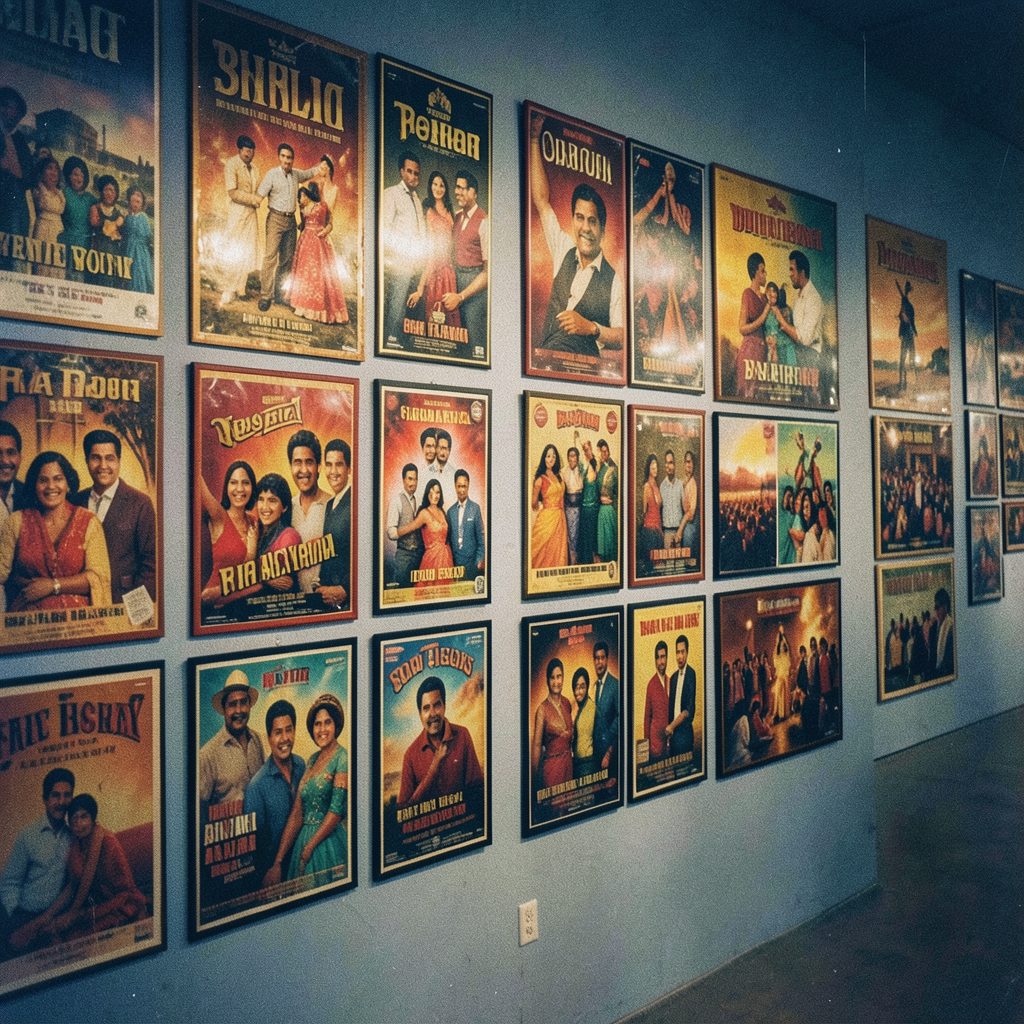

The Legacy of Yash Chopra in Bollywood Cinema
Yash Chopra remains one of the defining voices of Hindi cinema. Across five decades, he shaped the language of romance, family drama, music, fashion and emotional spectacle, creating films that continue to influence filmmakers and entertain audiences across generations.
His work moved between intimate relationships and large social conflicts. A Yash Chopra film could place lovers against snow-covered mountains, a divided family inside a wealthy Delhi home, or workers and industrialists on opposite sides of a tense moral debate. The settings changed, but his focus on human emotion remained constant.
For Bollywood audiences, his cinema also created a recognizable visual world: chiffon sarees in Switzerland, handwritten letters, railway stations, mustard fields, elegant mansions and unforgettable songs. His films became cultural references, while his production house helped establish a modern Hindi film industry.
The Early Films That Built His Voice
Chopra began directing with Dhool Ka Phool in 1959, a socially conscious drama about illegitimacy, identity and prejudice. The film showed his interest in characters caught between personal feelings and rigid social structures. His early work was often more serious and politically observant than the romantic image later associated with his name.
Films such as Dharmputra, Waqt and Ittefaq expanded his reputation. Waqt popularized the multi-starrer family saga, while Ittefaq demonstrated his ability to create suspense through limited locations and psychological tension. He could work within commercial cinema without sacrificing atmosphere or emotional complexity.
The 1970s brought major collaborations with Amitabh Bachchan, including Deewaar, Trishul and Kaala Patthar. These films carried the anger of a changing India, presenting characters shaped by poverty, class divisions, betrayal and ambition. Chopra’s direction gave their dramatic confrontations a polished, almost operatic intensity.
From Social Drama To Grand Romance
The transition from Kabhi Kabhie to Silsila and Chandni reveals how Chopra refined his romantic style. Kabhi Kabhie treated love as something that could survive across time, marriage and memory. Its poetry, music and ensemble performances created a film where emotional history mattered as much as present-day action.
Silsila was more controversial, exploring infidelity and unresolved desire through Amitabh Bachchan, Rekha and Jaya Bachchan. Its failure at the box office did not erase its influence. Over time, it became a key example of Chopra’s willingness to examine complicated relationships rather than offer simple moral answers.
With Chandni, he helped restore the popularity of the pure romantic musical after a period dominated by action films. Sridevi’s performance, the film’s European locations and its glossy songs established a template that many later Hindi romances would follow. Romance became aspirational, fashionable and deeply connected to music.
A Filmography Of Contrasting Moods
Yash Chopra’s legacy is best understood through the contrast between his films. He was associated with romance, yet he also directed thrillers, action dramas, family stories and war-related narratives. Each genre carried his signature attention to performance, music and emotional stakes.
| Film | Period | Defining Strength | Lasting Influence |
|---|---|---|---|
| Waqt | 1960s | Family separation and ensemble storytelling | Popularized the Hindi multi-starrer |
| Deewaar | 1970s | Class conflict and moral tension | Defined the angry young man era |
| Kabhi Kabhie | 1970s | Love, memory and poetry | Elevated the romantic family drama |
| Chandni | 1980s | Music, fashion and emotional recovery | Revived the grand romantic musical |
| Lamhe | 1990s | Age, love and unconventional relationships | Earned lasting critical admiration |
| Veer-Zaara | 2000s | Cross-border love and sacrifice | Reframed romance through shared history |
Lamhe remains one of his most adventurous films. Its treatment of age, emotional attachment and social expectations was ahead of its time, even though audiences initially responded cautiously. The film’s reputation grew through television, home viewing and critical reassessment.
Darr offered another shift, presenting obsessive love as frightening rather than heroic. Shah Rukh Khan’s performance as Rahul helped establish a darker form of romantic antihero, while the film showed Chopra’s ability to make familiar emotions feel dangerous and unpredictable.
Music, Fashion And Cinematic Memory
Songs were central to Chopra’s storytelling rather than decorative interruptions. Lyrics often revealed what characters could not say directly, giving inner feelings a public, lyrical form. His collaborations with composers such as Shiv-Hari, Jatin-Lalit and A. R. Rahman, along with celebrated lyricists and playback singers, produced soundtracks that outlived their original releases.
From Kabhi Kabhie to Veer-Zaara, music gave his films a strong afterlife. Songs became wedding selections, concert favorites and social-media references. Even audiences who have not watched every film often recognize the melodies, lyrics and visual imagery associated with his cinema.
Fashion also became part of the Yash Chopra signature. Sridevi’s chiffon sarees, Shah Rukh Khan’s tailored coats, elegant bridal styling and carefully coordinated color palettes turned costume into character expression. The landscapes functioned in a similar way, transforming Switzerland, London, Punjab and Kashmir into emotional spaces within the story.
The Women At The Heart Of His Stories
Although Chopra’s films are often discussed through their male stars, his leading women carried much of their emotional power. Waheeda Rehman, Rakhee, Jaya Bachchan, Rekha, Sridevi, Madhuri Dixit and Preity Zinta each brought different forms of strength, vulnerability and independence to his cinema.
His female characters were sometimes shaped by traditional ideas of family and sacrifice, yet many also challenged social expectations. Lamhe gave Sridevi an unusually layered role, while Veer-Zaara centered a woman whose choices were tied to love, duty and political borders. These characters helped make the films emotionally durable.
His influence remains visible among contemporary performers and directors. The continuing admiration expressed by younger actors, including in this Janhvi Kapoor interview, reflects how Chopra’s artistic image still shapes Bollywood conversations about romance, elegance and cinematic craft.
Why Veer-Zaara Still Matters
Released in 2004, Veer-Zaara brought together many elements of Chopra’s career: forbidden love, separation, sacrifice, music, lush visuals and the emotional force of time. Its India-Pakistan setting gave the story a political dimension, but the film remained focused on individual compassion rather than loud nationalism.
The performances by Shah Rukh Khan, Preity Zinta and Rani Mukerji anchored the film’s sweeping sentiment. The restoration of Madan Mohan’s unused compositions added a historical layer to the soundtrack, connecting a contemporary production with the golden age of Hindi film music.
Veer-Zaara also demonstrated Chopra’s confidence in patience. The story takes years to unfold, allowing silence, memory and sacrifice to carry dramatic weight. In an era increasingly shaped by fast editing and high-concept entertainment, its deliberate rhythm feels distinctive.
The Elements Filmmakers Continue To Borrow
Yash Chopra’s influence can be seen in several recurring features of contemporary Bollywood. Filmmakers continue to borrow his use of international locations, romantic song sequences, intergenerational conflict and emotionally heightened reunions. His production style helped define the polished Hindi film as a global entertainment product.
The strongest lessons from his cinema include:
- Build romance around character choices rather than locations alone.
- Use songs to deepen emotion and advance the story.
- Treat costume and production design as part of narrative language.
- Balance commercial appeal with difficult moral questions.
- Give performers space to communicate through silence and gesture.
His legacy also belongs to Yash Raj Films, which grew into one of India’s most influential studios. Through production, distribution and talent development, the company extended his impact beyond directing. The studio became associated with major stars, memorable soundtracks and a distinctly international vision of Hindi cinema.
Yash Chopra’s films remain valuable because they combine accessibility with emotional ambition. They invite audiences to enjoy the glamour while recognizing the loneliness, compromise and social pressure beneath it. That balance explains why his work continues to return to television, streaming platforms, retrospectives and everyday Bollywood conversation.
Explore Wassupbollywood for more film reviews, soundtrack stories, celebrity updates and coverage of the movies that continue to shape Hindi cinema. Revisit a Yash Chopra classic, listen to its songs and see how much of modern Bollywood still carries his unmistakable imprint.