The Evolution of Dialogue Writing in Hindi Cinema
Dialogue has always been one of Hindi cinema’s most powerful storytelling tools. A memorable line can define a character, shape a film’s public image, inspire imitation, and remain popular long after the theatrical run has ended. From poetic exchanges in classic dramas to sharp, conversational lines in contemporary Bollywood, dialogue reflects changing ideas about society, language, heroism, romance, and family.
The craft has moved through several distinct phases. Hindi film dialogue was once built around literary elegance and theatrical performance, while today’s writers often favor realism, regional flavor, humor, and instantly shareable phrases. This transformation mirrors the growth of Indian cinema itself, from studio-era storytelling to multiplex films, pan-Indian releases, and streaming platforms.
From Theatrical Oratory To Emotional Realism
In the early decades of Hindi cinema, dialogue was shaped by stage traditions, Urdu poetry, Parsi theatre, and the conventions of mythological and social dramas. Characters frequently spoke in complete, polished sentences, with a rhythm designed to carry across large cinema halls. Emotional declarations were direct, and moral positions were clearly expressed.
The language of films such as Mughal-e-Azam, Mother India, and Devdas carried a formal quality. Romantic lines often sounded like poetry, while confrontations used heightened vocabulary to establish dignity and conflict. The writing was designed for performance, giving actors space to pause, project, and turn a sentence into a dramatic event.
This approach did not mean that older cinema lacked subtlety. Writers used carefully chosen words to reveal social status, education, class, and cultural identity. A character’s vocabulary could communicate far more than the plot itself, particularly in films centered on family honor, sacrifice, or social reform.
The Urdu-Hindi Foundation Of Classic Bollywood
Urdu made a major contribution to the sound and emotional texture of Hindi film dialogue. Writers such as Kamal Amrohi, Aman, Kaifi Azmi, Majrooh Sultanpuri, and Wajahat Mirza brought literary depth, metaphor, and musicality to the screen. Their work helped establish a dialogue tradition in which a simple exchange could carry romantic longing, philosophical thought, or tragic inevitability.
This influence was especially visible in historical romances, Muslim social dramas, and films featuring intense love stories. Words associated with grace, honor, destiny, and separation gave these movies a distinctive emotional register. Even when audiences did not use such language in everyday life, they embraced it as part of cinematic fantasy.
The enduring popularity of classic Bollywood dialogues shows how sound and meaning work together. A line survives when its rhythm feels natural to the actor, its emotion is easy to recognize, and its wording creates a vivid image. This is why several older dialogues continue to appear in tribute videos, television references, fashion captions, and fan-made posters.
The Angry Young Man And The Rise Of Street Language
The 1970s brought a major shift in Hindi film writing. Social unrest, unemployment, corruption, and urban alienation changed the image of the mainstream hero. Writers Salim-Javed played a crucial role in this transformation, giving Amitabh Bachchan’s characters a direct, confrontational voice.
The language became less ornamental and more forceful. Short sentences, street expressions, taunts, and declarations of defiance replaced much of the formal speech associated with earlier decades. Films such as Zanjeer, Deewaar, and Sholay showed how dialogue could represent public frustration while building a larger-than-life star persona.
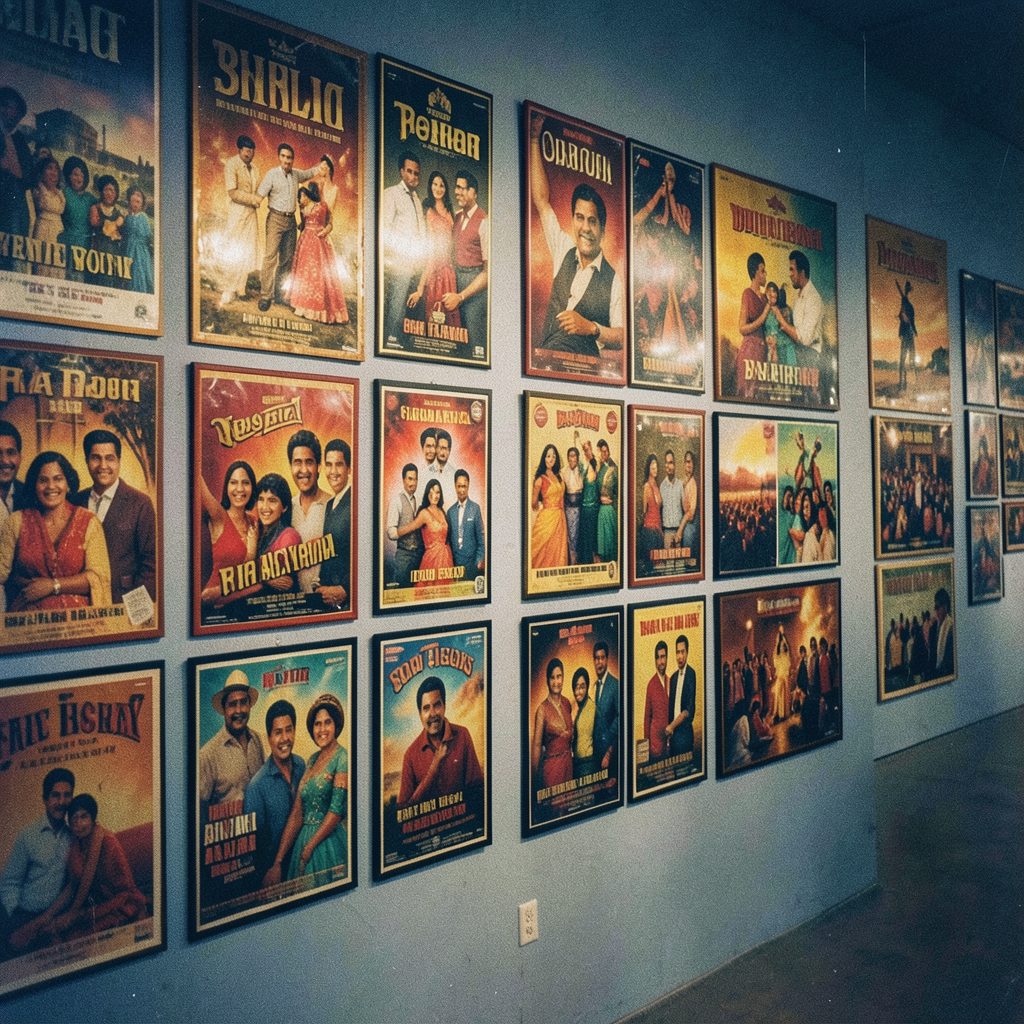
This period also established the dialogue as a marketing asset. A powerful line could appear in trailers, newspaper advertisements, audio cassettes, and television promos. The words helped audiences identify with the hero, repeat his attitude, and turn a film character into a cultural symbol.
| Era | Dominant Style | Common Themes | Representative Impact |
|---|---|---|---|
| 1950s–1960s | Literary, poetic, formal | Love, sacrifice, honor, social duty | Dialogue created emotional grandeur |
| 1970s–1980s | Direct, dramatic, street-oriented | Anger, corruption, revenge, justice | Catchphrases strengthened the star image |
| 1990s | Romantic, family-centered, accessible | Romance, tradition, ambition, reunion | Dialogues entered popular family culture |
| 2000s | Urban, witty, aspirational | Youth, relationships, globalization | Hinglish became increasingly visible |
| 2010s–2020s | Conversational, regional, genre-specific | Identity, politics, realism, personal conflict | Authentic voice became central to storytelling |
Romance, Comedy And The Arrival Of Hinglish
The 1990s reshaped dialogue through the popularity of family entertainers and romantic musicals. Films such as Dilwale Dulhania Le Jayenge, Hum Aapke Hain Koun..!, Kuch Kuch Hota Hai, and Dil To Pagal Hai favored warm, accessible language. Dialogue became closely connected to songs, wedding scenes, family rituals, and the emotional expectations of young audiences.
English words entered Hindi film conversations more naturally as urban India changed. Hinglish became a useful device for showing education, ambition, social mobility, and metropolitan lifestyles. The mixture was not limited to comic characters; it became a realistic part of everyday speech among many young Indians.
Comedy also expanded the possibilities of dialogue writing. Writers began using timing, repetition, misunderstandings, deadpan reactions, and regional accents to create humor. In films such as Hera Pheri, Andaz Apna Apna, and Munna Bhai M.B.B.S., the popularity of certain lines depended as much on delivery and pauses as on the words themselves.
Realism, Regional Voices And Character-Based Writing
Contemporary Hindi cinema has moved toward dialogue that sounds spoken rather than written. Writers increasingly avoid giving every character the same polished vocabulary. A small-town student, a corporate executive, a police officer, and a political leader may all use different syntax, slang, and emotional codes.
Films such as Gangs of Wasseypur, Masaan, Newton, Article 15, and Dangal demonstrate how regional speech can add texture and credibility. Local expressions make characters feel rooted in a particular geography. They also challenge the idea that “standard” Hindi is the only suitable language for serious cinema.
This change has encouraged stronger character-based writing. Instead of using dialogue solely to explain the plot, writers allow people to evade questions, interrupt each other, repeat themselves, and reveal feelings indirectly. Silence, incomplete sentences, and ordinary conversation can now carry dramatic weight.
The influence of regional Indian cinema has accelerated this development. Hindi films increasingly borrow the energy of Marathi, Punjabi, Tamil, Telugu, Bengali, and Bhojpuri storytelling traditions while retaining a broad national reach. As audiences become more comfortable with subtitles and dubbed films, linguistic diversity has become an advantage rather than a barrier.
The Streaming Era And The New Dialogue Economy
Streaming platforms have expanded the space available for dialogue-heavy stories. Series and films can explore complex relationships, political conflicts, crime networks, and family histories without compressing every idea into a two-hour theatrical format. Writers have greater freedom to create layered conversations and morally uncertain characters.
The digital era has also changed how dialogues become popular. A line may first circulate through a teaser, Instagram reel, meme, fan edit, or short video rather than through a cinema hall. The most successful dialogue often has a second life online, where viewers adapt it to commentary, comedy, fashion, and everyday situations.
At the same time, writers face new pressure to create lines that can be clipped and shared. Some scenes are built around quotable moments, while others resist instant consumption through quieter, naturalistic exchanges. The strongest contemporary writing balances memorability with character truth.
Why Dialogue Still Defines A Film
Great dialogue writing gives a film its voice. Visual style may establish atmosphere, and music may shape emotion, but dialogue reveals how characters think under pressure. It can expose insecurity behind confidence, affection beneath anger, or political power hidden inside polite language.
For Bollywood, the craft remains closely connected to performance. A line written on the page becomes memorable through an actor’s accent, expression, pause, gesture, and relationship with the camera. This is why the same sentence can feel ordinary in a script and unforgettable on screen.
The most effective dialogue usually has several qualities:
- It sounds authentic to the character’s background and situation.
- It advances the story while revealing personality.
- It uses rhythm, silence, or repetition with purpose.
- It remains memorable without feeling forced.
- It reflects the social and linguistic world of its time.
Hindi cinema will continue to change as audiences move between theatres, television, mobile screens, and streaming services. Yet the pleasure of hearing a perfectly shaped line will remain constant. Follow Wassupbollywood for film reviews, dialogue-driven movie analysis, Bollywood news, trailers, music coverage, and the latest stories from Hindi cinema.